3 September 2026
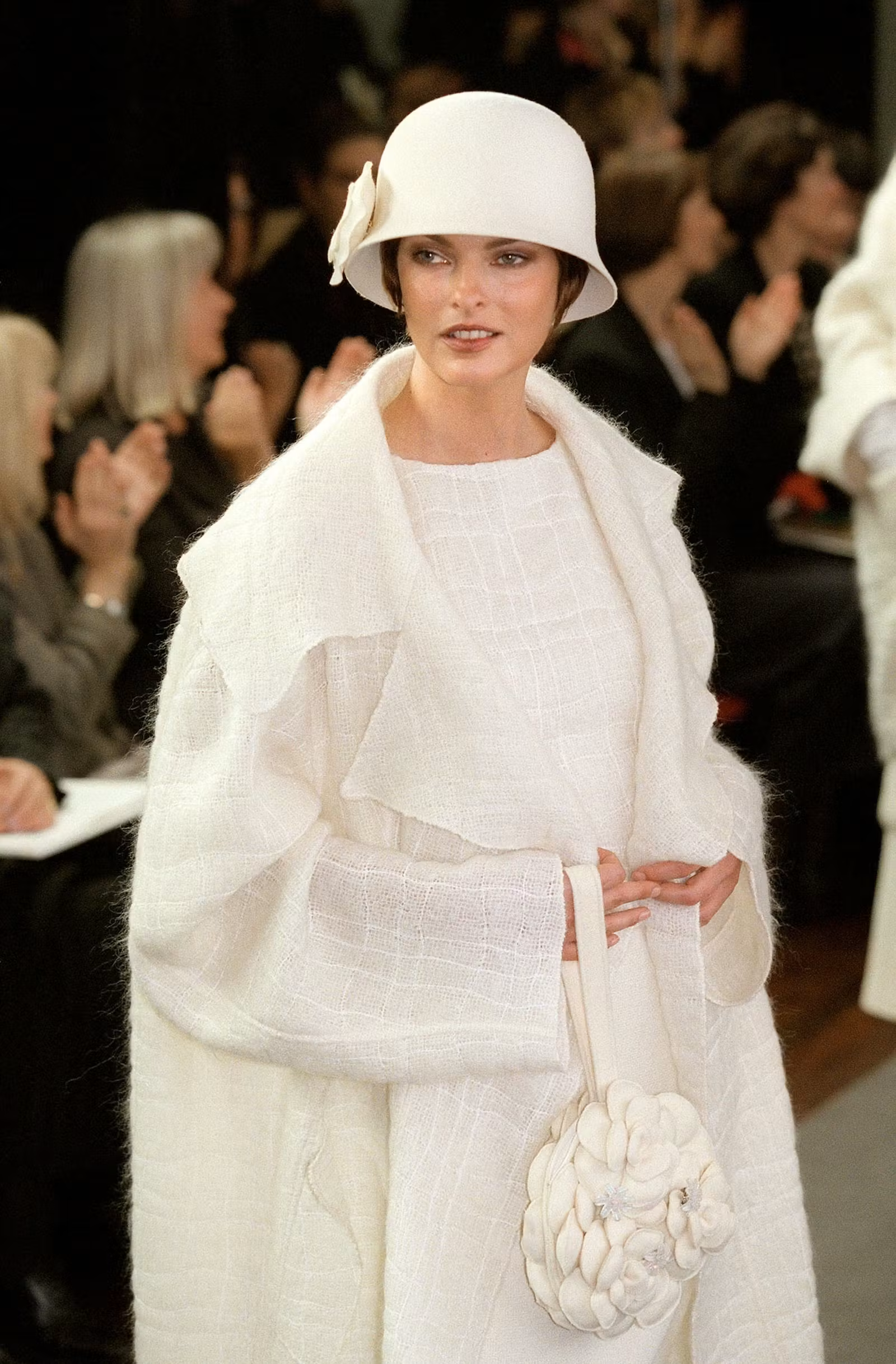
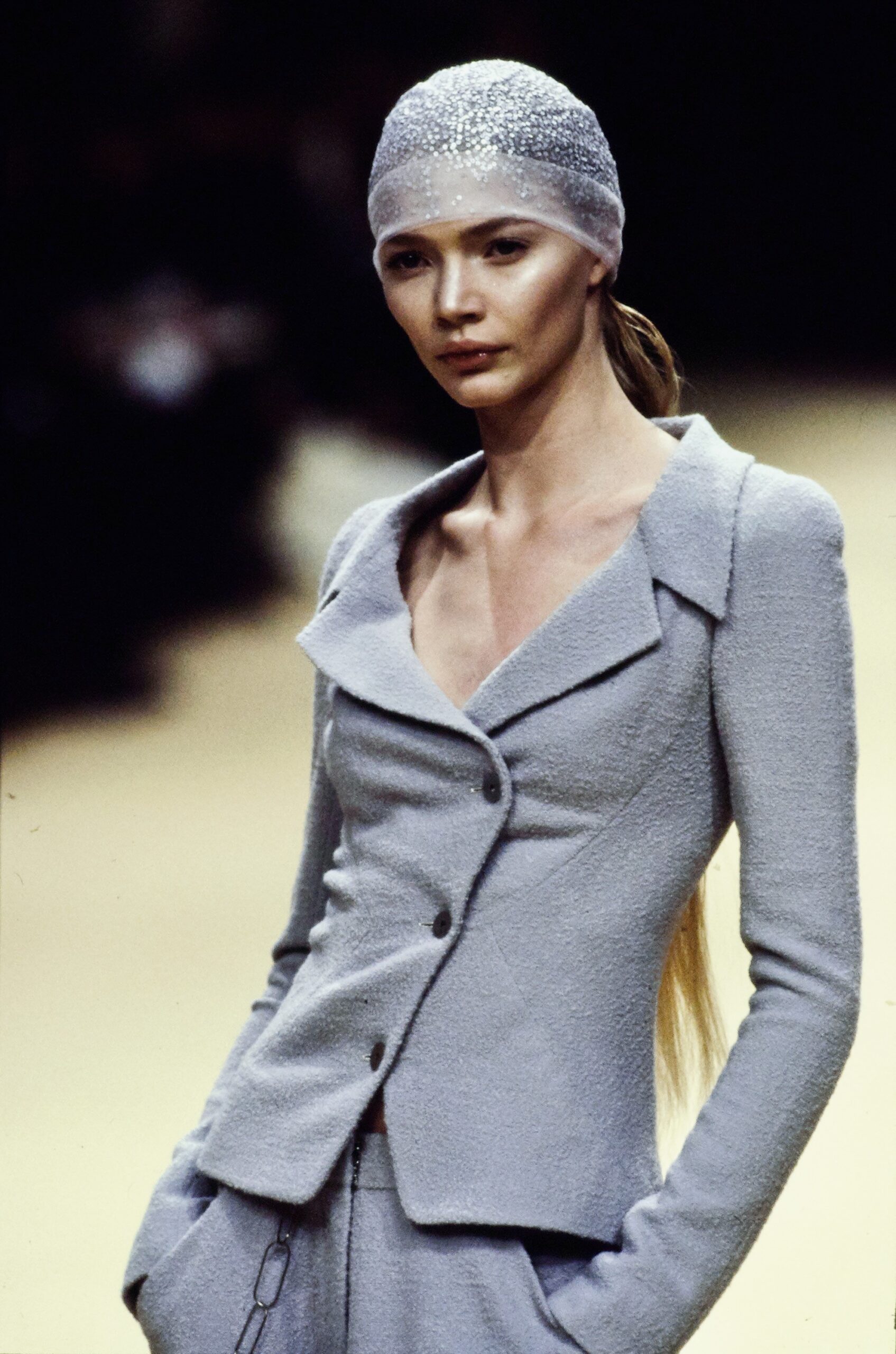
There are certain years in CHANEL’s history that are remembered for spectacle. The oversized logo. The extravagant accessories. The theatrical sets. The pop references. The moments when Karl Lagerfeld turned the house’s codes into something deliberately larger than life.
Then there are 1998 and 1999.
By 1998, Lagerfeld had already spent fifteen years transforming CHANEL. He had revived the house, rebuilt its commercial power and turned its historic codes into a visual vocabulary capable of being endlessly manipulated. Then came a change of temperature.
At first glance, they might seem like unlikely years to revisit when considering the future of CHANEL. Yet, looked at more closely, these two years represent one of the most fascinating periods in the house’s modern history: a moment when Karl Lagerfeld temporarily resisted the instinct to make CHANEL more CHANEL.
The collections were a quieter, cleaner, more architectural CHANEL. Suits became less rigid. Eveningwear became lighter. The familiar codes were present, but they were no longer shouting. There was tweed, tailoring, black and white, but also bare skin, simple trousers, elongated silhouettes, fluid dresses and an almost unexpected restraint. It was CHANEL without the costume of CHANEL. And almost three decades later, that distinction feels remarkably relevant to Matthieu Blazy.
But first, let’s review five collections from this period that reveal this quieter, more modern vision of the house.
Spring/Summer 1998 was a retrospective of Coco Chanel’s six decades as a fashion designer – and Karl Lagerfeld approached the exercise almost like an exhibition. The collection was divided into six distinct sections, each representing approximately a decade of Chanel’s career. Beginning with “Coco Before CHANEL” and moving through the evolution of the house to “CHANEL Now and Next,” Lagerfeld compressed six decades of design history into a single runway.
It was an ambitious undertaking, but what made it remarkable was rather than simply reproducing famous CHANEL garments, Lagerfeld isolated the ideas that defined each period and translated them through the language of 1998.
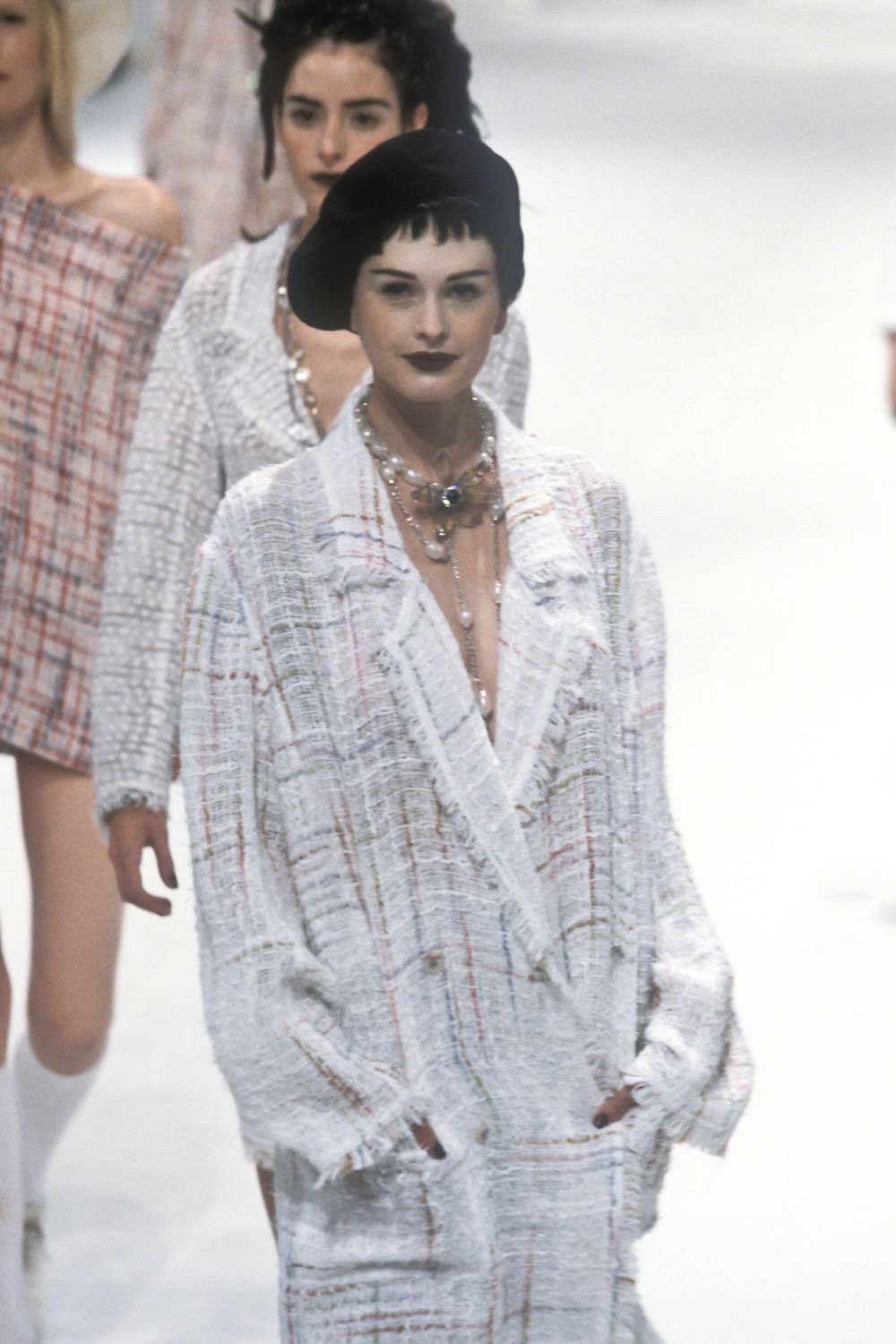
Image Credit: CHANEL
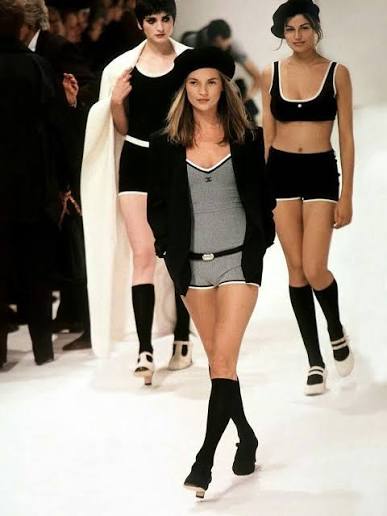
Image Credit: CHANEL
The earliest chapters looked toward the 1920s and the foundations of CHANEL’s modern wardrobe: jersey, relaxed silhouettes, sportswear and the boyish attitude that distinguished Coco’s clothes from the more restrictive fashions of her contemporaries. One of the collection’s most memorable looks was worn by a young Kate Moss: a 1920s-inspired jersey bathing suit layered beneath a boxy black blazer, finished with knee-high heeled boots and a black beret.
As the decades progressed, Lagerfeld moved through the vocabulary that had accumulated around the house: the skirt suit, tweeds, dresses and the increasingly recognizable CHANEL silhouette. Gypsy-inspired dresses and multicoloured tweeds appeared alongside more familiar tailoring, allowing each decade to have its own character while remaining part of the same visual story.
But the most interesting aspect of the collection was not the number of references. It was the way Lagerfeld demonstrated that CHANEL had never been one fixed look. The CHANEL of the 1920s was not identical to the CHANEL of the 1930s. The postwar CHANEL was not identical to the CHANEL of the 1960s. And the CHANEL of the 1980s was certainly not the CHANEL of 1998.
What connected them was an underlying philosophy: the ability to make clothes feel modern without severing their connection to what came before. That idea matters. Because one of the defining characteristics of CHANEL in 1998 was that the clothes did not need to announce themselves as “CHANEL” in order to feel like CHANEL. There were no heavy logos, no gimmicks. It was wearable.
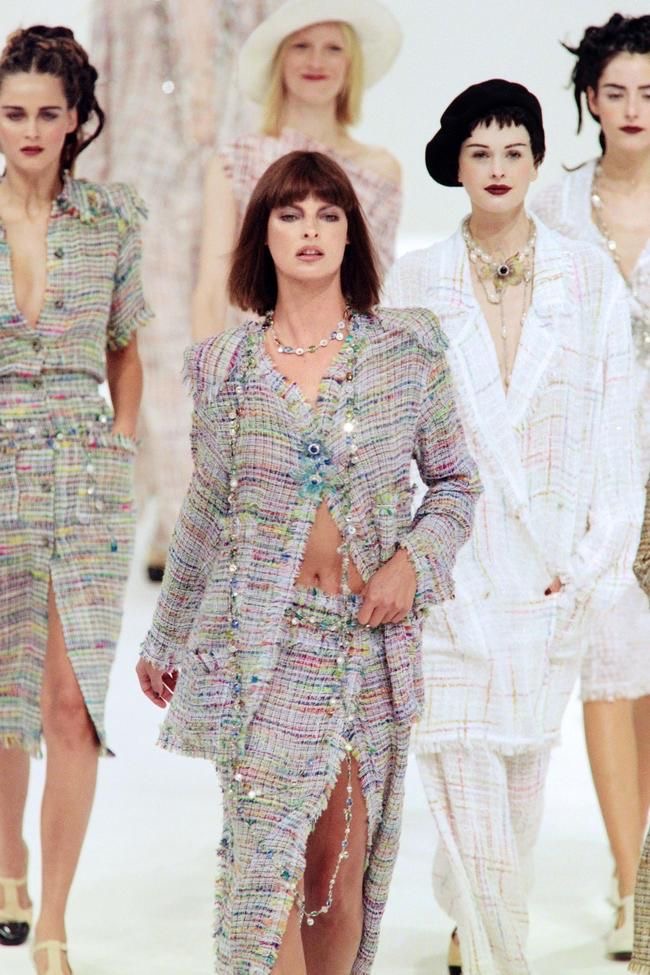
Image Credit: CHANEL
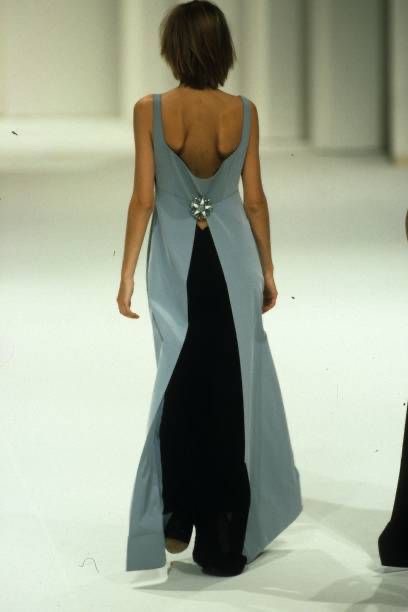
Image Credit: CHANEL
That made the final section – “Chanel Now and Next” – particularly significant. Lagerfeld was not presenting the archive as something that belonged in a museum. He was using it to demonstrate that CHANEL’s history could be continually rewritten. The past was material, not instruction.
And that may be the most revealing way to understand the collection today. The Spring/Summer 1998 show was essentially Lagerfeld asking: If Coco Chanel had spent sixty years continually reinventing herself, why should CHANEL stop reinventing itself now?
That question feels surprisingly close to the challenge facing Matthieu Blazy today. Blazy’s CHANEL is similarly concerned with separating the principles of the house from its accumulated symbols. He is not treating the archive as a template to be copied garment for garment. Instead, he appears interested in identifying the ideas that made CHANEL radical in the first place – and asking what those ideas mean now.
If the ready-to-wear collection explored Coco Chanel’s modernity through restraint, the Spring/Summer 1998 couture collection approached her legacy through character. The collection moved between the world of the flapper and the concierge, bringing together two seemingly different figures associated with Chanel’s history. The flapper suggested the liberated, boyish woman of the 1920s: shortened silhouettes, movement, bare legs and a rejection of restrictive femininity. The concierge evoked the practical, uniformed world of the hotel and the working woman, with its emphasis on service, structure and everyday functionality.
The collection’s couture was softened and made mobile. Tailoring was present, but it did not feel rigid. Dresses moved around the body. Jackets were shaped without becoming overly formal. The contrast between the flapper and the concierge allowed Lagerfeld to explore both glamour and utility, fantasy and uniform. That tension was central to CHANEL from the beginning.

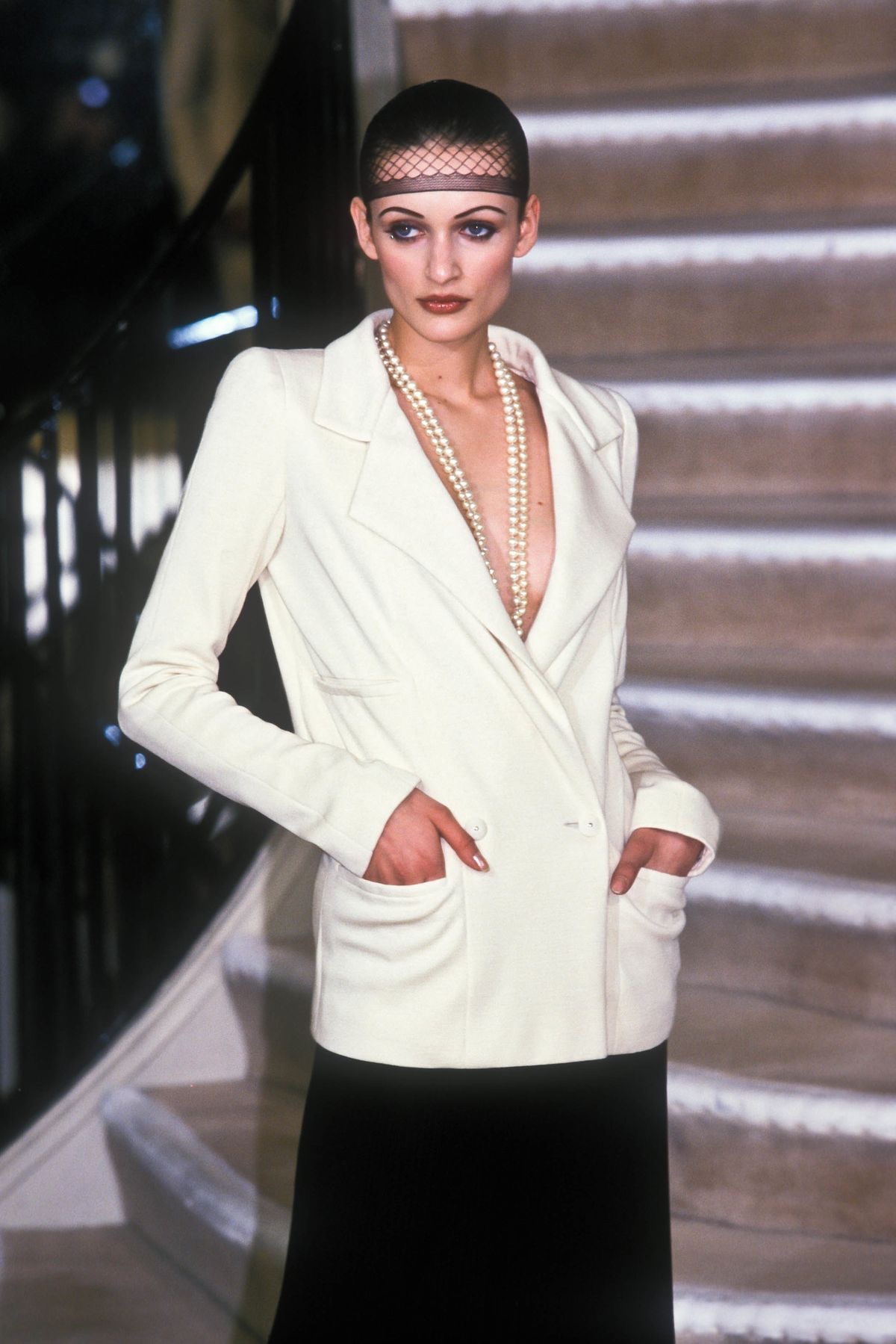
Image Credit: CHANEL
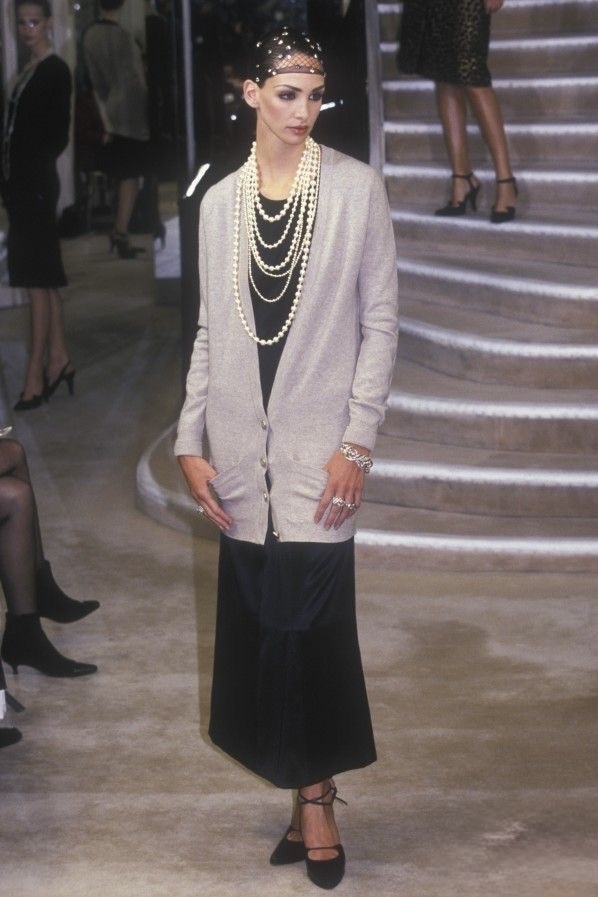
Image Credit: CHANEL
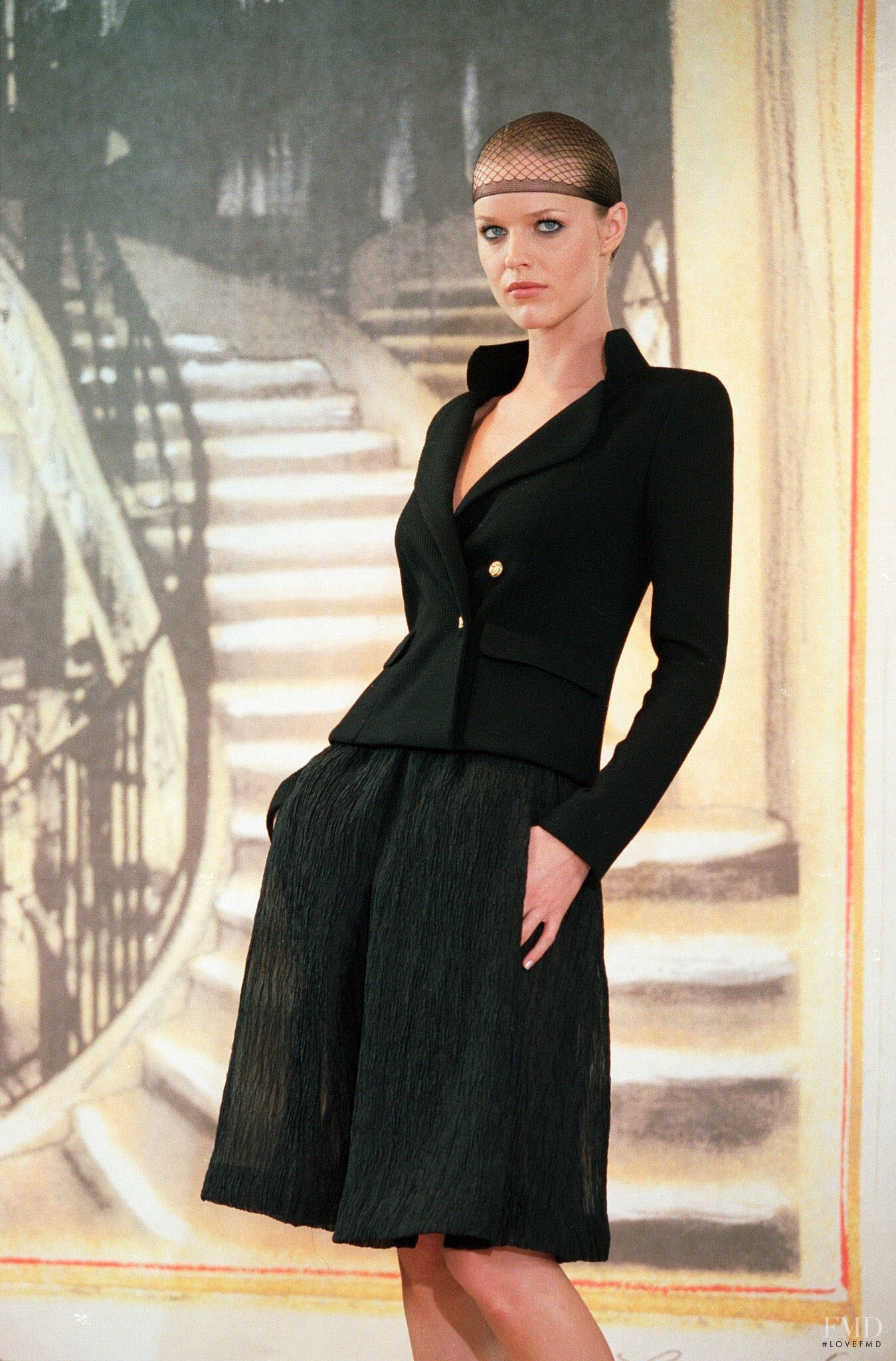
Image Credit: CHANEL
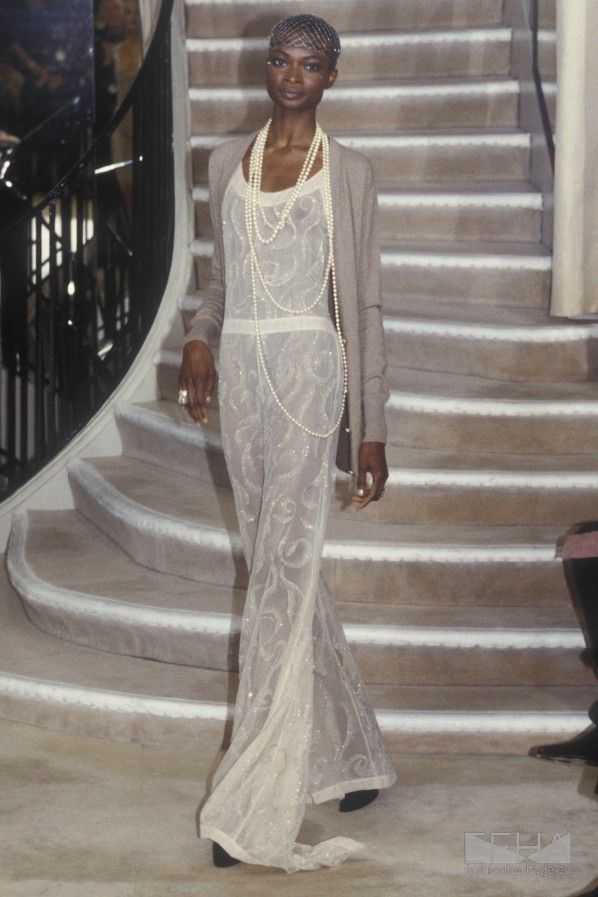
Image Credit: CHANEL
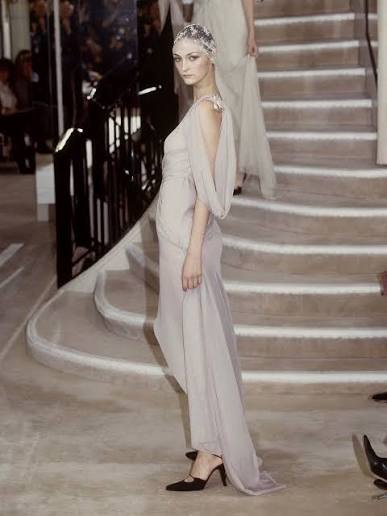
Image Credit: CHANEL
Coco Chanel’s clothes had always depended on the collision of opposites: masculine and feminine, luxury and practicality, refinement and ease. Lagerfeld understood that these contradictions could be more powerful than literal archival references.
The flapper looks brought a sense of youthful freedom, while the concierge-inspired pieces grounded the collection in the realities of work and movement. Couture was not presented as an untouchable fantasy. It was treated as a system of construction that could accommodate different kinds of women.
This was also where Lagerfeld’s interest in the CHANEL suit became particularly clear. The suit was not simply a jacket and skirt. It was a framework that could be adapted, loosened and reinterpreted. It could suggest a uniform, a costume or a form of liberation depending on how it was cut and worn. The collection was theatrical in concept, but its clothes remained remarkably grounded.
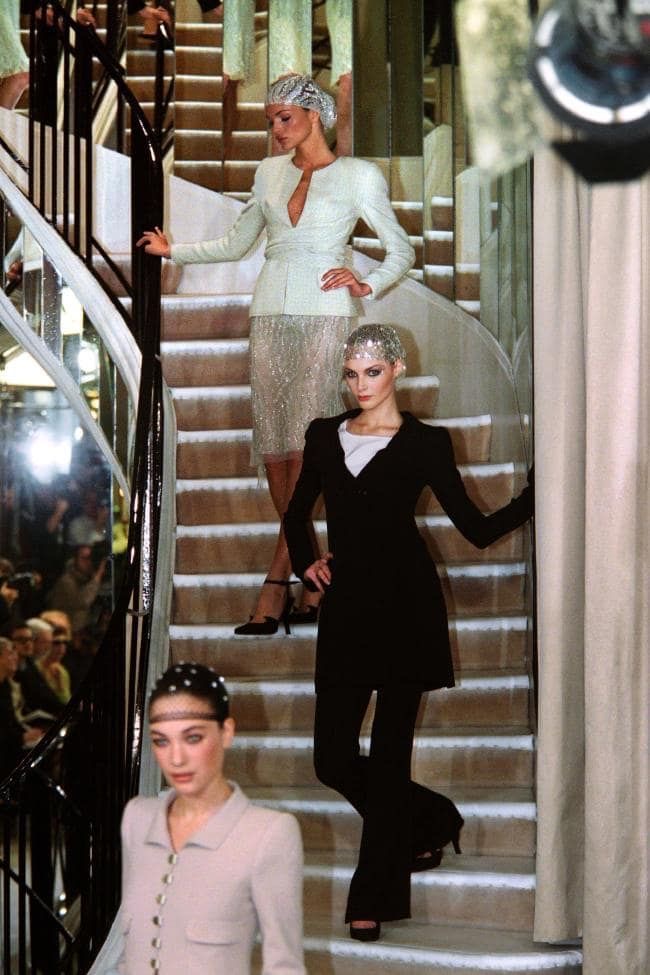
Image Credit: CHAENL
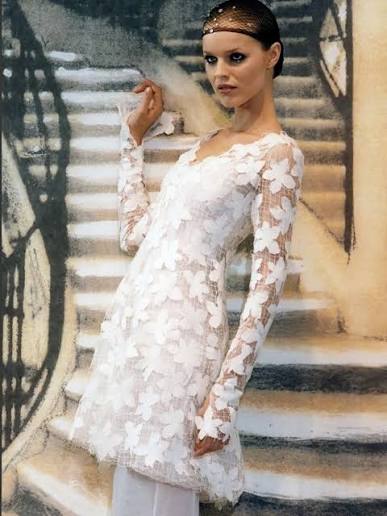
Image Credit: CHANEL
The Fall/Winter 1998 ready-to-wear collection took CHANEL back to one of the most important chapters in Coco Chanel’s own story: Deauville.
It was there, at Chanel’s early sportswear boutique, that Coco began establishing many of the ideas that would eventually define the house. She borrowed from menswear, embraced jersey, loosened the restrictions of women’s clothing and created a wardrobe designed for movement. Deauville was not about formal Parisian elegance. It was about a new kind of luxury: sporting, practical and distinctly modern. Lagerfeld returned to that spirit rather than simply reproducing its imagery.
The collection was built around the idea of leisure as luxury. There were relaxed jackets, practical coats, trousers, knitwear and easy separates, with silhouettes that appeared designed for a woman who was actually going somewhere rather than simply presenting herself. The clothes had a distinctly athletic quality, but they never became overtly sporty in the contemporary sense. That balance was quintessentially CHANEL.
The masculine influence was particularly important. Lagerfeld played with the same dialogue between men’s and women’s clothing that had been fundamental to Coco’s early work. Trousers and jackets carried a slightly boyish attitude, while the overall styling retained the polish and femininity associated with CHANEL.
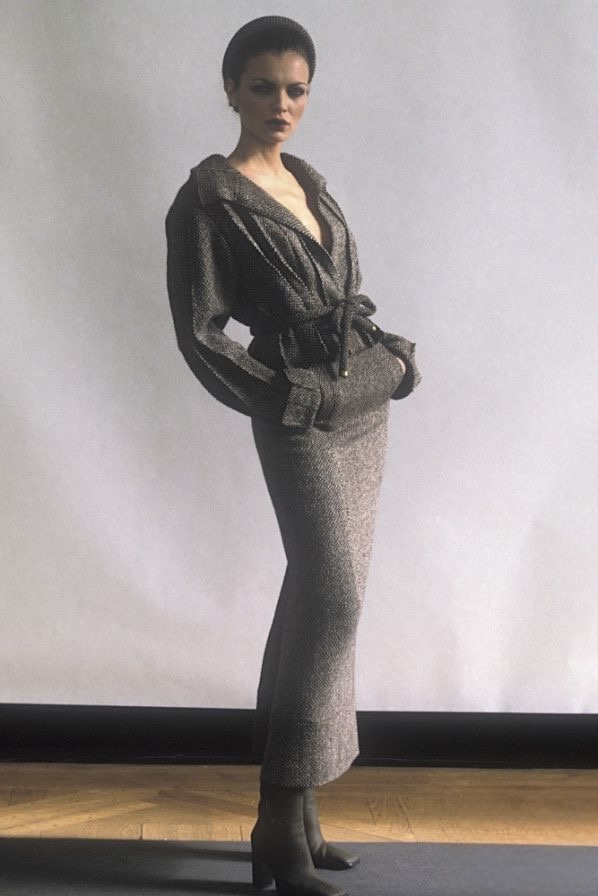
Image Credit: CHANEL
Image Credit: CHANEL
Even the more recognizable house codes felt quieter. Rather than relying on elaborate embellishment or an abundance of CHANEL insignia, Lagerfeld allowed the silhouette and materials to do much of the work. The collection’s connection to Coco was embedded in its attitude: comfort without sloppiness, practicality without sacrificing elegance, masculinity without suppressing femininity.
This was also a collection in which Lagerfeld seemed interested in the idea of a wardrobe rather than a series of individual fashion statements. A jacket could be worn with a skirt or trousers. A coat could become the entire look. Knitwear could move from casual to polished. The pieces felt interchangeable, useful and lived-in. That quality makes the collection particularly interesting when viewed alongside Blazy’s CHANEL nearly three decades later. Blazy, too, has shown an interest in taking CHANEL away from the idea of the “CHANEL look” and toward the idea of a CHANEL wardrobe. His tailoring, shirting, trousers and softened versions of the house’s codes often feel like clothes intended to be worn rather than costumes designed to represent CHANEL.
In that sense, Fall/Winter 1998 may be one of the clearest examples of Lagerfeld understanding Coco Chanel through her principles rather than her symbols. Deauville was never really about the beach itself. It was about freedom. It was about taking clothes traditionally associated with men and giving women the ability to move differently. And Lagerfeld understood that the most authentic way to revisit that history was not through nostalgia, but through clothes that felt equally liberated. The result was perhaps one of the most understated forms of CHANEL: a collection where the house’s identity was felt more in the way the clothes lived on the body than in how loudly they announced themselves.
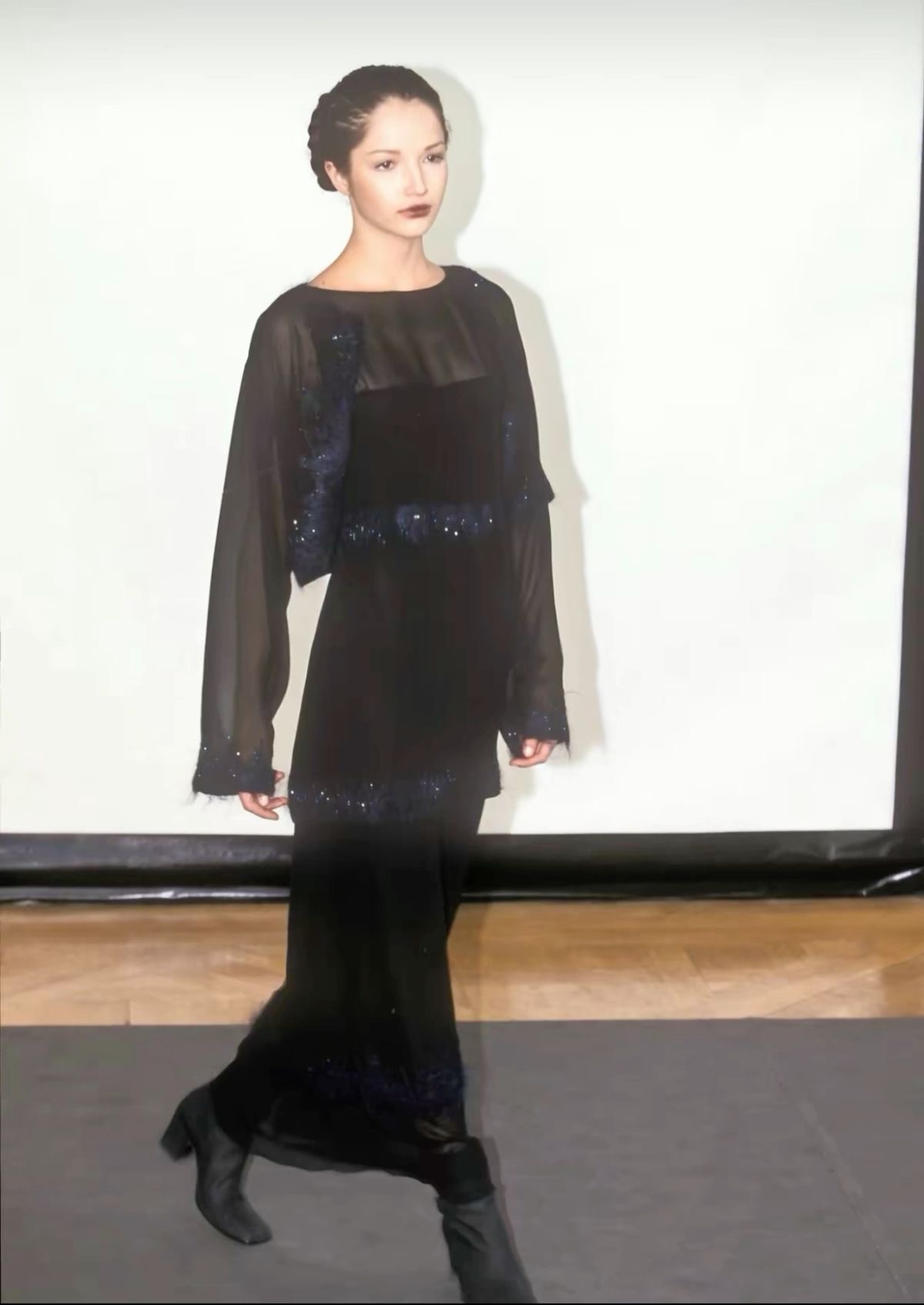
Image Credit: CHANEL
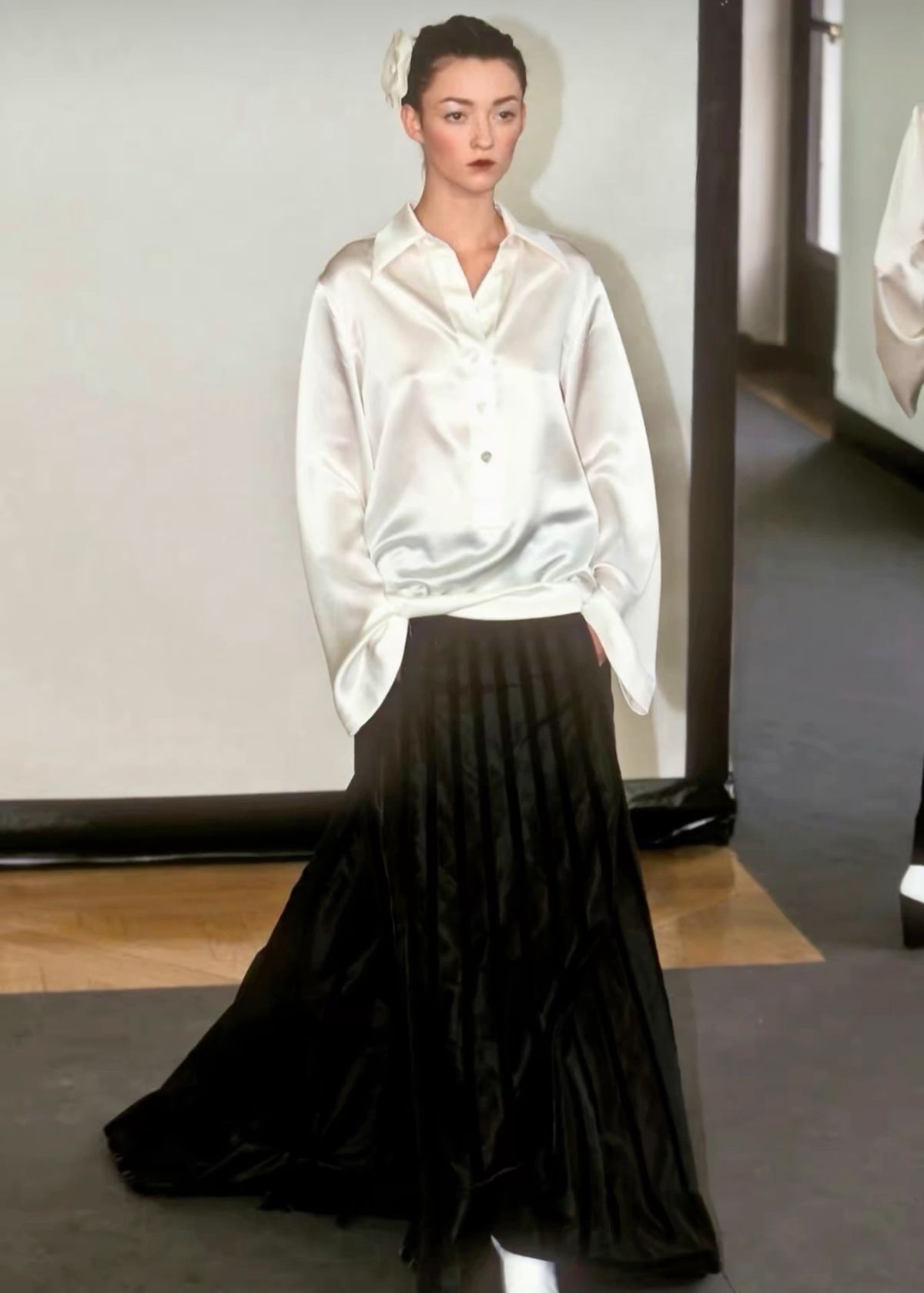
Image Credit: CHANEL
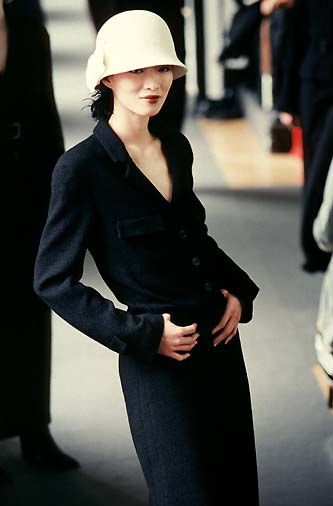
Image Credit: CHANEL
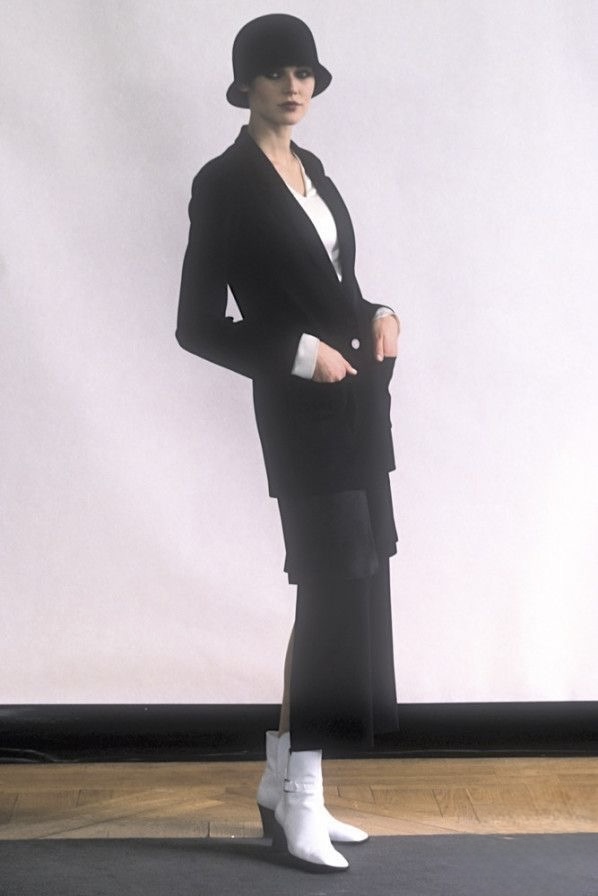
Image Credit: CHANEL
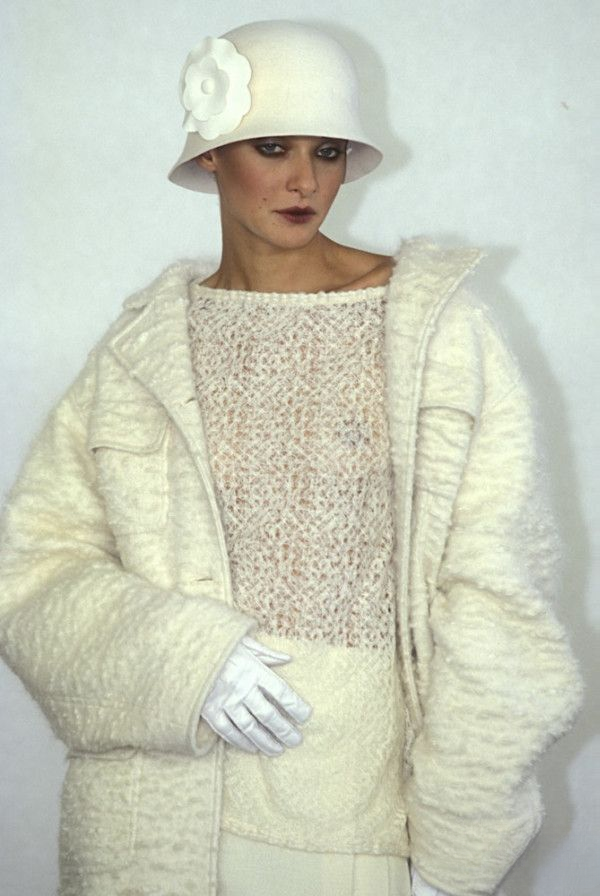
Image Credit: CHANEL
If Fall/Winter 1998 explored the relaxed side of CHANEL through ready-to-wear, Spring/Summer 1999 couture transformed that ease into something almost ethereal.
Lagerfeld did something almost unthinkable for the house: he eliminated black from the collection entirely. For CHANEL, this was more than a colour decision. Black was one of the most deeply embedded elements of the house’s visual identity. Yet Spring/Summer 1999 replaced it with neutrals, pastels and metallics.
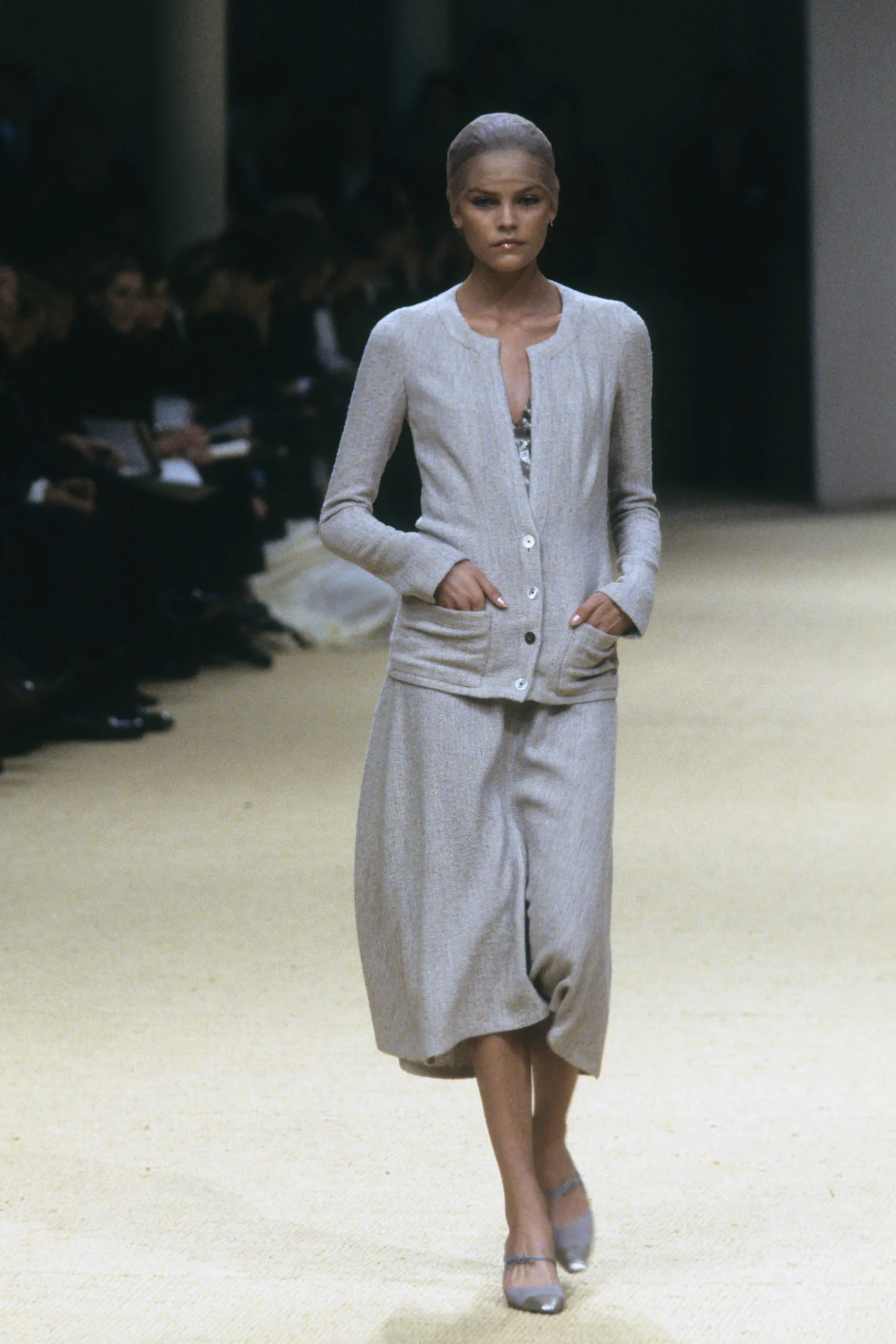
Image Credit: CHANEL
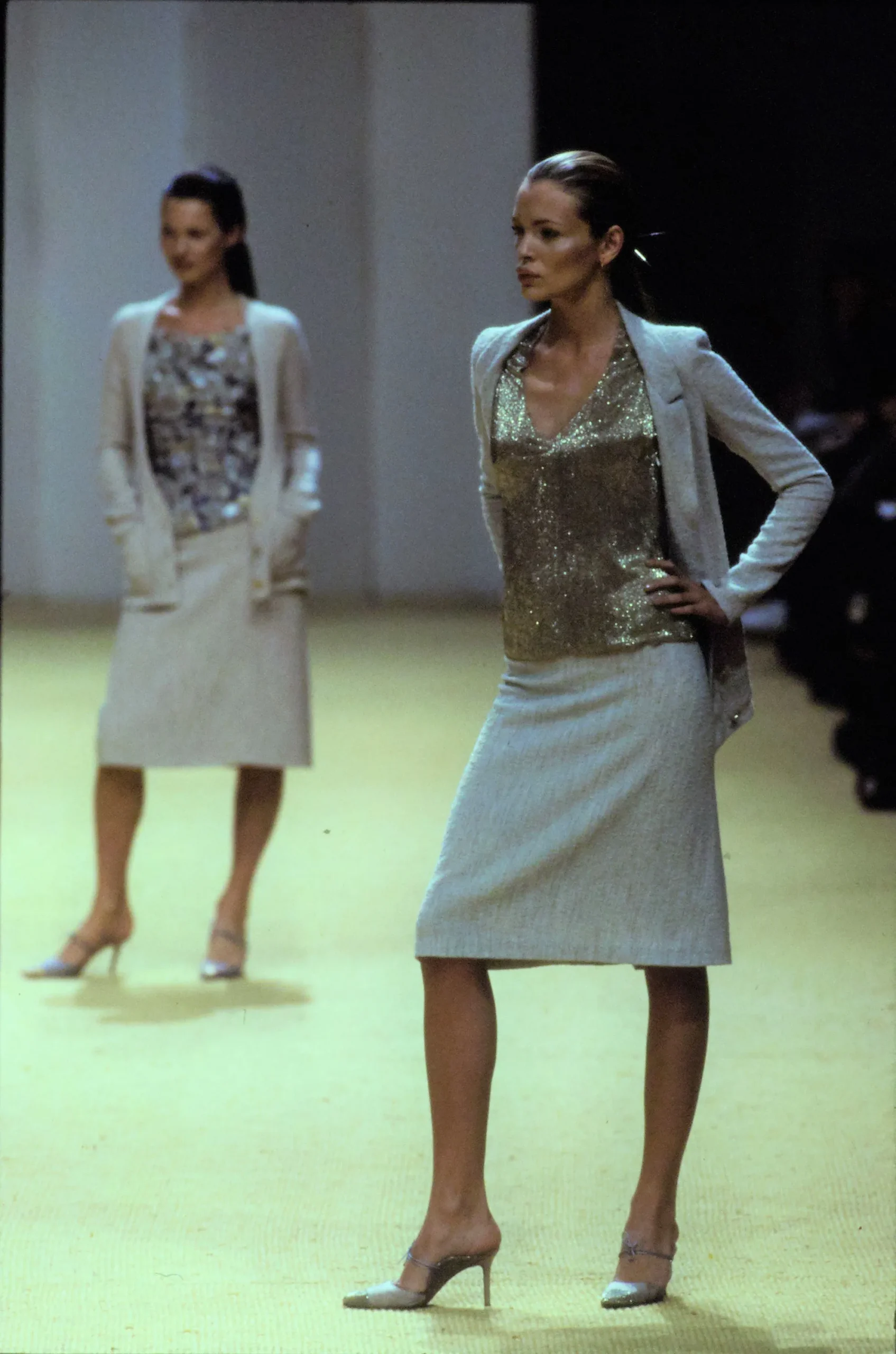
Image Credit: CHANEL
The collection’s central idea was soft tailoring. Suits were present, but they were lightened and relaxed. Jackets appeared almost weightless, while skirts and trousers moved with an ease that seemed unusual for couture. Tailoring became less about imposing a shape on the body and more about creating a frame through which the body could move.
Tulle and organza floated around the figure. Dresses were delicate without becoming overly decorative. The clothes suggested couture through their construction rather than through visible excess. This was couture that did not necessarily look like couture. Instead of announcing hours of labour through heavy embellishment, Lagerfeld allowed proportion, movement and finish to communicate the value of the clothes. The collection was luxurious, but its luxury was quiet.
The effect was CHANEL looking forward rather than backward. The collection also clarified Lagerfeld’s changing relationship with the CHANEL suit. He was not abandoning tailoring; he was making it more fluid. The suit could be soft, pale and almost weightless. It could retain its authority without retaining its stiffness. That is what made the collection so radical. It did not reject CHANEL’s codes. It made them less literal.
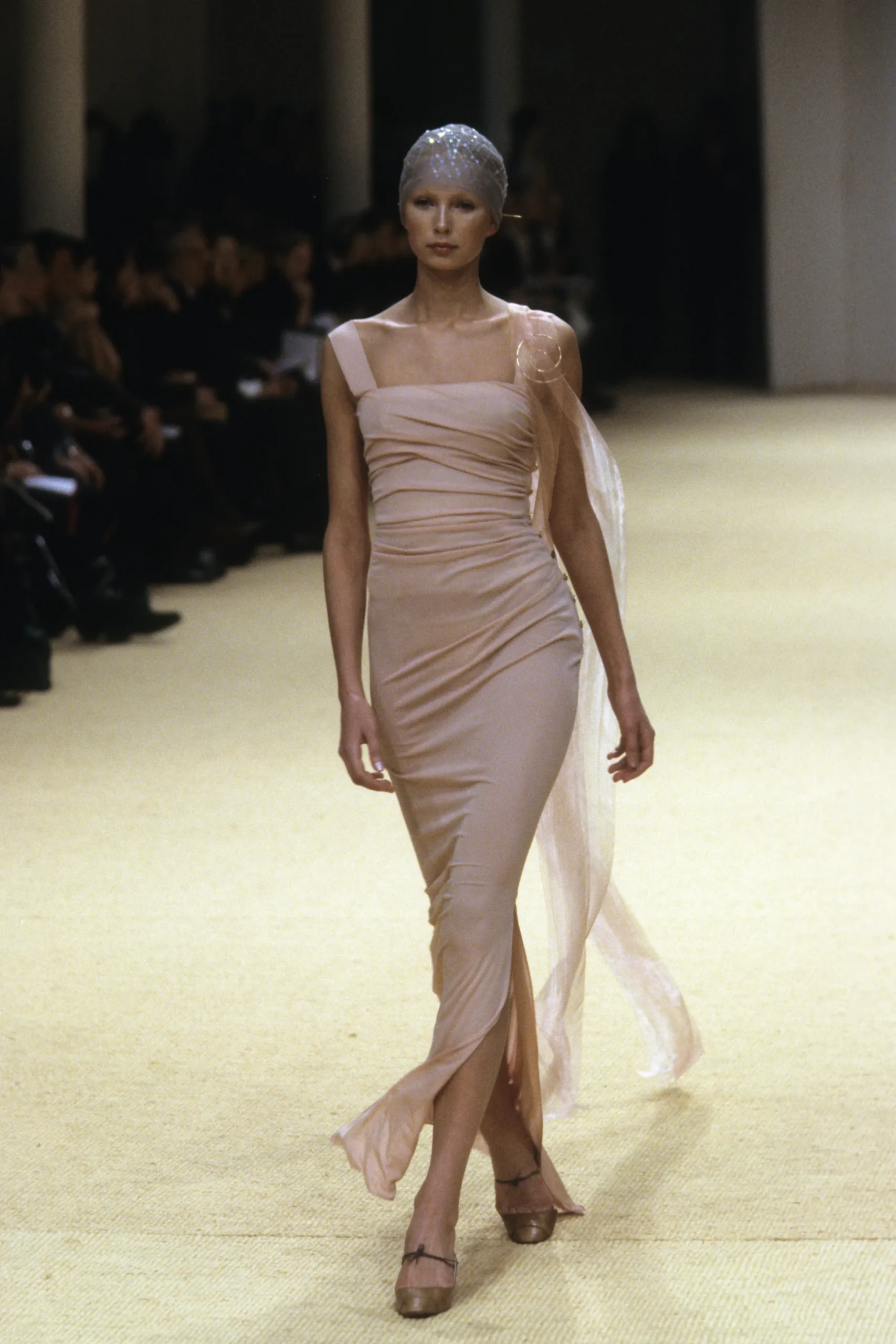
Image Credit: CHANEL
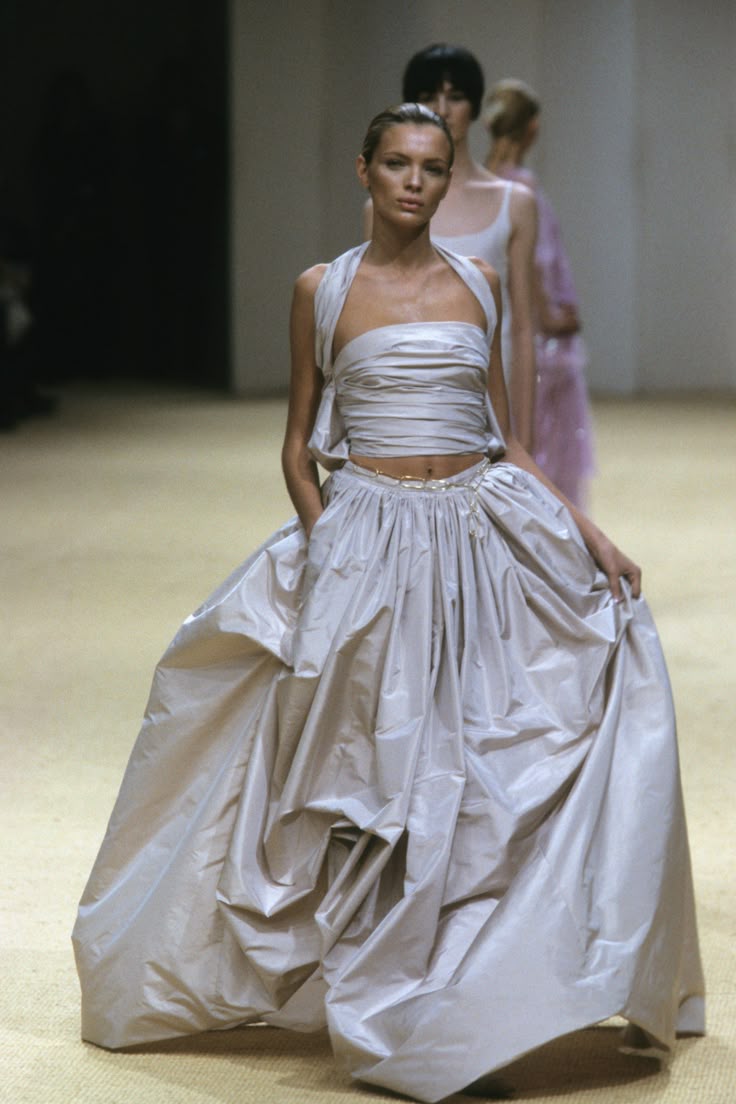
Image Credit: CHANEL
Image Credit: CHANEL
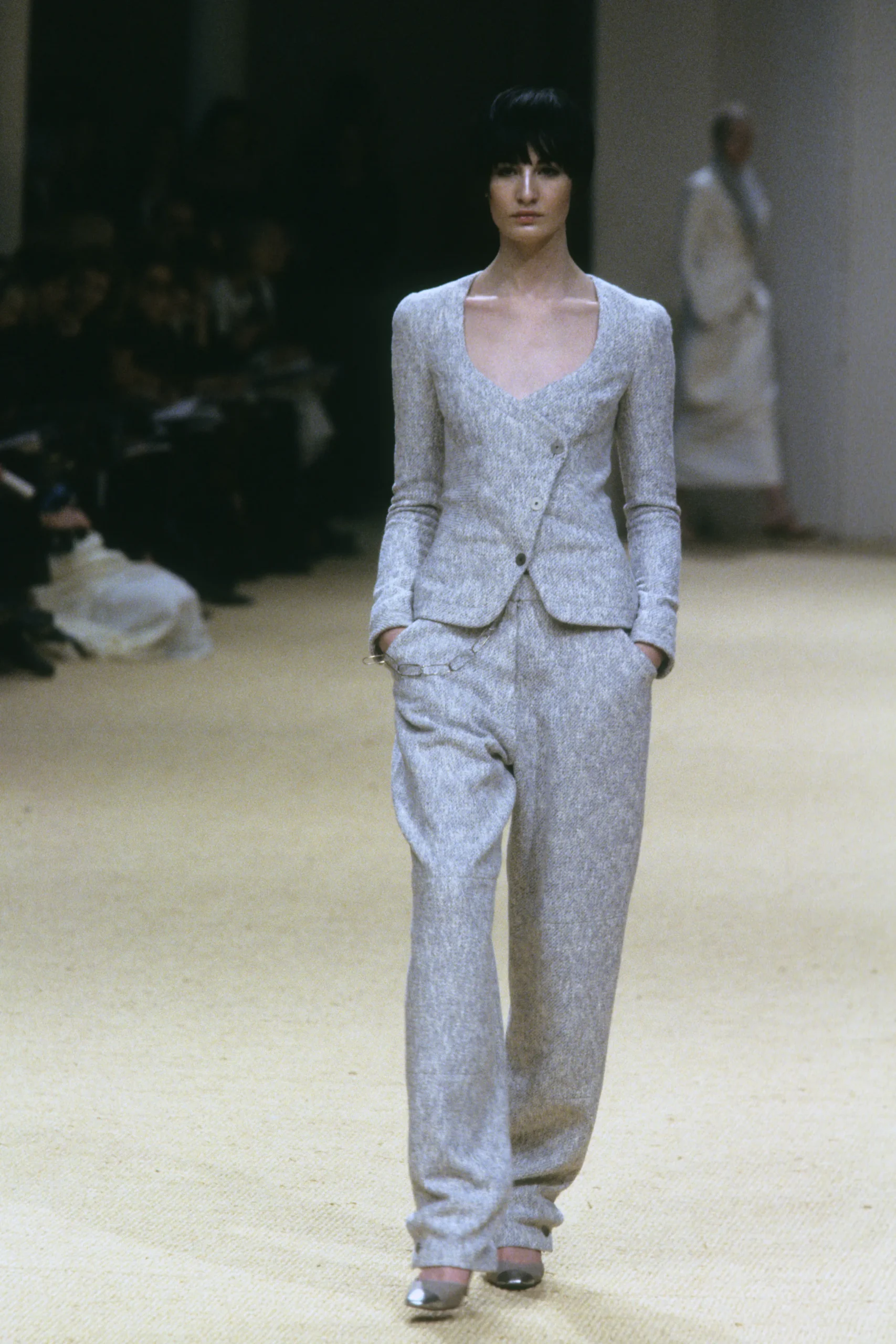
Image Credit: CHANEL
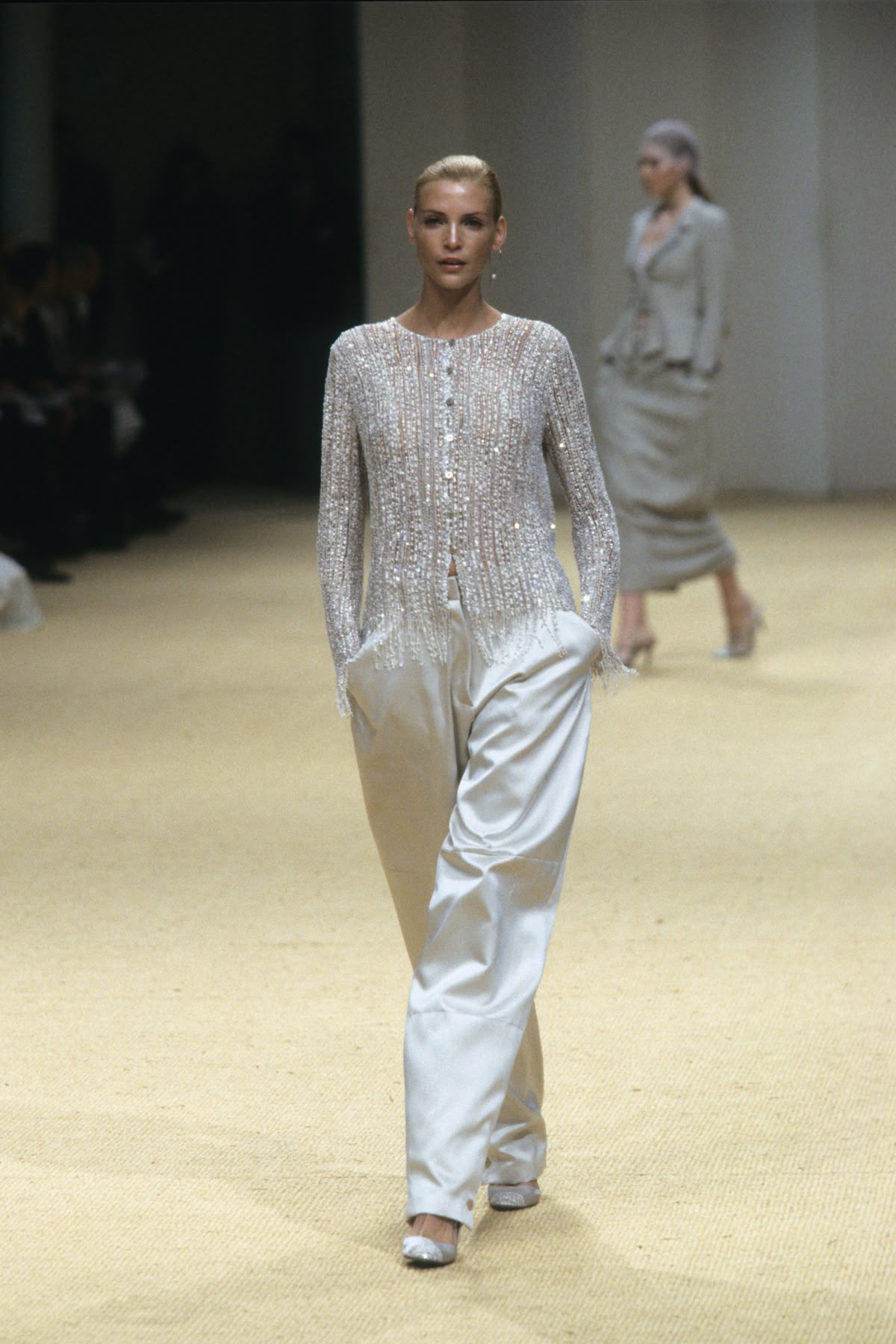
Image Credit: CHANEL
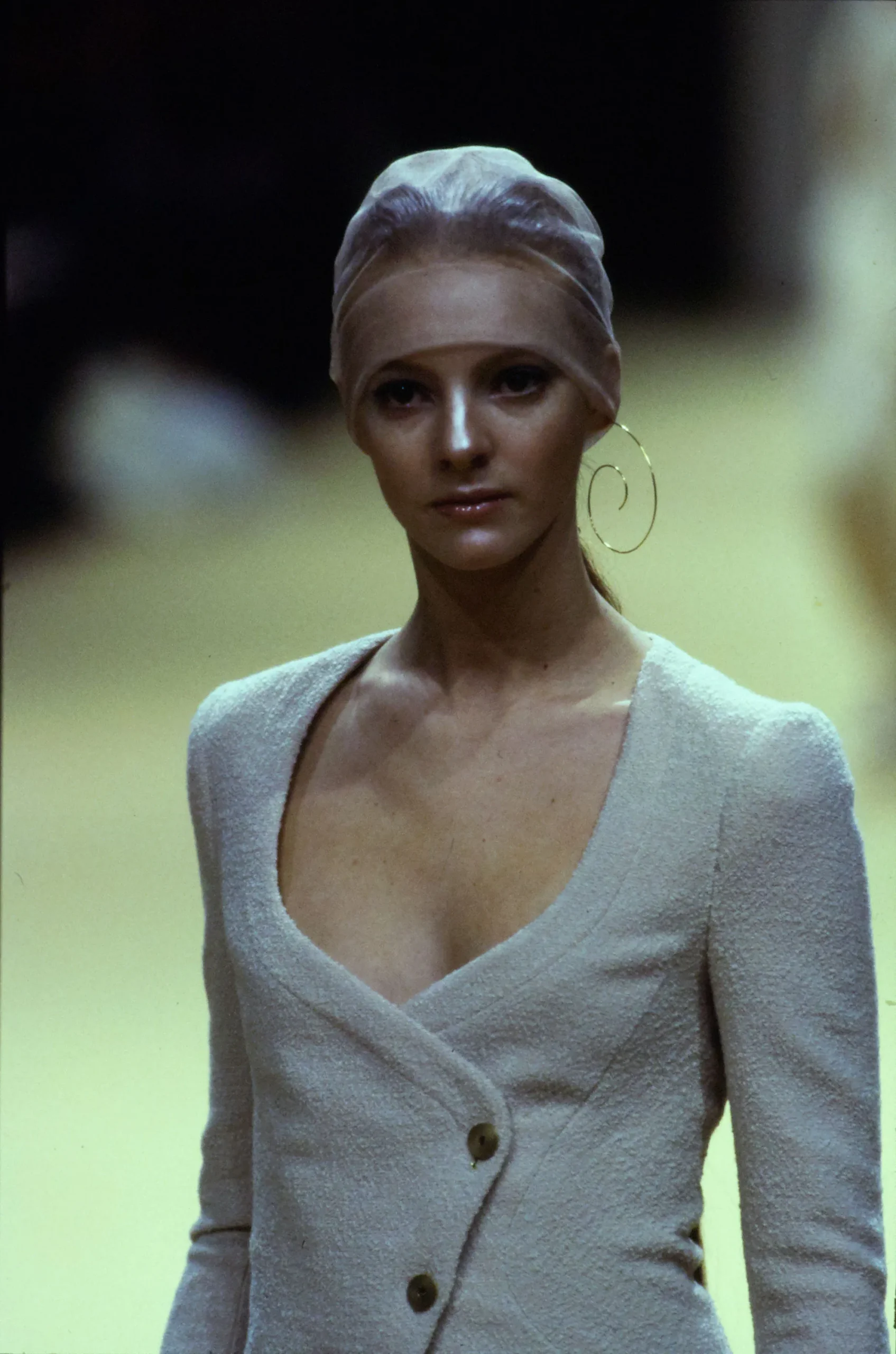
Image Credit: CHANEL
The Fall/Winter 1999 ready-to-wear collection looked toward the new millennium, but it did not do so through a simplistic vision of futuristic fashion. Instead, Lagerfeld imagined CHANEL entering the twenty-first century by carrying its essential codes forward in altered forms.
The collection was more expressive than the quiet Spring/Summer 1999 couture, with shearling, flat musketeer boots, chain belts and protective amulets creating a slightly medieval mood. Yet the collection’s futurism was not dependent on metallic gimmicks or overt technology. It came from the way familiar elements were recombined.
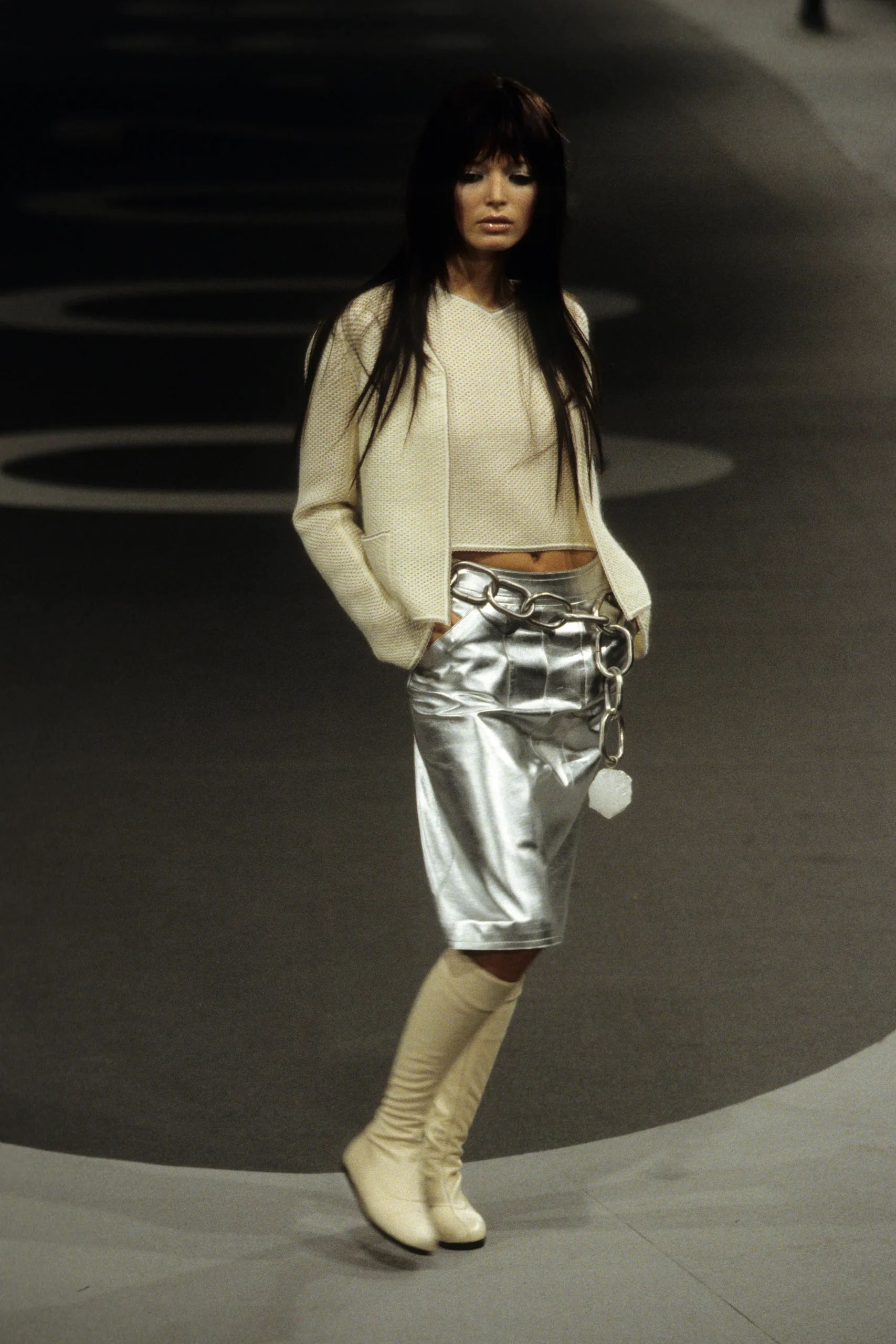
Image Credit: CHANEL
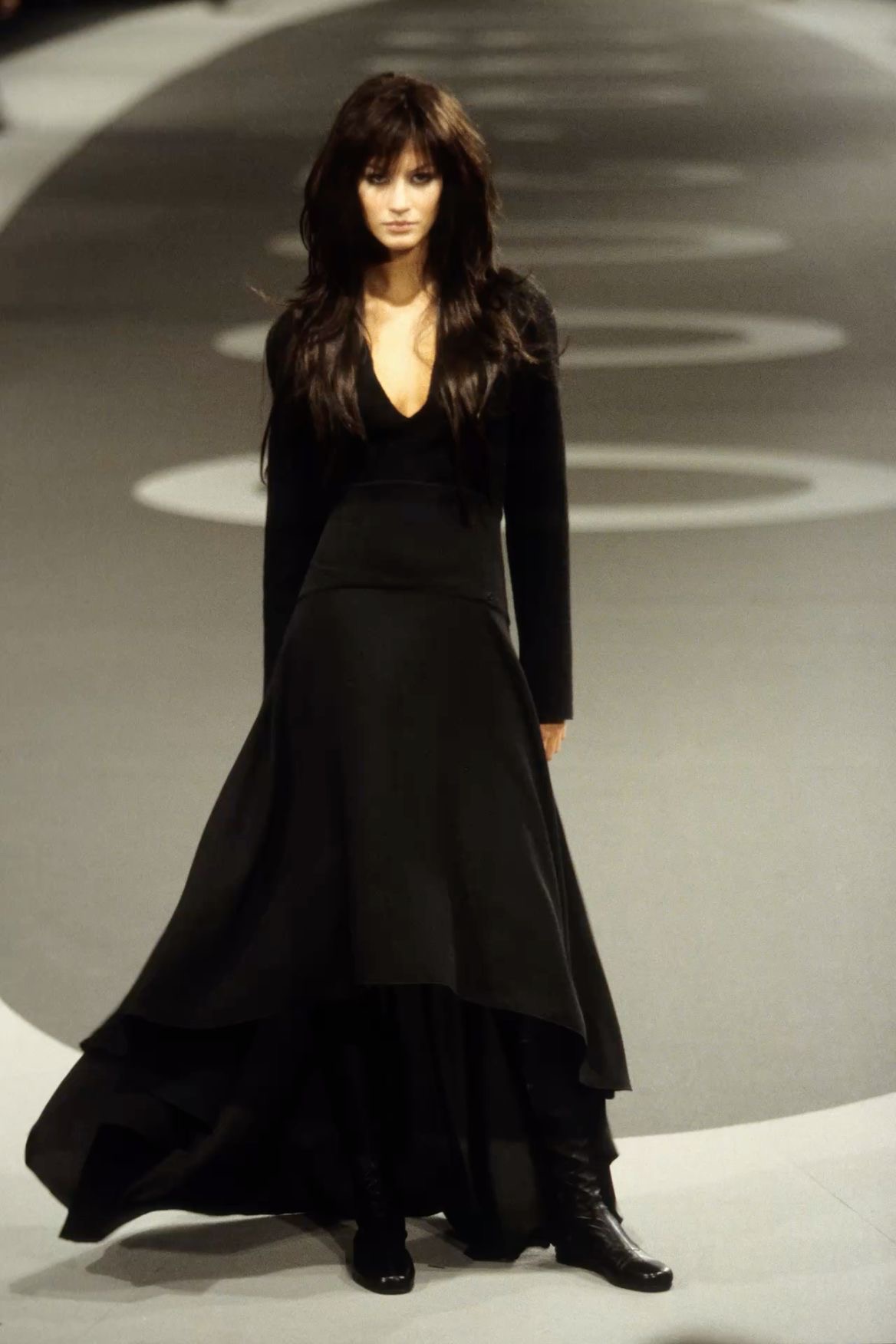
Image Credit: CHANEL
The CHANEL woman was no longer simply elegant or sporty. She was protected, mobile and prepared for an uncertain future. She wore layers, boots and amulets. She moved through the collection with a sense of independence that felt more practical than decorative. The clothes suggested a woman entering the new century on her own terms.
There was still glamour, but it was grounded in utility. There was still ornament, but it was used to create identity rather than simply display wealth. The chain belt, the boot and the amulet became functional signs of character.
This was also where Lagerfeld’s ability to balance restraint and theatre became especially visible. The collection could be dramatic, but its drama came from silhouette, material and attitude rather than from an overload of logos. The future, in Lagerfeld’s CHANEL, was not a clean break from the past. It was Coco’s vocabulary made more mobile, more protective and more adaptable.
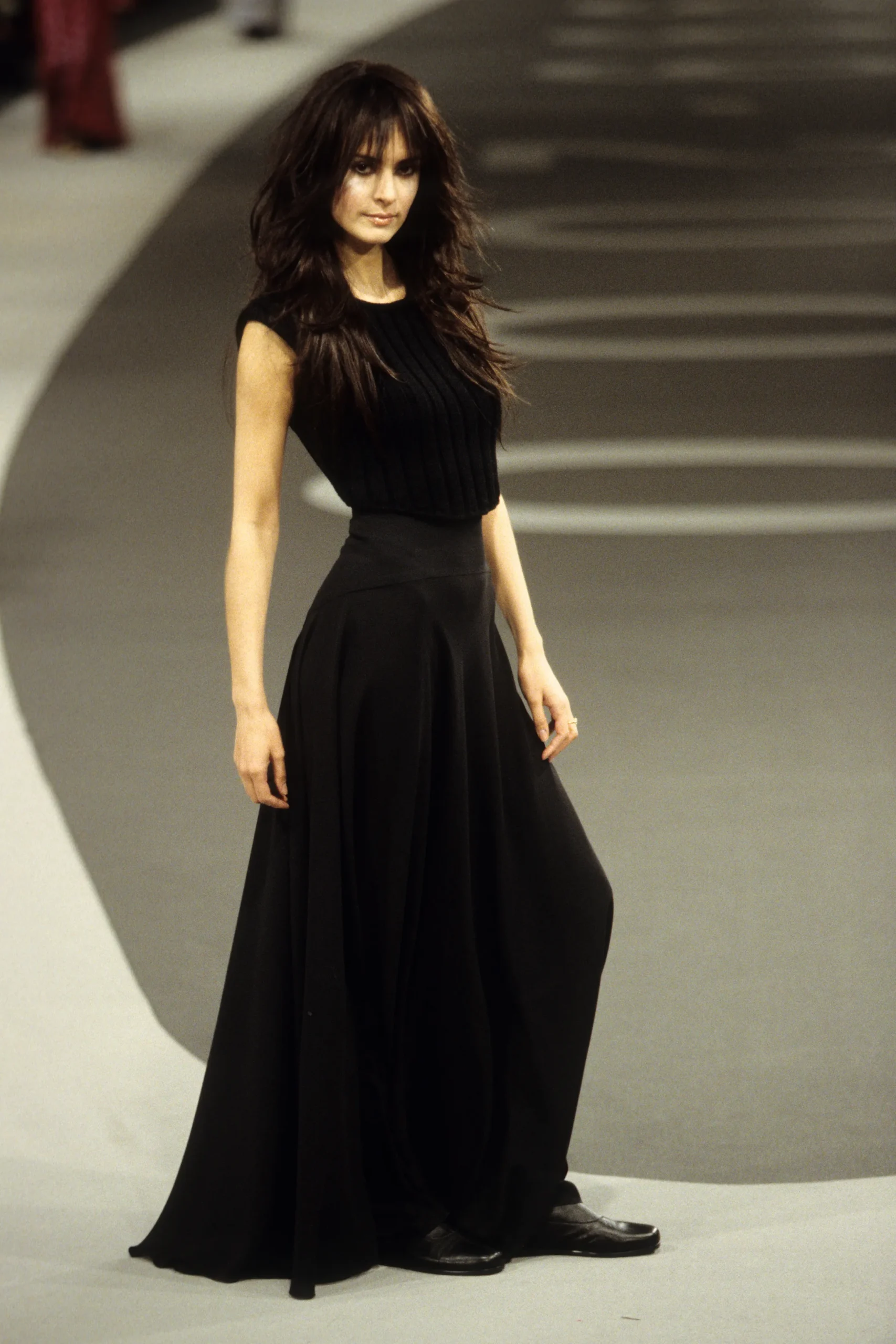
Image Credit: CHANEL
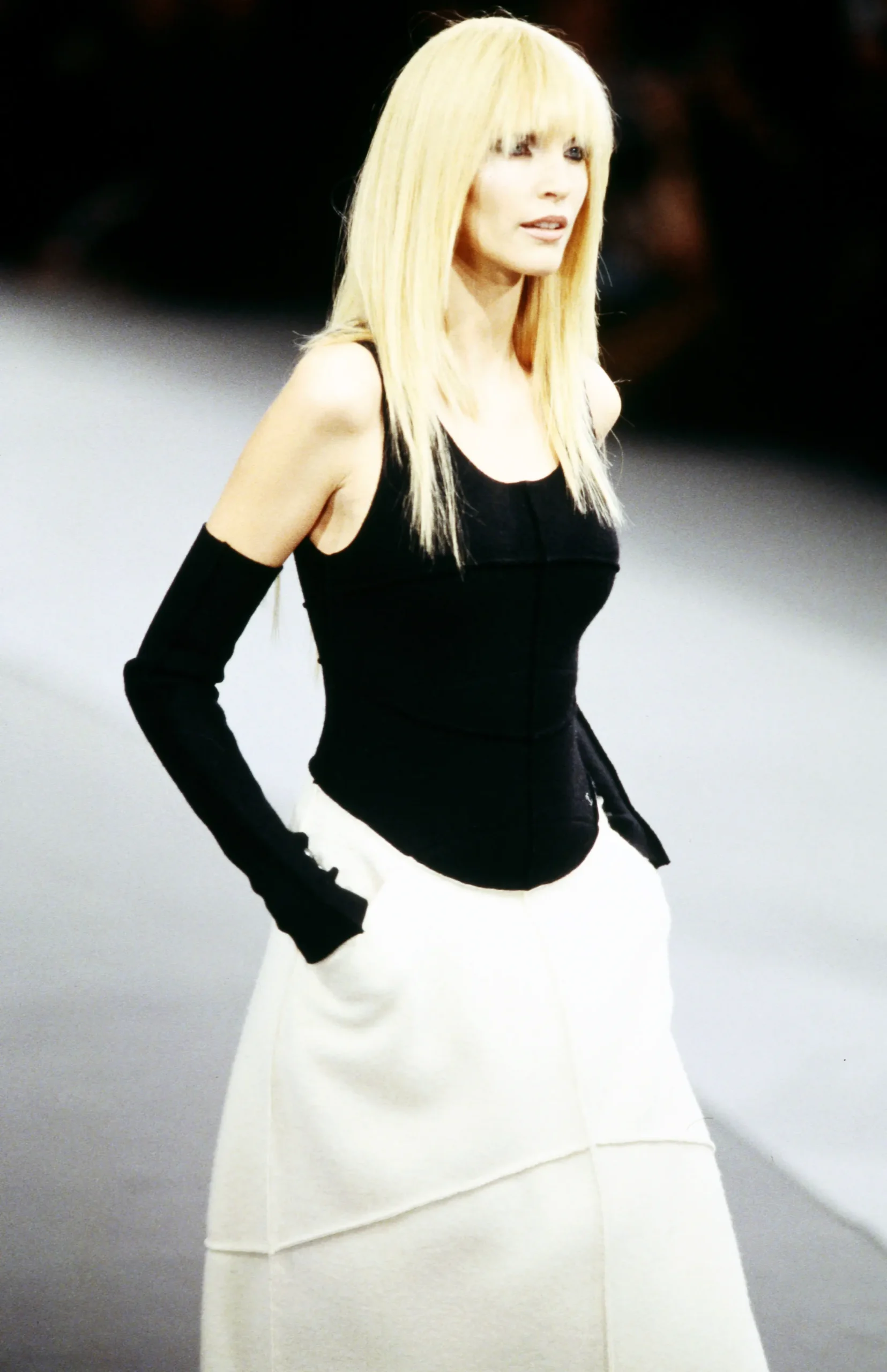
Image Credit: CHANEL
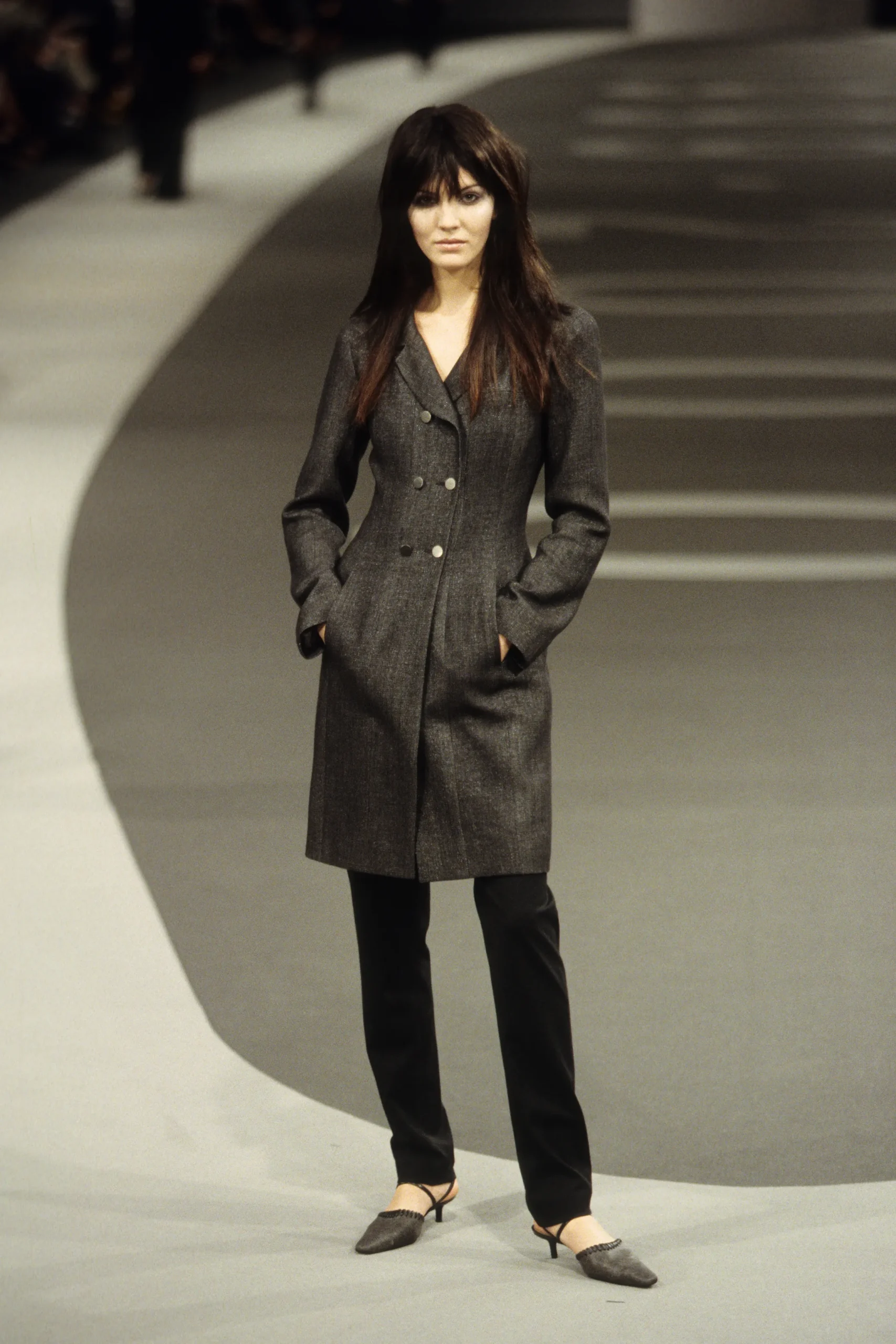
Image Credit: CHANEL
It would be easy to describe these seasons simply as “minimalist CHANEL.” But that doesn’t quite capture what Lagerfeld was doing. He wasn’t rejecting CHANEL. He was reducing it to its fundamentals. The suit remained, but it became softer. The dress remained, but it became simpler. The feminine silhouette remained, but it could be elongated, loosened or flattened.
The CHANEL codes were still there – but increasingly embedded in the construction rather than applied as decoration. This is perhaps why these collections feel so contemporary today. They anticipated an idea that has become central to fashion in the years since: luxury doesn’t necessarily have to look excessive.
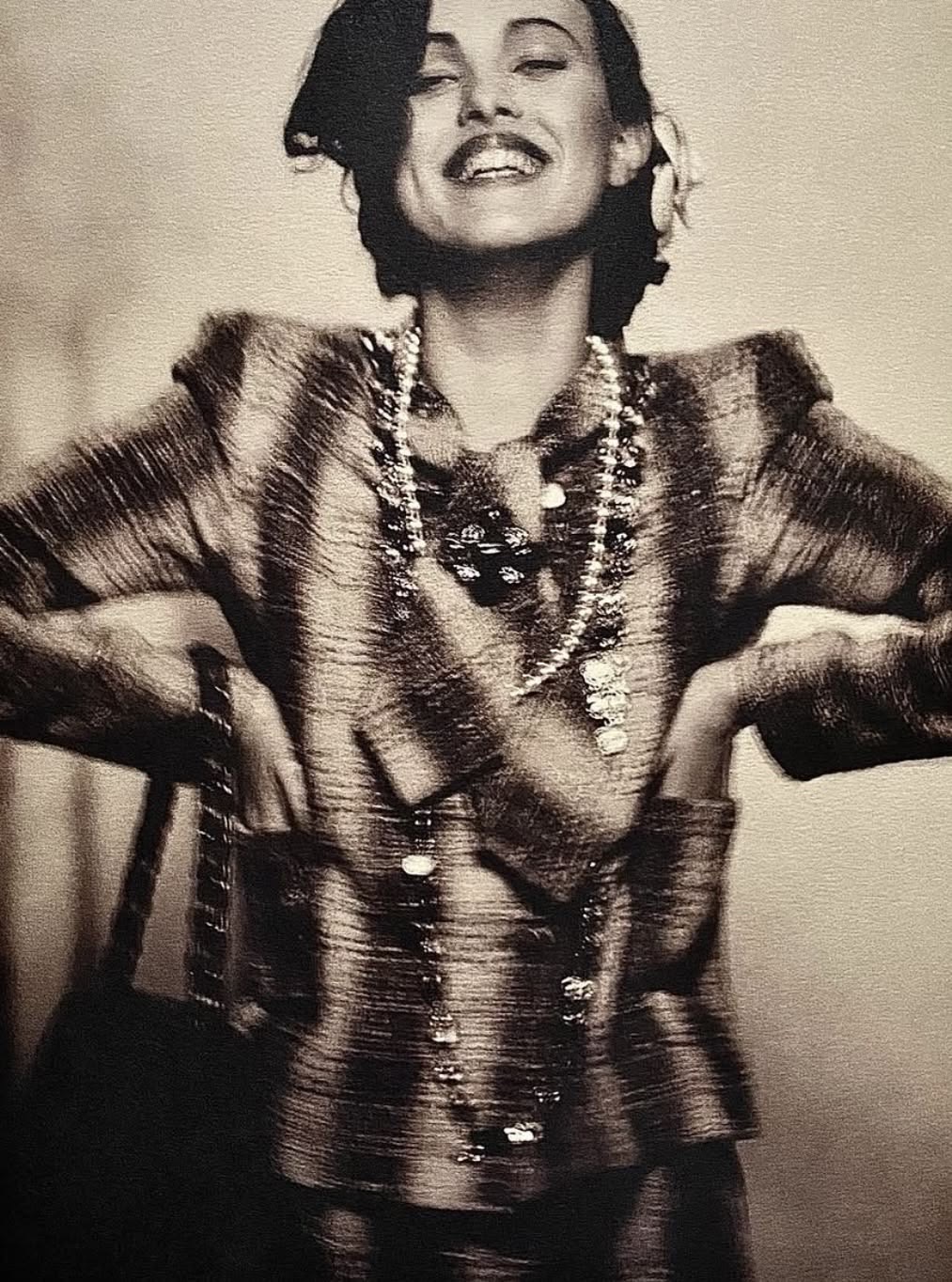
Image Credit: CHANEL
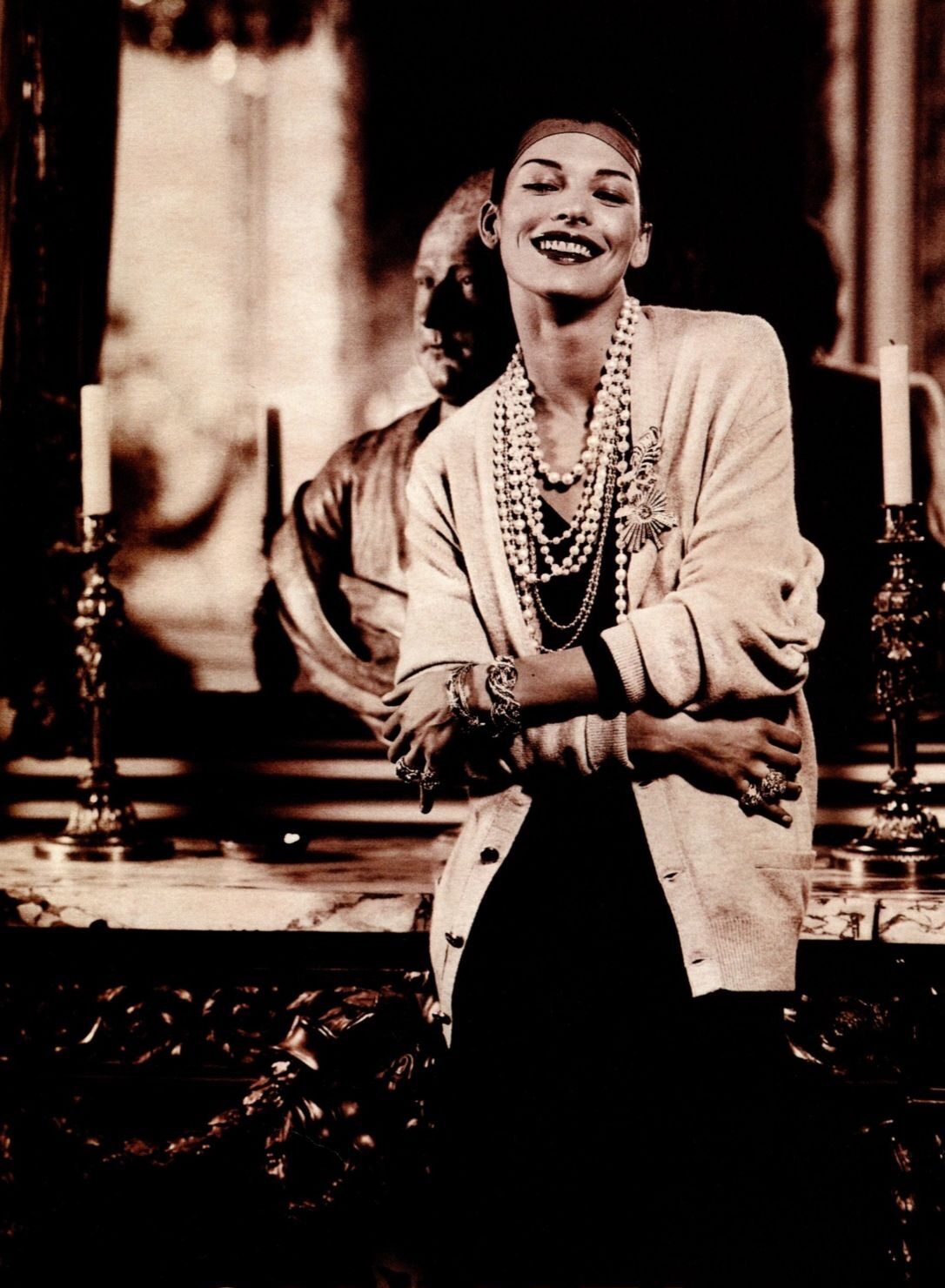
Image Credit: CHANEL
This is where the connection to Matthieu Blazy becomes compelling. Blazy has never presented himself as someone interested in simply reproducing the CHANEL archive. His stated starting point for CHANEL was remarkably direct: “CHANEL is modern.” That sentence could almost have been written across the collections of 1998 and 1999. Because the most interesting thing about Blazy’s CHANEL so far is not that he has abandoned the house codes. It is that he is making them feel less ceremonial.
Tweed becomes fluid. The camellia becomes abstract. The suit becomes something closer to a wardrobe than a costume. And clothes are allowed to move. This is precisely where the 1998–99 comparison becomes intriguing. Both designers understood that the CHANEL suit does not need to be preserved literally in order to remain powerful. It can be loosened. It can be simplified. It can become masculine. It can become almost anonymous. And somehow, it is still CHANEL.
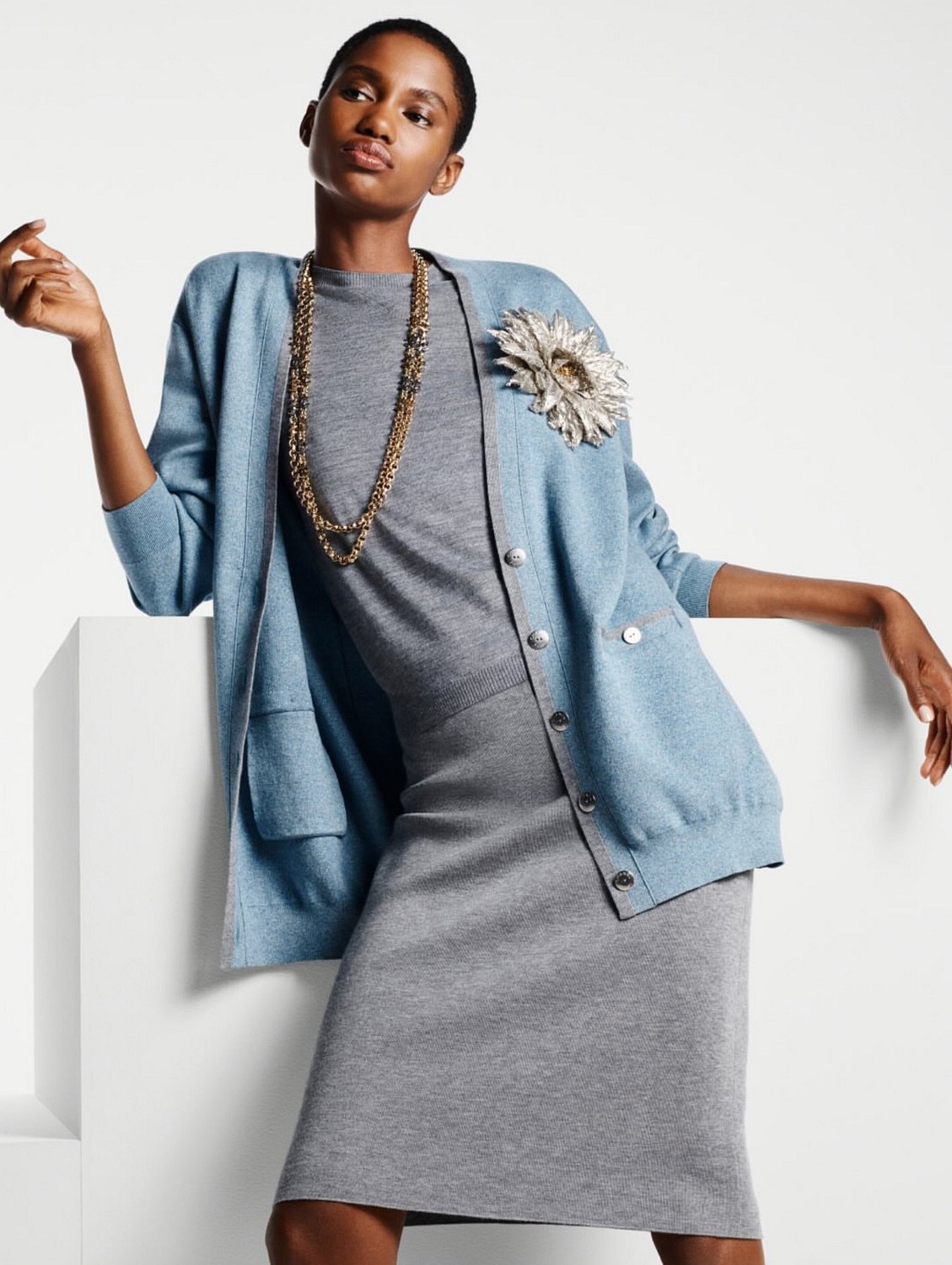
Image Credit: CHANEL
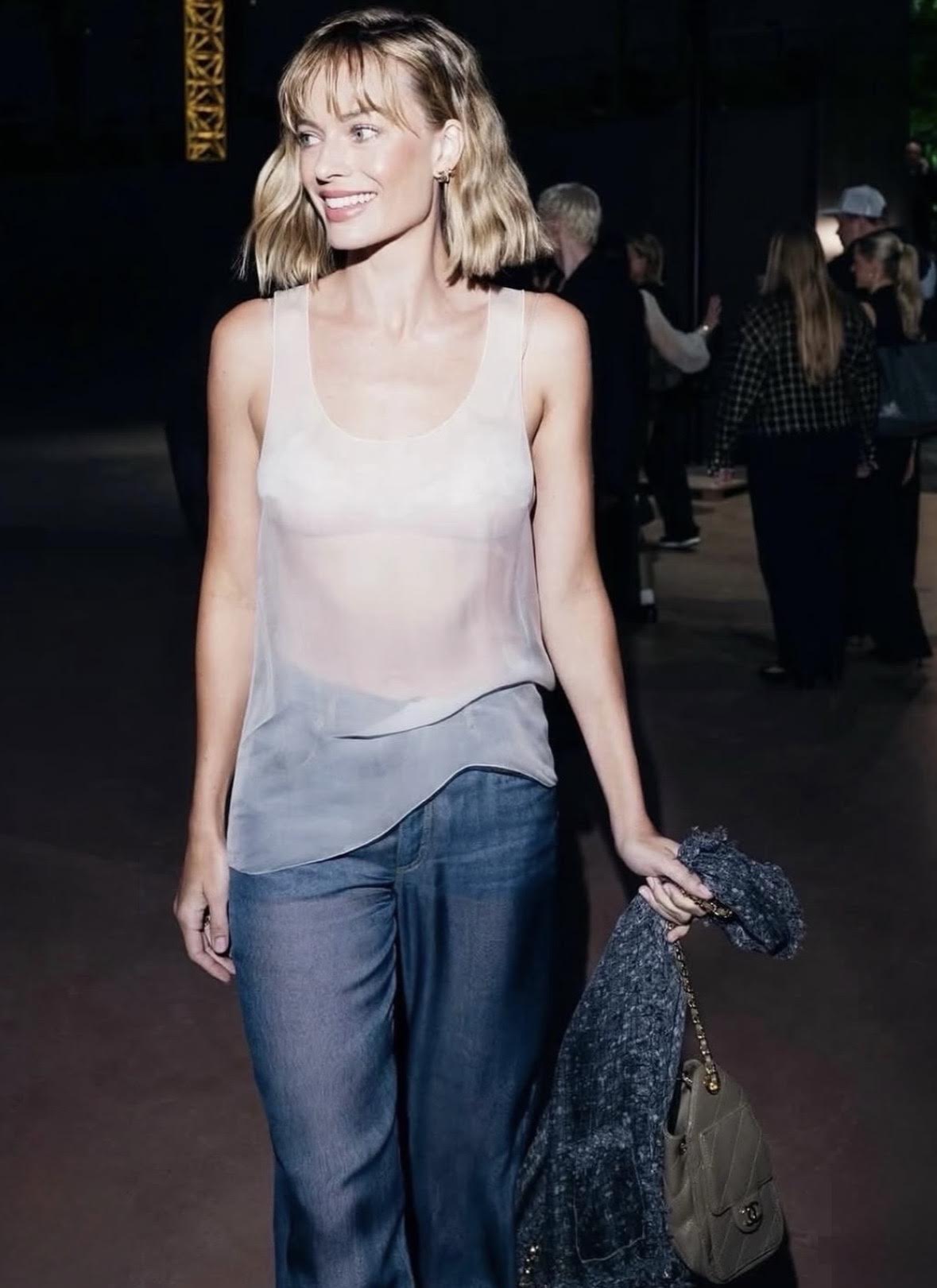
Image Credit: CHANEL
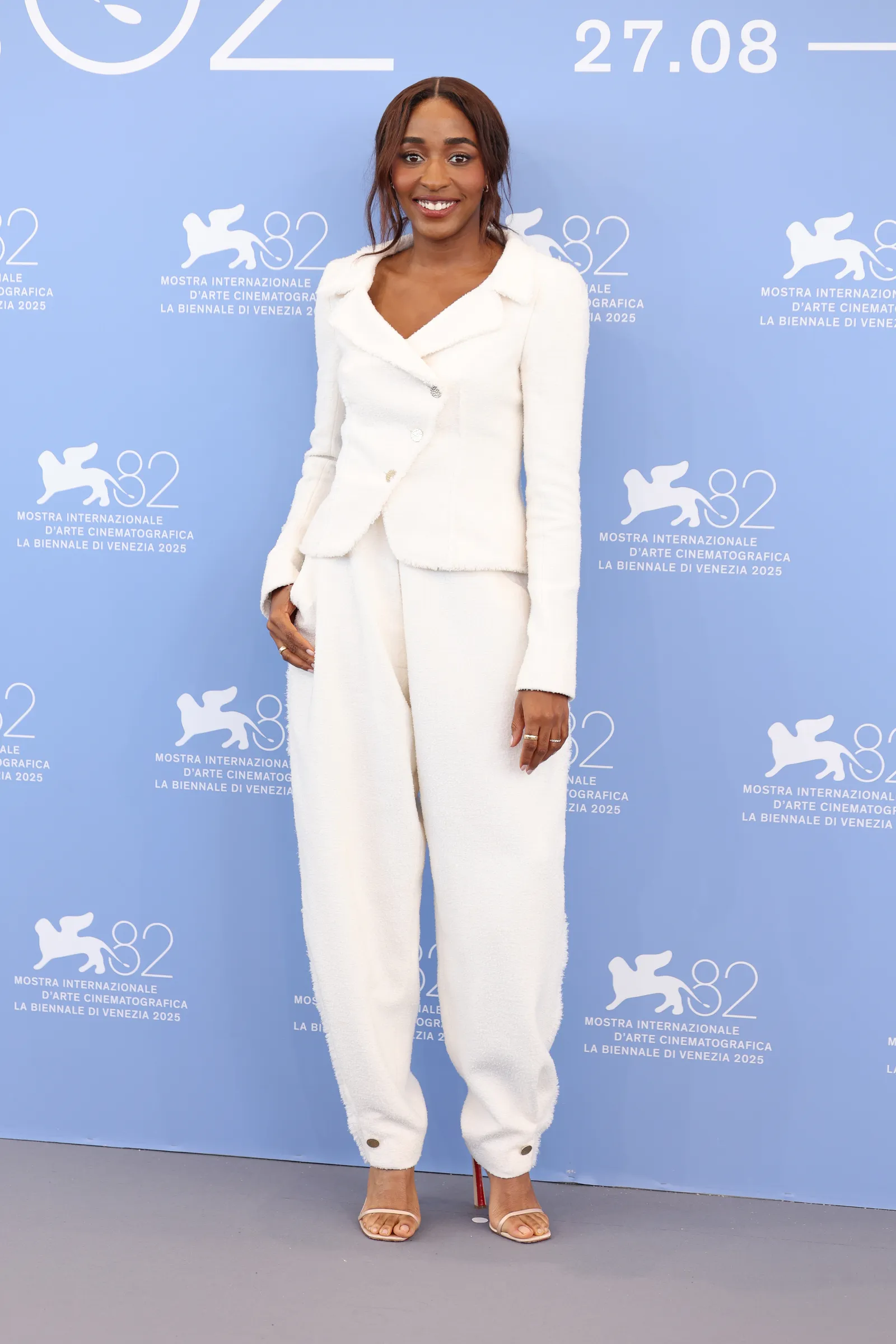
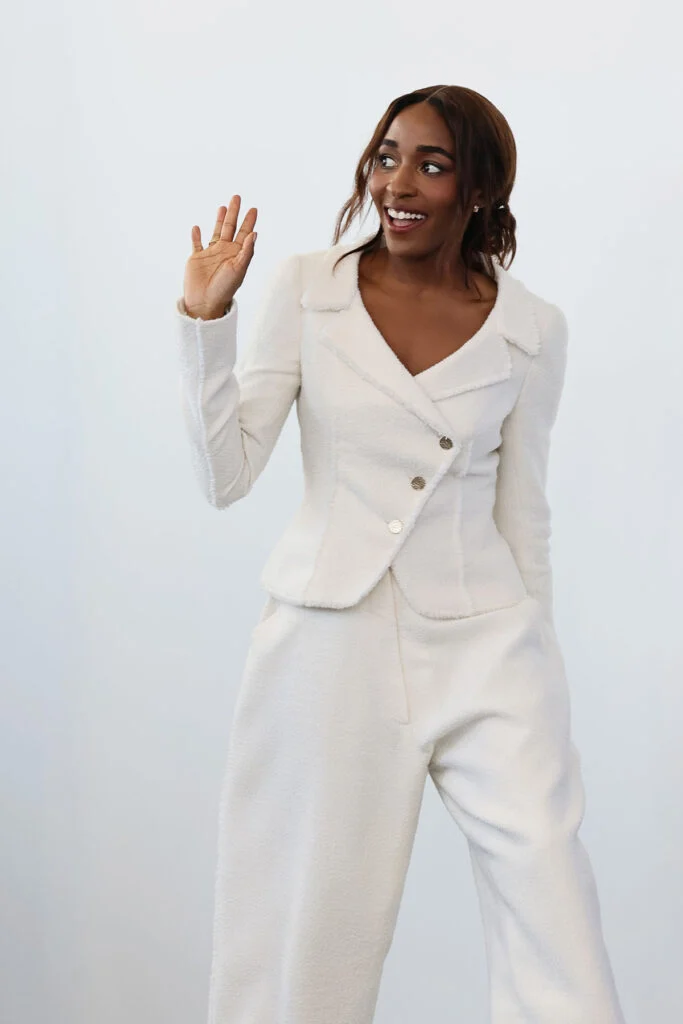
Perhaps the clearest contemporary example appeared before Blazy had even officially presented his first collection. At the 2025 Venice Film Festival, Ayo Edebiri appeared in a custom off-white CHANEL two-piece: an asymmetrical jacket paired with trousers that narrowed at the ankle. The look was immediately recognizable as CHANEL without relying on the expected CHANEL formula.
And the connection to 1999 was not merely theoretical.
The Guardian specifically identified Edebiri’s look as echoing CHANEL’s SpringSummer 1999 Couture collection, noting the similarities in the asymmetrical jackets and cuffed trousers. That makes the look especially significant. Because it was exactly the kind of CHANEL that defined the quieter years of Lagerfeld’s tenure: tailored but relaxed, recognizable but not obvious, feminine without being traditionally girlish.
This may ultimately be the most interesting relationship between Lagerfeld’s 1998–99 CHANEL and Blazy’s CHANEL.
Blazy isn’t necessarily borrowing individual garments. He appears to be borrowing a method: Look at the archive. Identify what made the house powerful. Remove what has become predictable. Keep what is essential. Then make it feel contemporary.
That was one of Lagerfeld’s greatest strengths, and it was particularly visible in these late-1990s collections. The irony is that the CHANEL of 1998 and 1999 may have been less recognizably “CHANEL” to the casual observer precisely because it was more deeply concerned with what CHANEL actually was. It wasn’t about tweed for tweed’s sake. It wasn’t about a logo. It wasn’t about making a woman look expensive. It was about giving her clothes that allowed her to move through the world with ease. And that is very close to the territory Blazy appears to be exploring.
His CHANEL is not trying to erase Karl Lagerfeld, nor is it trying to imitate him. Instead, it may be reaching back to one of the quieter moments within Lagerfeld’s own CHANEL vocabulary – a period when the house briefly proved that its identity was strong enough to survive subtraction. Nearly thirty years later, that may be exactly the lesson CHANEL needs again.
The most radical CHANEL is sometimes the CHANEL reduced to it’s simplest form.
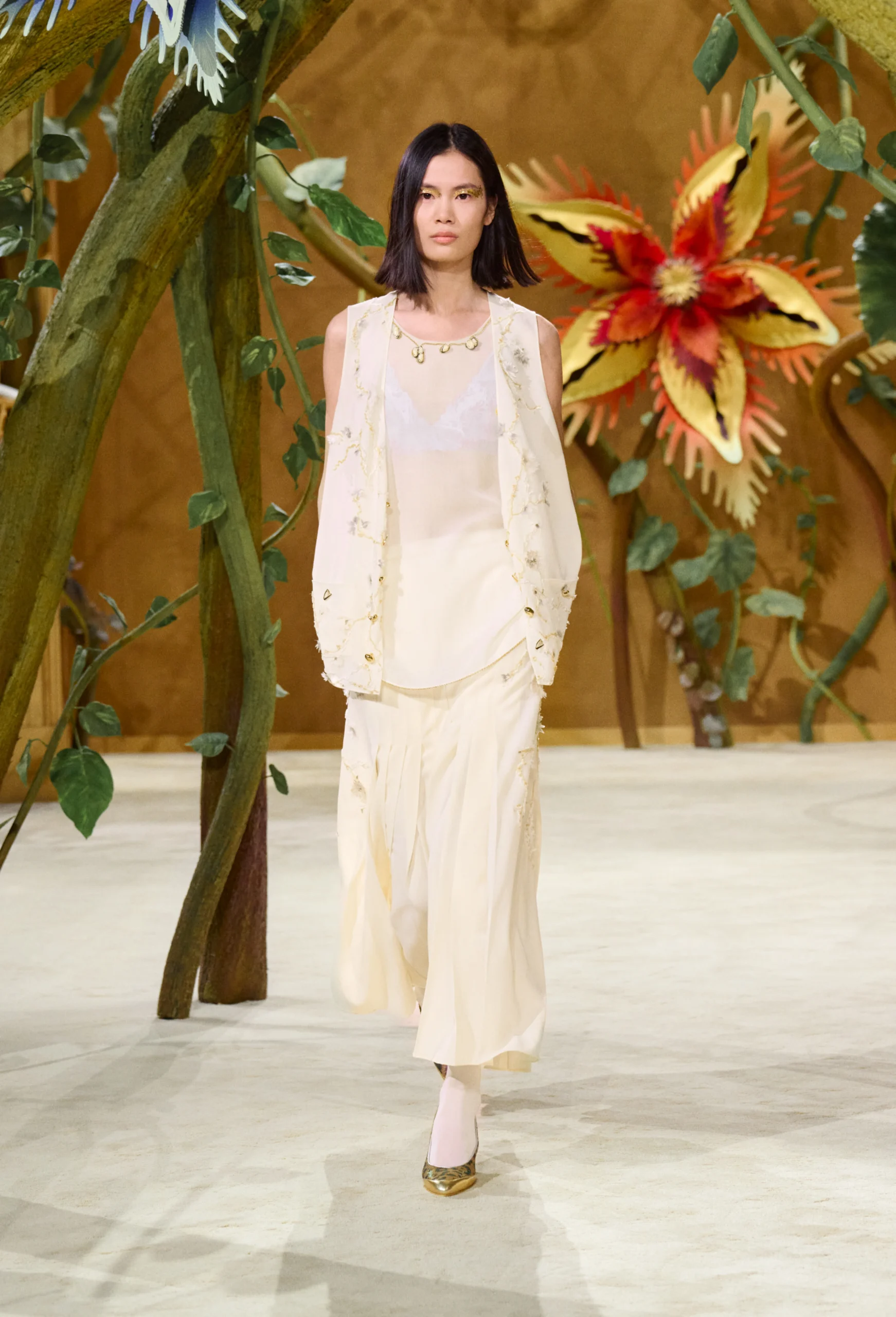
Image Credit: CHANEL
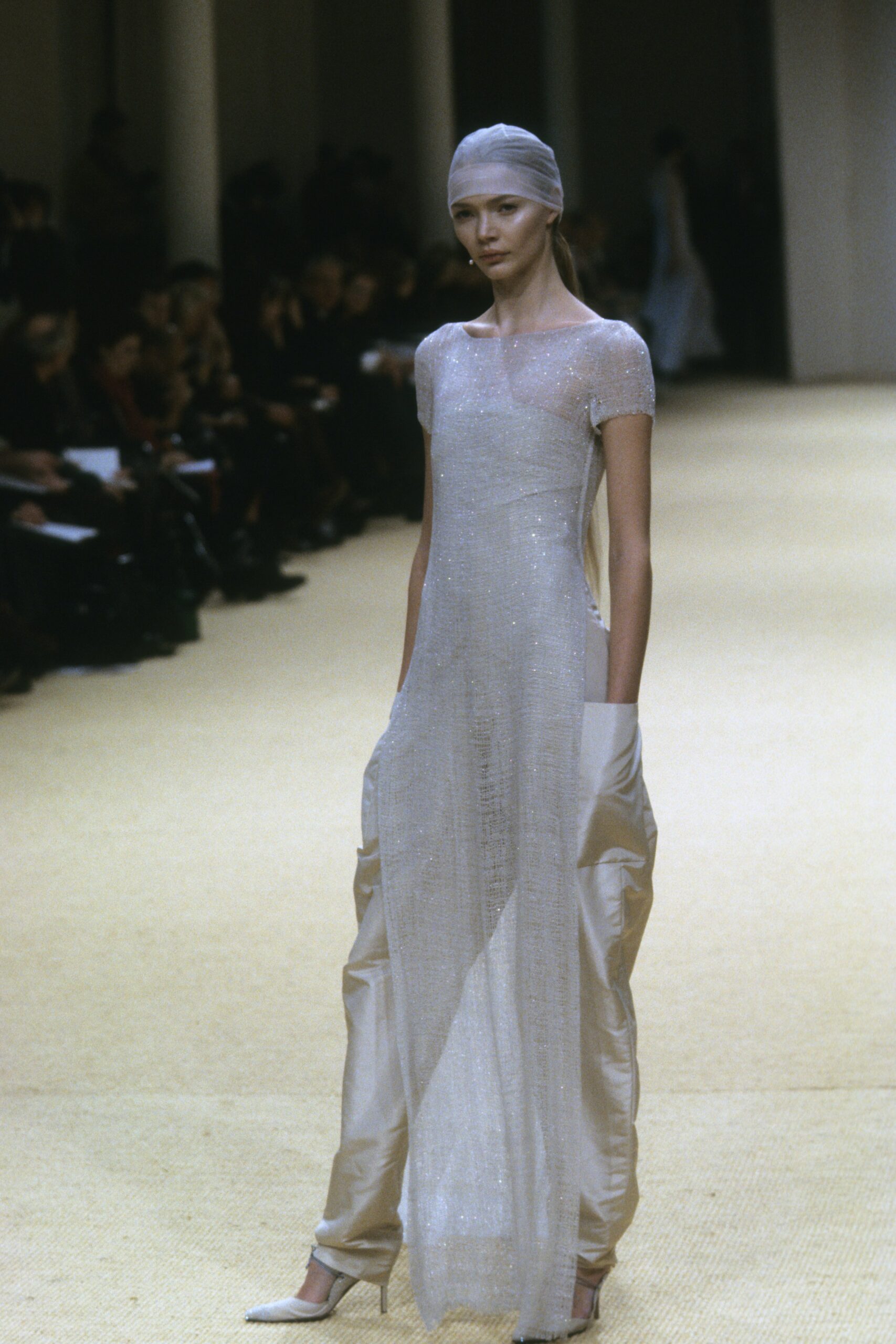
Image Credit: CHANEL