16 May 2026
CHANEL announced that its 2027 Métiers d’Art collection would be shown in the city of Rome later this year. This is hardly CHANEL’s first union with Italian culture. Let’s travel through time and landscape, connecting CHANEL & ITALY.
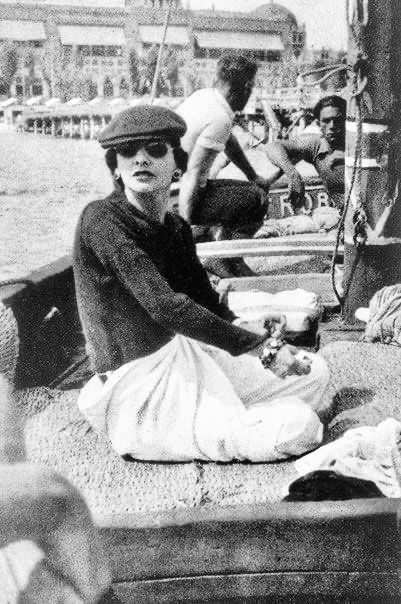
Gabrielle Chanel first set foot on Italian soil in the summer of 1920, travelling to Venice and the Lido beaches with her closest confidante, the artist-muse Misia Sert. She lets the sun darken her skin – then considered scandalosa – and discovers a new ease in her body that will later translate into the very spirit of her sportswear. Italy enters Chanel not as a backdrop, but as a revelation. Venice’s light, the languor of the Lido, and the Byzantine grandeur of its basilicas imprint themselves on her visual memory. She will return again and again.
CHANEL
CHANEL
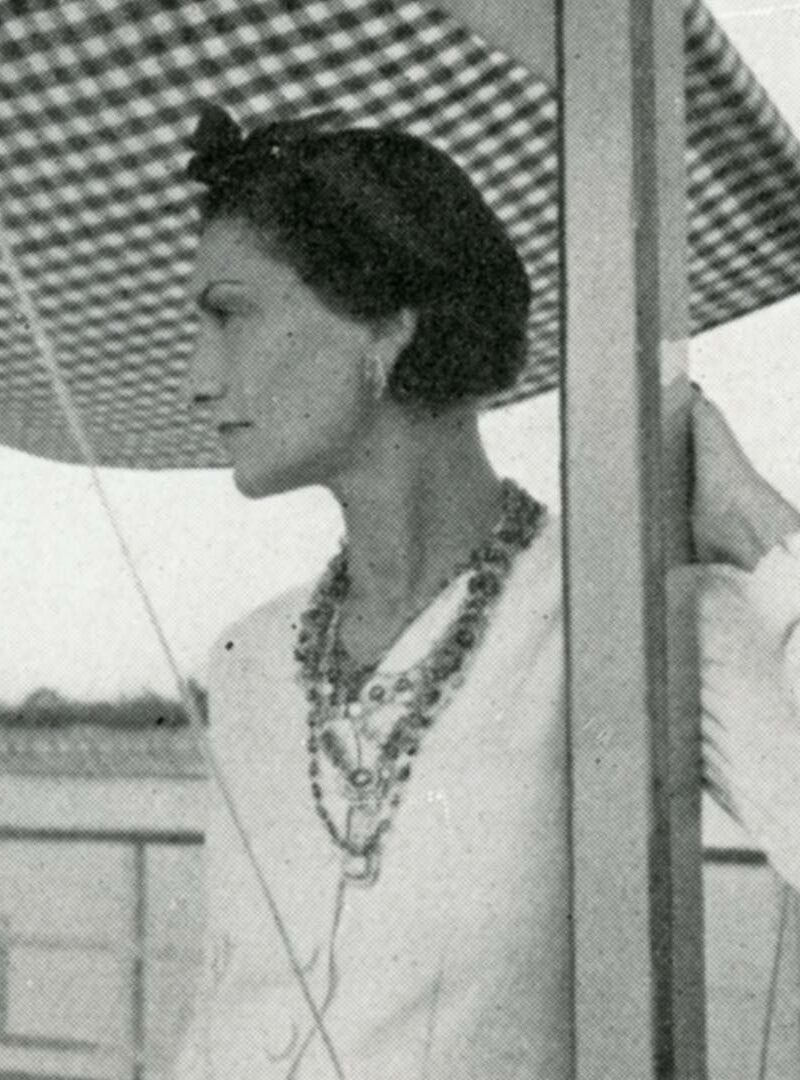
Accompanied by José María Sert – the muralist husband of Misia – Chanel travels through Rome and Venice, standing transfixed before the gold-mosaiced apses of ancient churches and the theatrical grandeur of Baroque architecture. The templates of antiquity, the adoration of gold, the heaviness of stone and light: all of it settles organically into her stylistic vocabulary. Chanel later recalls being in awe of the beauty of the churches and the magnificence of Baroque art. The Roman gold – its warmth, its weight, its spiritual authority – will echo throughout her jewellery for decades.
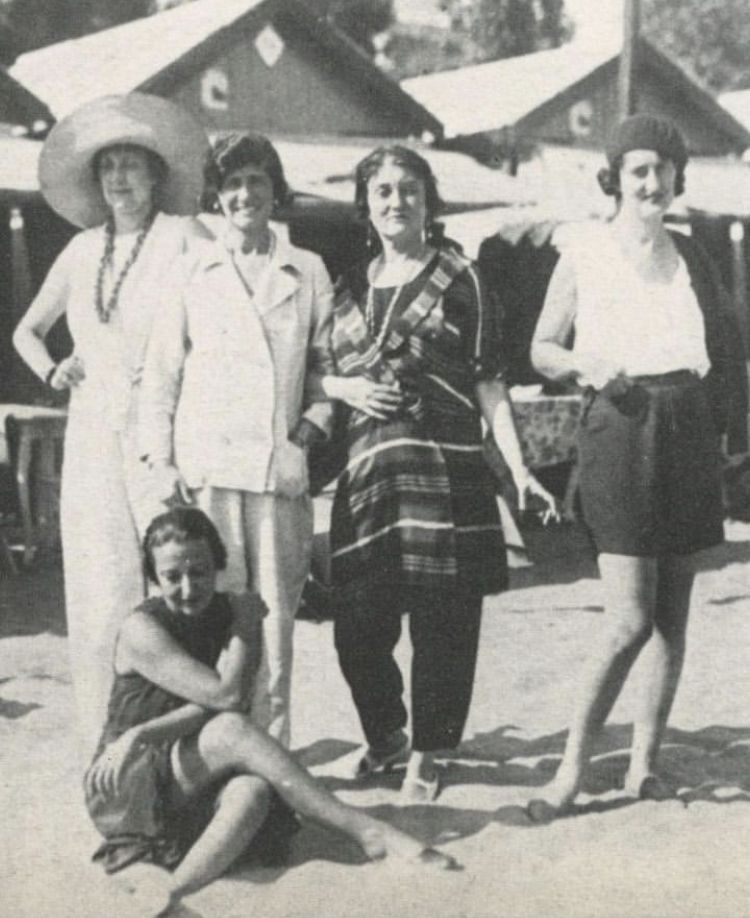
Chanel in Venice, 1923
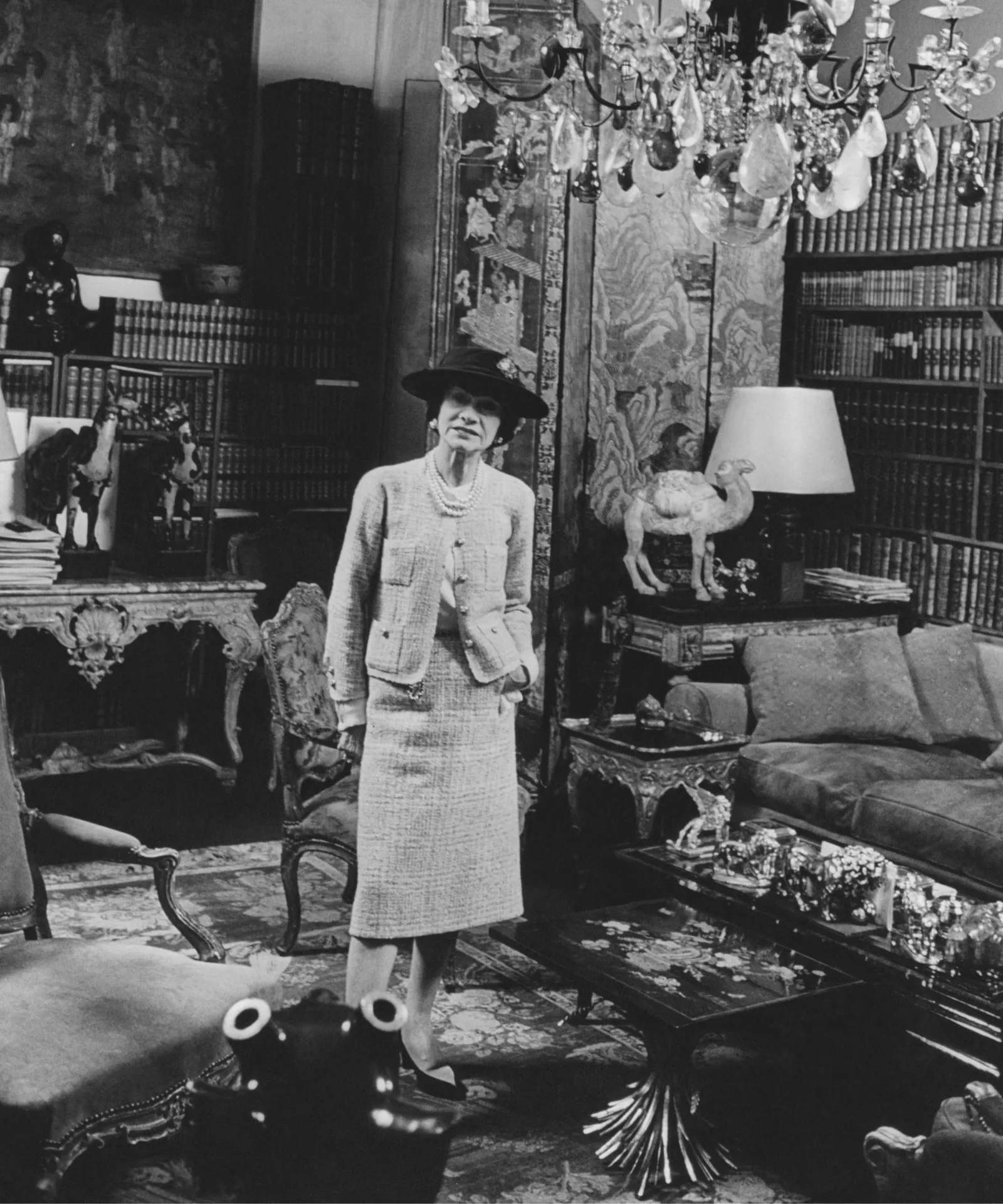
Chanel's baroque style 31 Rue Cambon apartment
At a party hosted by Cole and Linda Porter in Venice, Chanel meets Duke Fulco di Verdura – a Sicilian aristocrat of wild imagination, dazzling wit, and a painter’s eye for colour. He follows the social seasons of Europe, and within two years, Chanel, having recognized his true gift, has hired him as a textile designer. Verdura brought the Italian Renaissance to the rue Cambon: his mind steeped in the Palermo of his childhood, in Baroque palazzos, in Byzantine mosaics glittering with mismatched gems.
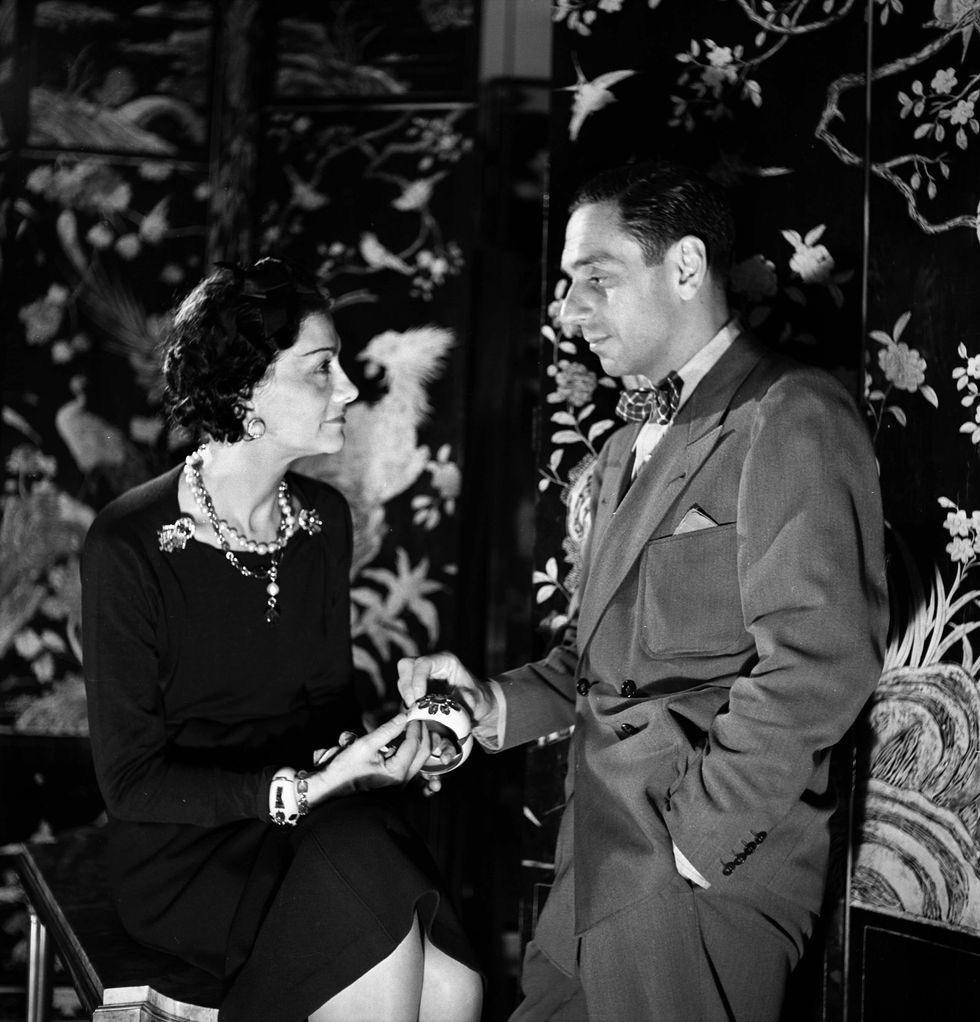
Chanel and Fulco di Verdura. Image by Lipnitzki
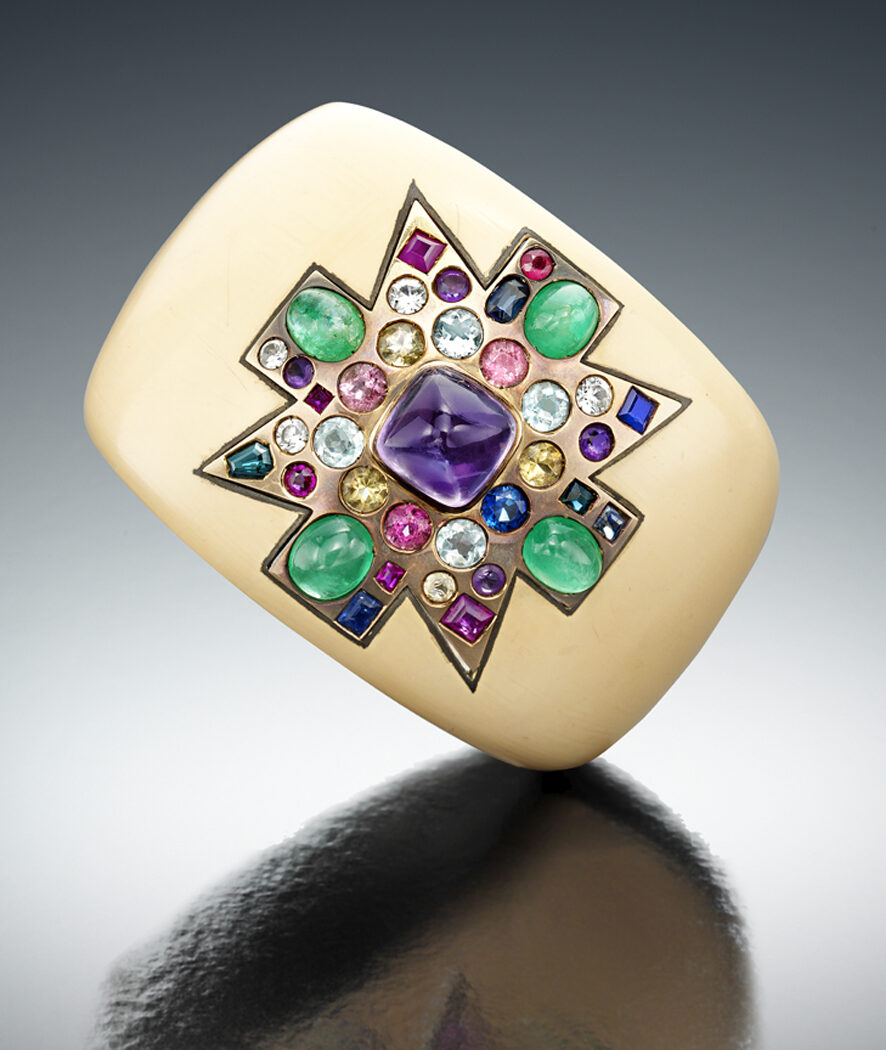
Verdura for CHANEL Cuff from the ‘30s. Image credit: nationaljeweler.com
Chanel hands Verdura the jewels given to her by former lovers – Grand Duke Dmitri, the Duke of Westminster – and asks him to remake them. The result shatters the platinum-and-diamond geometry of Art Deco. Verdura designs the Theodora and Ravenna Brooches: gold, mismatched cabochon gems, Byzantine mosaics reborn as wearable art. Diana Vreeland acquires the first two pieces on sight. The pair travel together to the Basilica of San Vitale in Ravenna, where the sixth-century mosaic portrait of Empress Theodora stops them cold. The pilgrimage produces Chanel’s most enduring jewellery icons: the Maltese Cross Cuffs – white enamel, coloured stones, the cross of the Knights of Malta – which Chanel wears almost every day until her death.
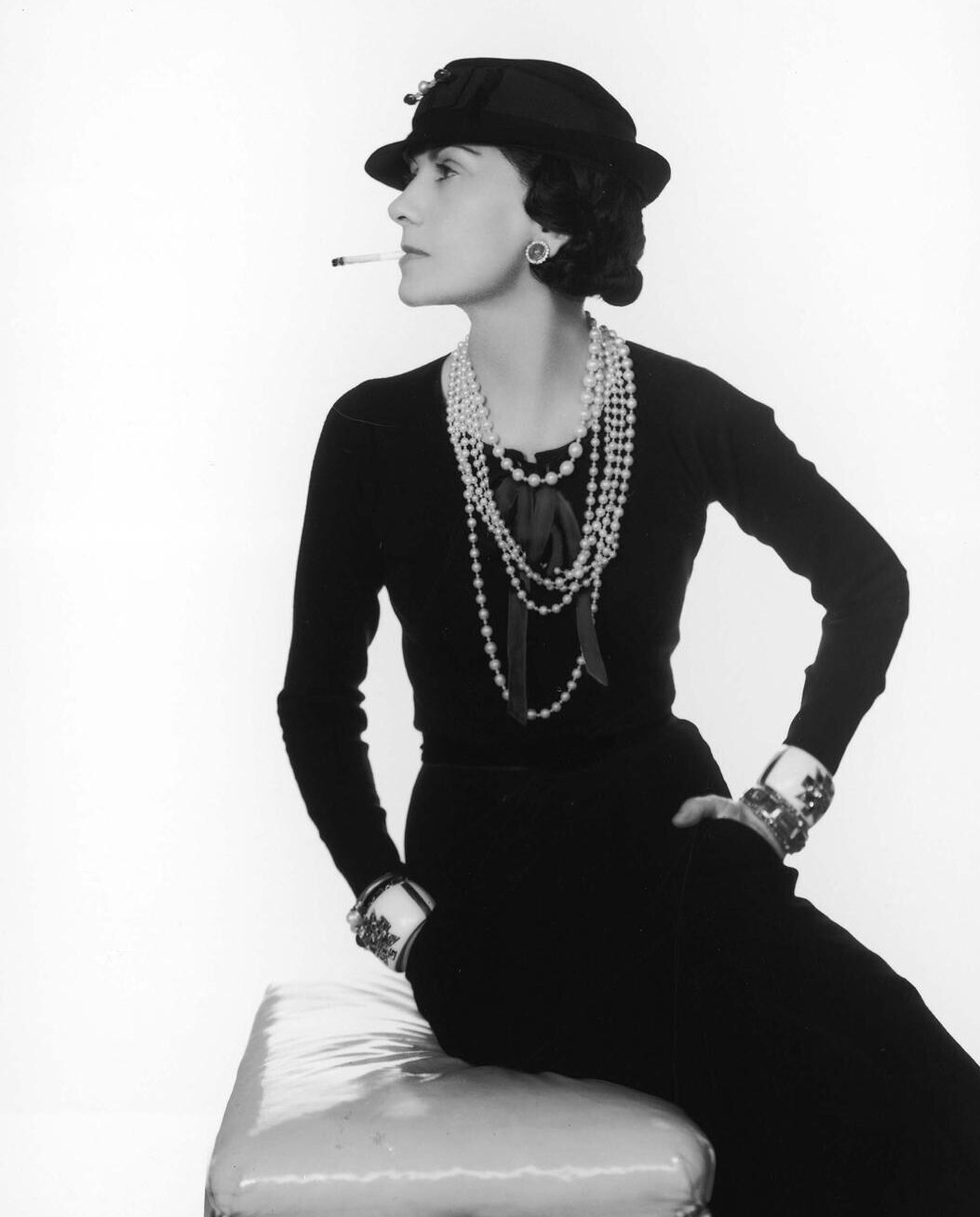
Coco Chanel, 1935. Image by Man Ray
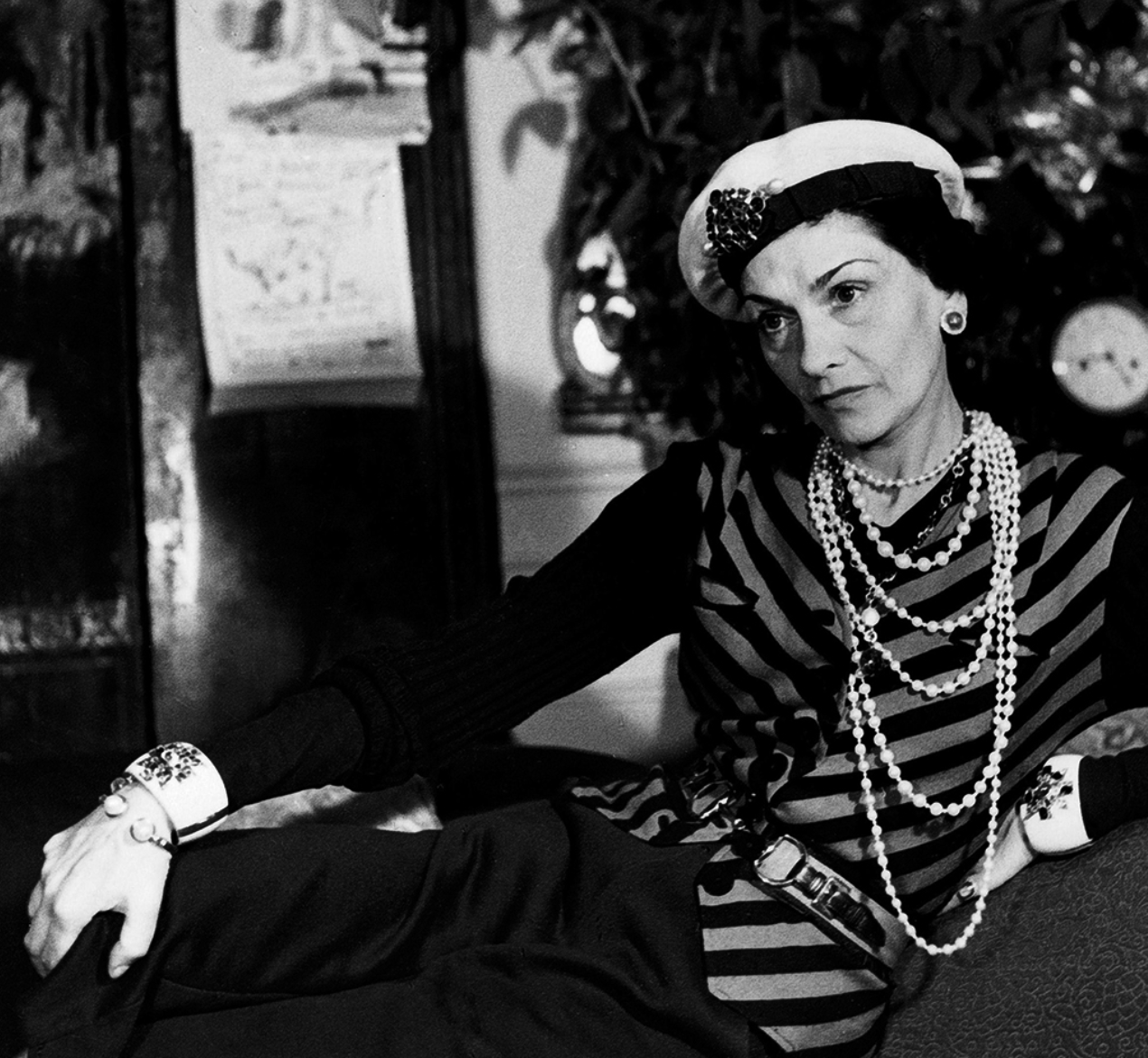
CHANEL
A young Luchino Visconti, heir to one of Italy’s most aristocratic families and not yet a filmmaker, arrives in Paris at thirty years old. He meets Chanel and is stunned by what he later describes as her ‘feminine beauty, masculine intelligence, and outstanding energy.’ He invites her to Italy; she introduces him to Jean Renoir. Chanel is instrumental in opening the door of cinema to Visconti – she persuades Renoir to allow the young Italian to observe a film shoot. Renoir hires Visconti as an assistant, and the encounter decides his vocation. Italy’s greatest post-war filmmaker is, in part, a Chanel creation.
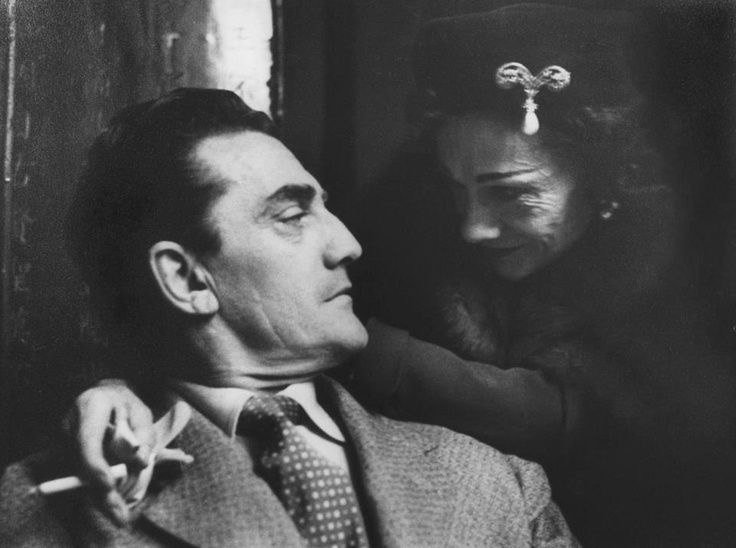
Coco Chanel and Luchino Visconti. Image Credit: CHANEL
Visconti, now the celebrated director of La Terra Trema, Senso, and Rocco and His Brothers, calls on Chanel again. He is directing a segment of the anthology film Boccaccio ’70 – a sly satire of Italian society – and he needs costumes for his leading actress: a young Romy Schneider, still famous as the fairy-tale Sissi. ‘Visconti took me to her house to choose my dresses,’ Romy later recalled. ‘And when I put on my first Chanel, I realised that I would never want anything else again.’ Chanel does not merely dress Romy, she distils the Chanel essence into her: the tweed tailleur, the two-tone shoe, the pearl necklace. There are three people who have changed my life, Romy would later say: Alain, Visconti, and Coco Chanel.
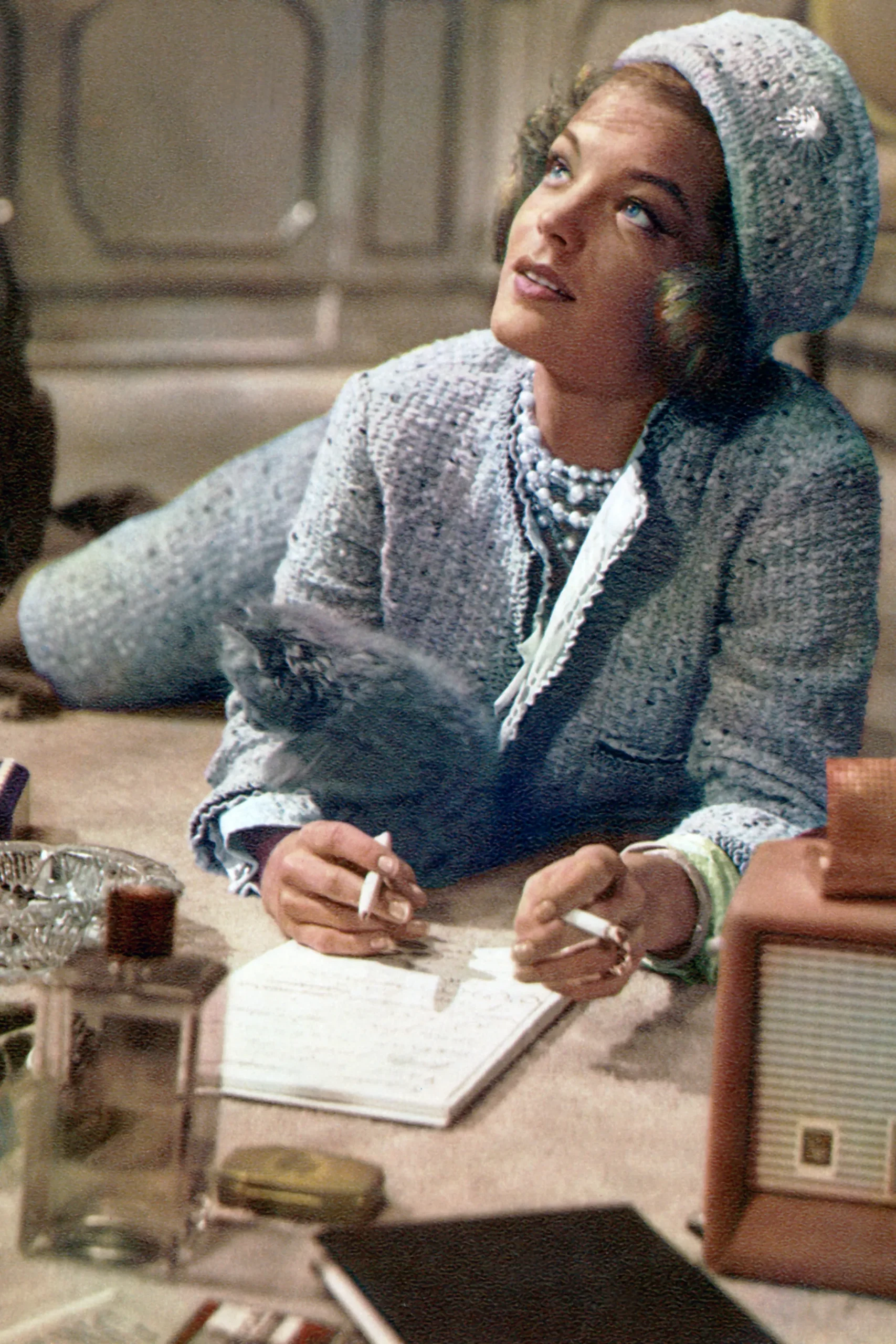
Romy Schneider, wearing CHANEL in Boccaccio '70
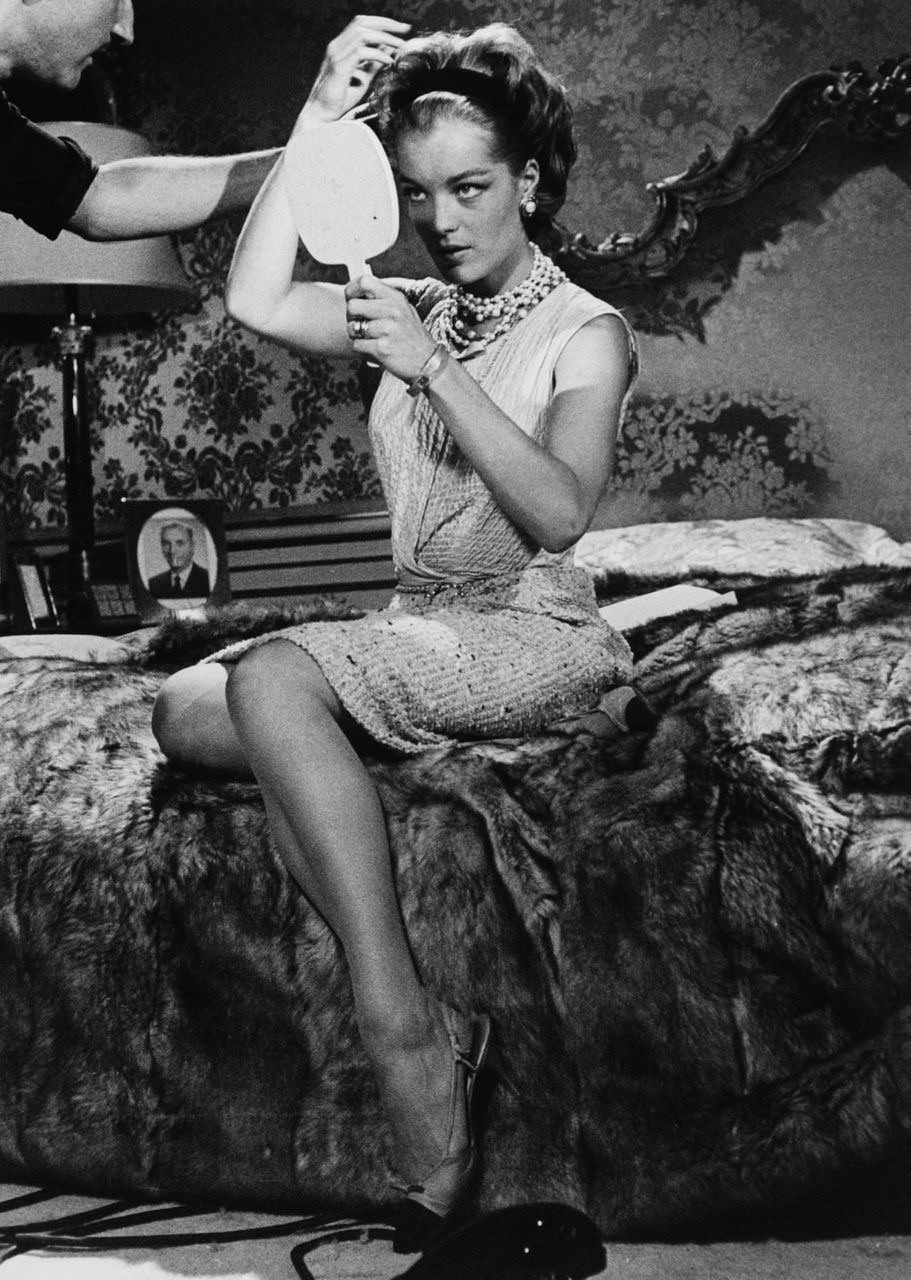
Romy Schneider, wearing CHANEL in Boccaccio '70
Franco Zeffirelli – himself a close friend of Gabrielle Chanel, introduced to her by Luchino Visconti – directs Callas Forever. He turns to Karl Lagerfeld to dress his lead actress Fanny Ardant. Lagerfeld designs all 22 of her outfits from scratch, paying deliberate attention to not copying a single garment Callas herself would have worn. The circle closes: Visconti introduced Chanel to Zeffirelli, Chanel’s friendship shaped Zeffirelli, and decades later, Zeffirelli calls on Chanel’s house to dress his film about Italy’s greatest voice.
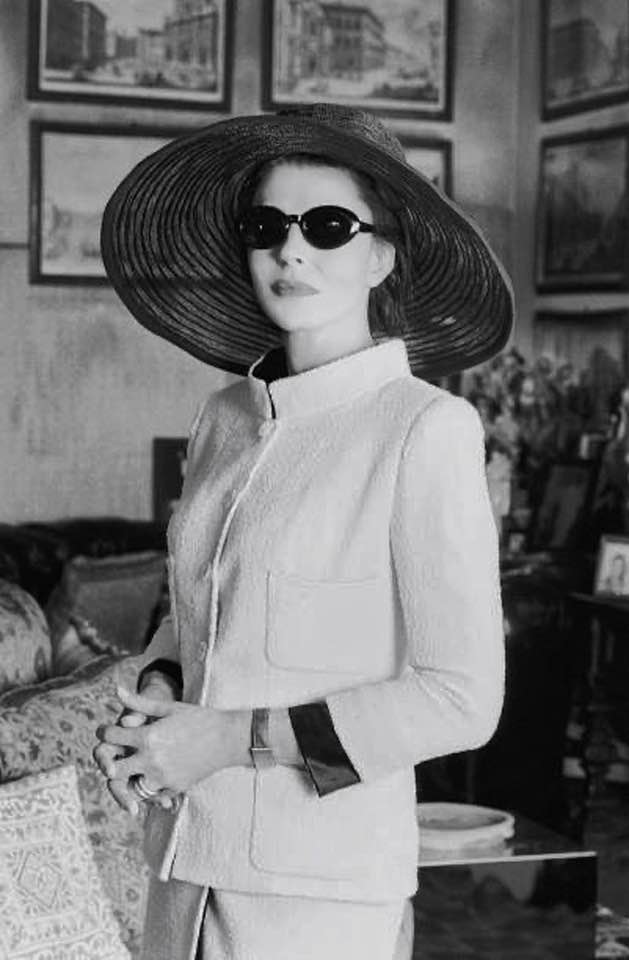
Fanny Ardent fittings for "Callas Forever"
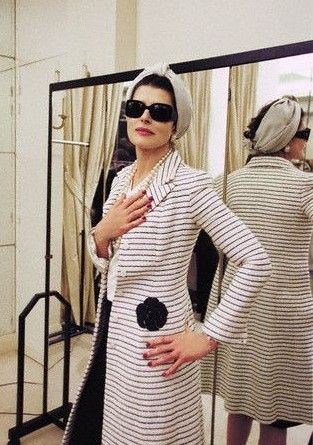
Fanny Ardent fittings for "Callas Forever"
Karl Lagerfeld brings the Cruise 2009/10 collection to the very shore where Gabrielle Chanel first darkened her skin in the summer of 1920. The show is staged at sunset on the boardwalk of the Hotel Excelsior on Venice’s Lido – steps from the sea, the horizon turning gold. Lagerfeld chose the setting deliberately: Coco made yearly visits to this beach in the 1920s, and the collection is an open homage to her time here. The collection reads as a love letter to Venice in its entirety: striped knitwear and gondolier shirts echo Coco’s early Breton designs; sunglasses are reimagined as hand-held Venetian carnival masks; gold and Byzantine red appear in bouclé suits; lace dresses pay tribute to the lacework of nearby Burano. The atmosphere is lifted directly from Visconti’s 1971 film Death in Venice, shot on this same strip of sand. It is a circle within a circle: Chanel, Venice, Visconti, and the Lido, all converging once more.
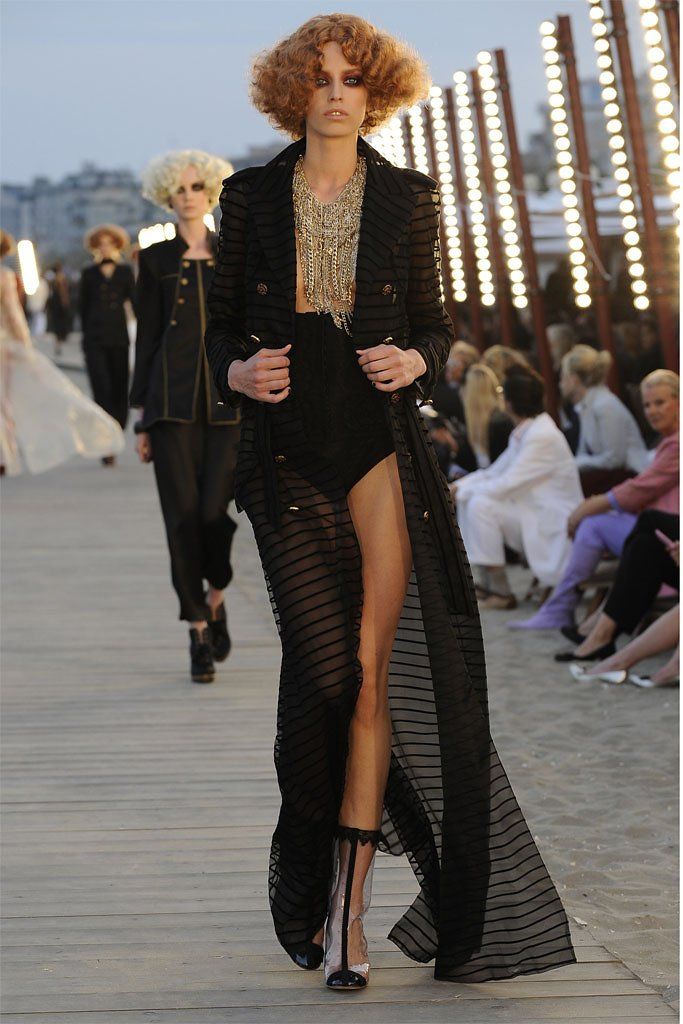
Image Credit: CHANEL
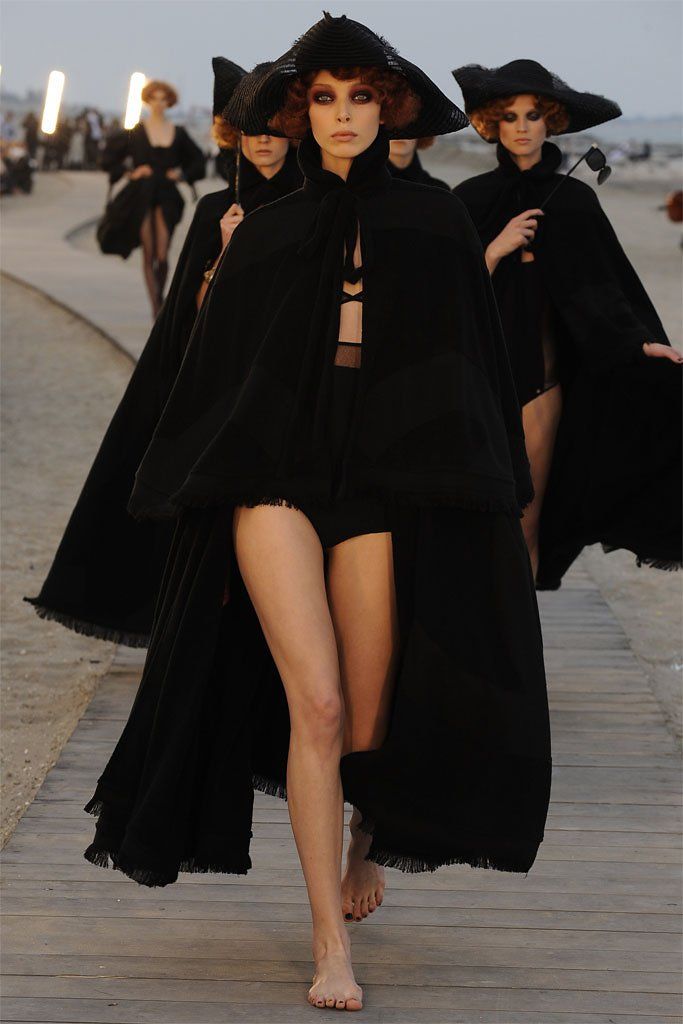
Image Credit: CHANEL
Karl Lagerfeld stages the Métiers d’Art 2015/16 collection – titled Paris in Rome – at Stage 5 of Cinecittà, the studio complex that gave the world Fellini’s La Dolce Vita. He transforms the legendary Roman sound stage into an imaginary Parisian boulevard: café terraces, metro entrances, and film sets collide in a love letter written in two languages. Kristen Stewart and Geraldine Chaplin star in Once and Forever, a short film shot within this suspended theatrical universe. The collection draws from the Byzantine, the Baroque, and the Roman – all the things Gabrielle Chanel first saw in those Roman churches a century earlier.

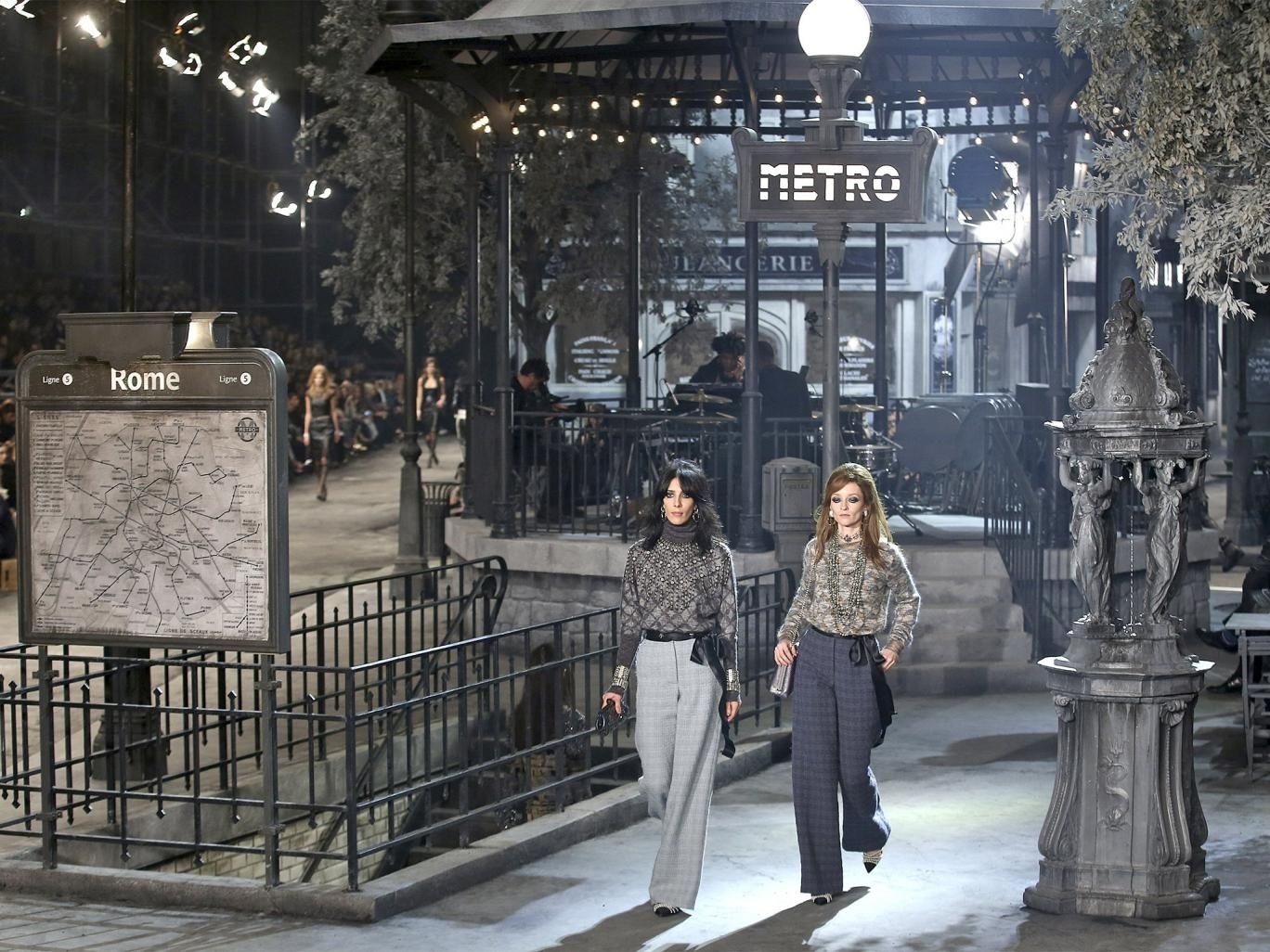
Image Credit: CHANEL
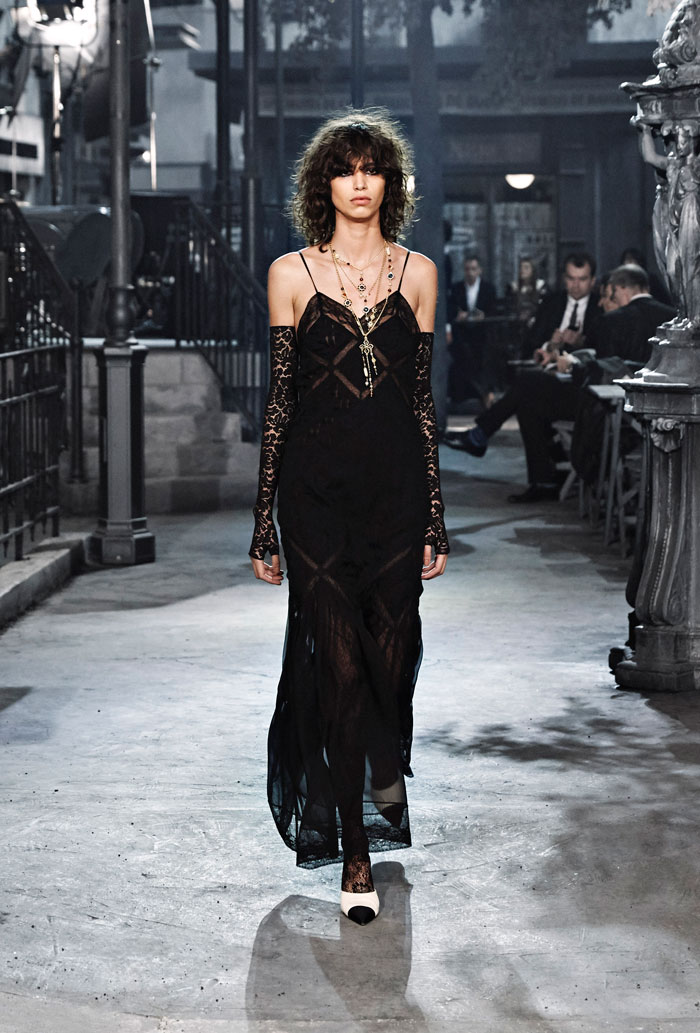
Image Credit: CHANEL
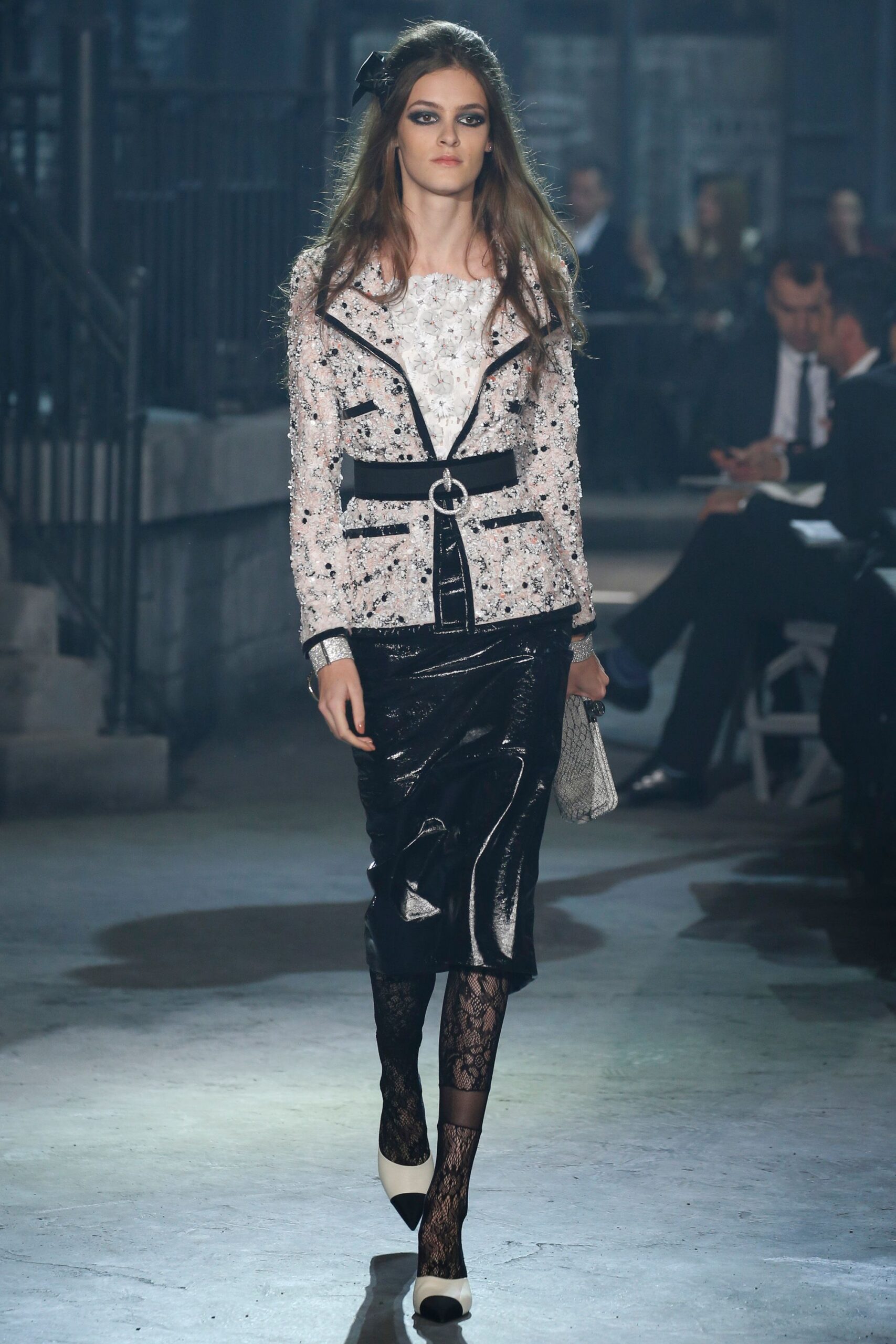
Image Credit: CHANEL
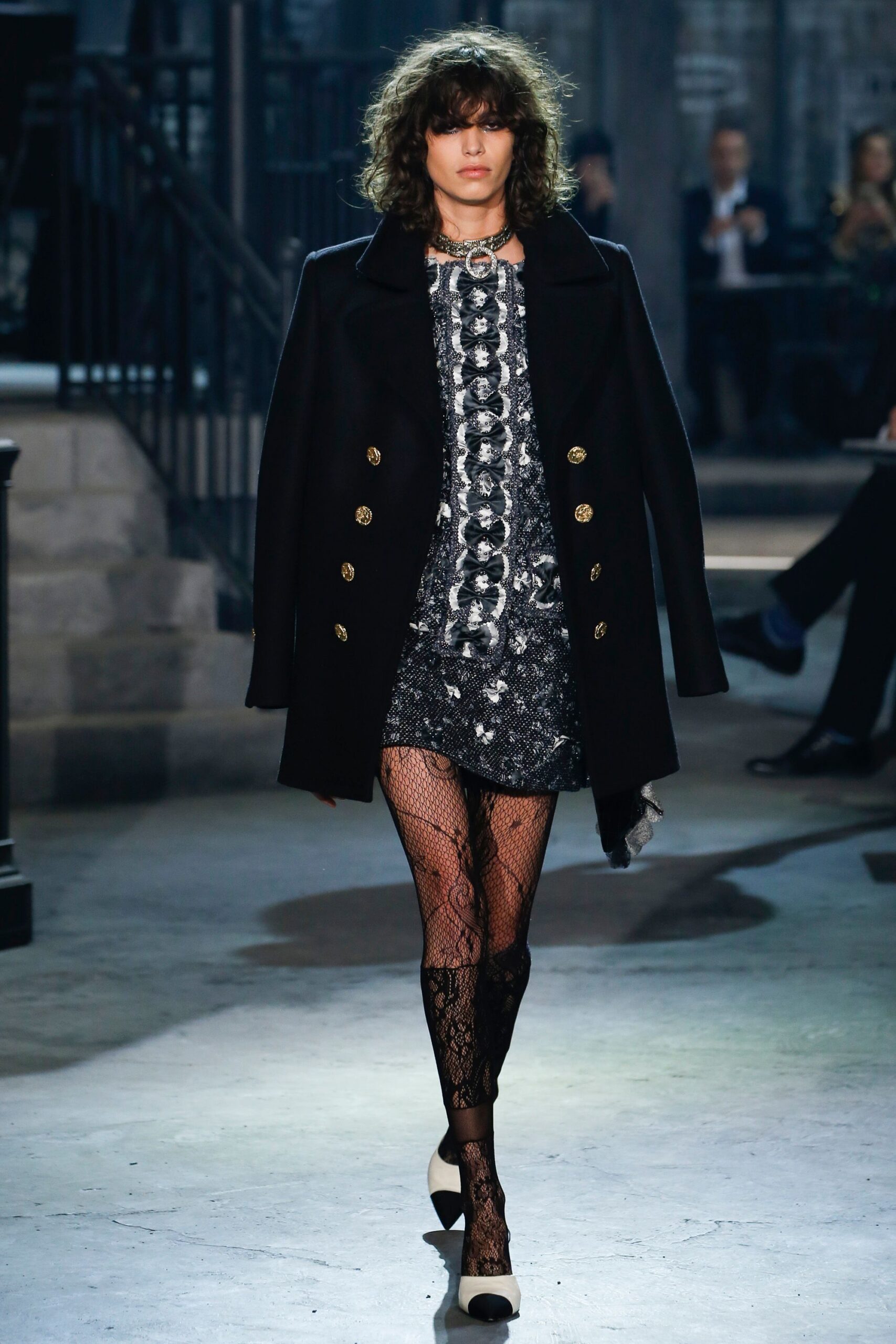
Image Credit: CHANEL
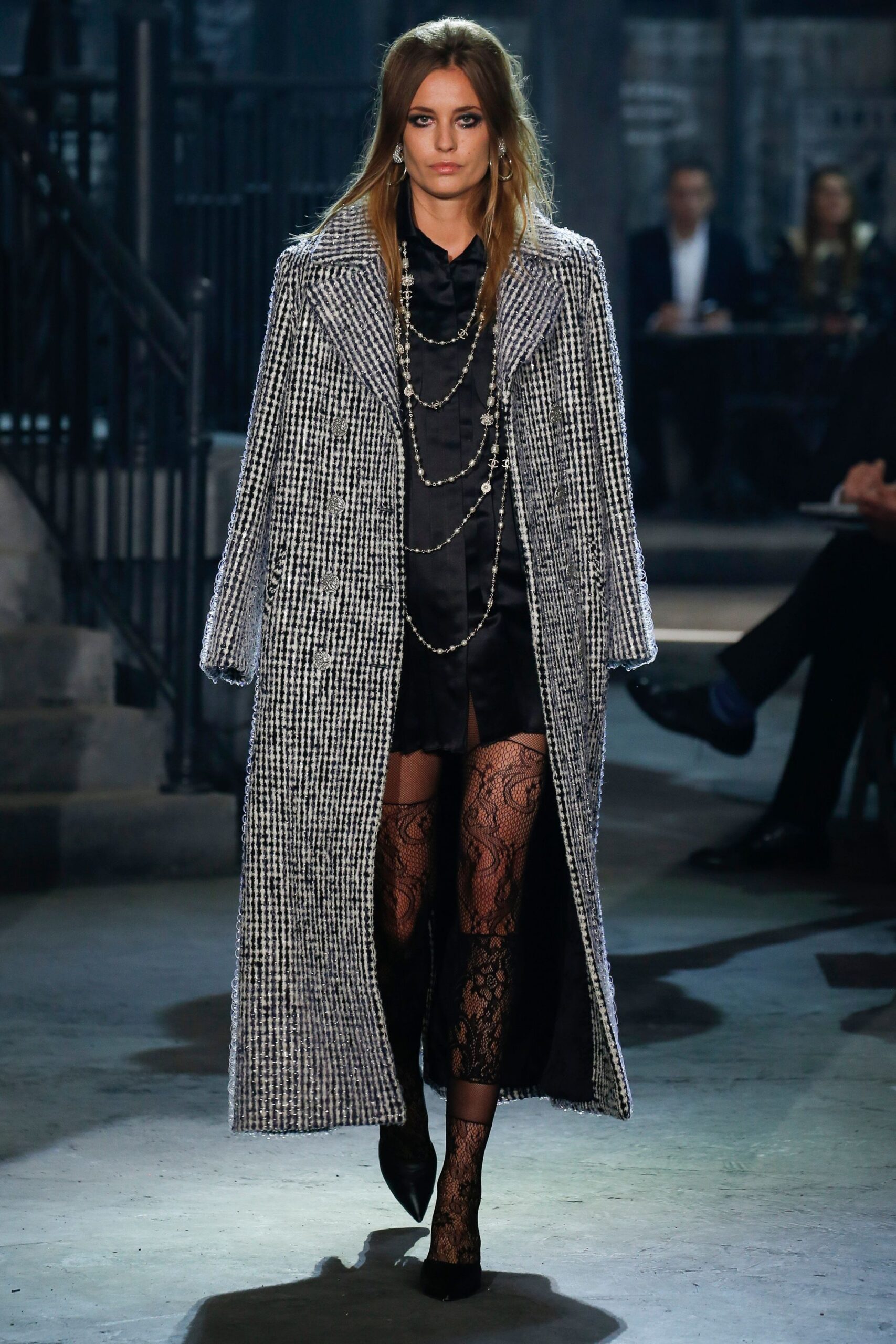
Image Credit: CHANEL
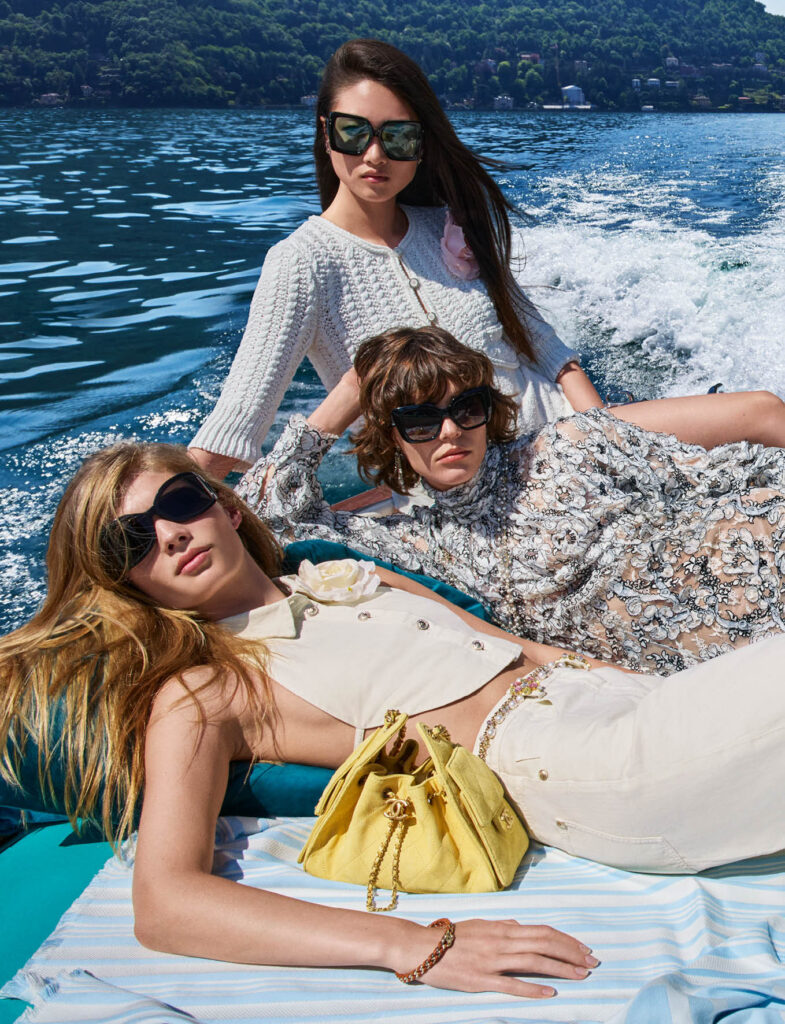
CHANEL presents the Cruise 2025/26 collection on the terrace of Villa d’Este – a Renaissance palace on the shores of Lake Como. Keira Knightley and Margaret Qualley attend; director Sofia Coppola creates a short film. The collection evokes the glamour of old Hollywood summers in Italy: silk headscarves, white tweed coats, handbags shaped like gelato tubs. Coppola’s film is about ‘that version of yourself when you get away’ – time suspended on an Italian lake. The spirit of the 1920 Lido lives on, unchanged.
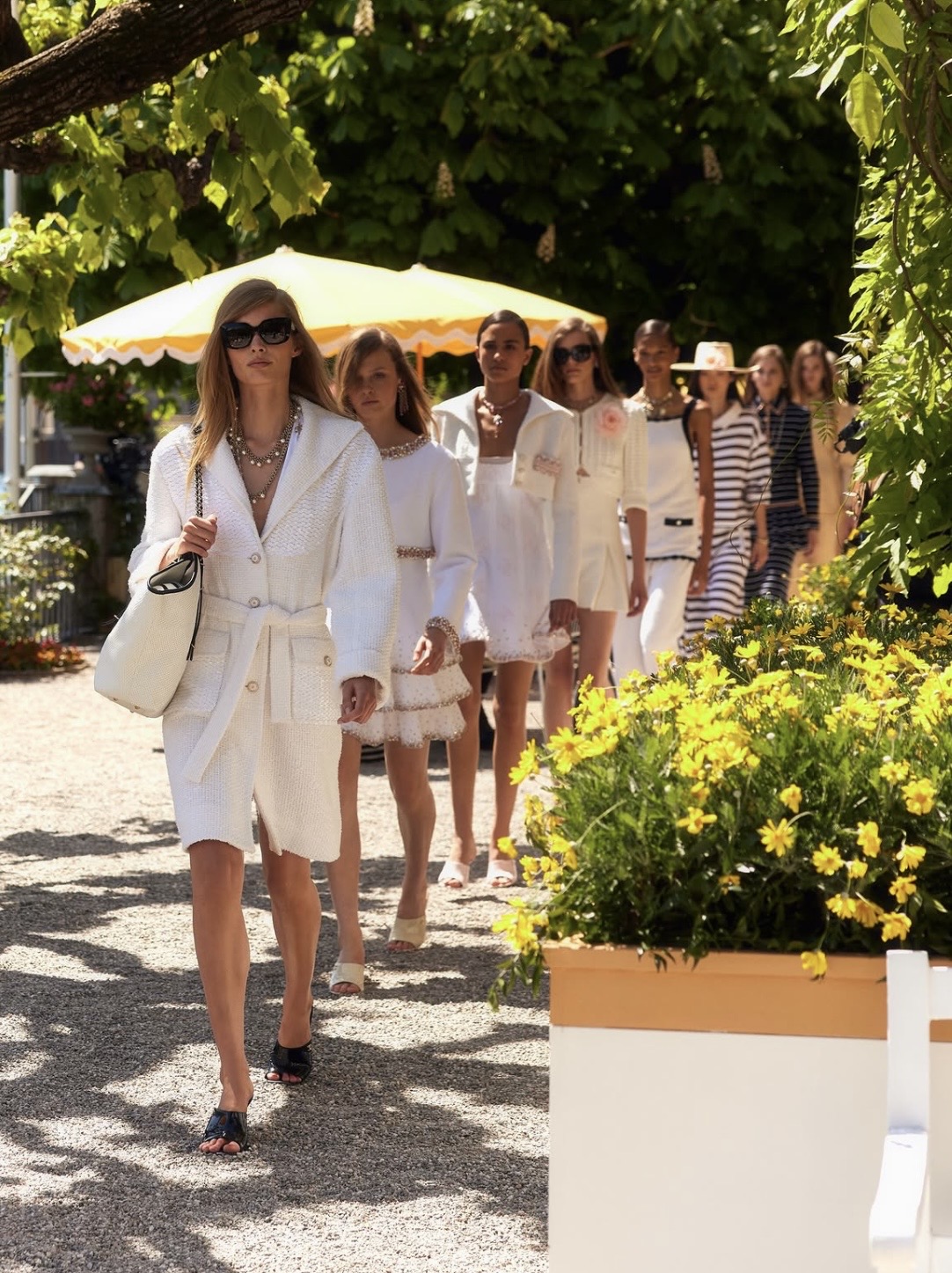
Image Credit: CHANEL
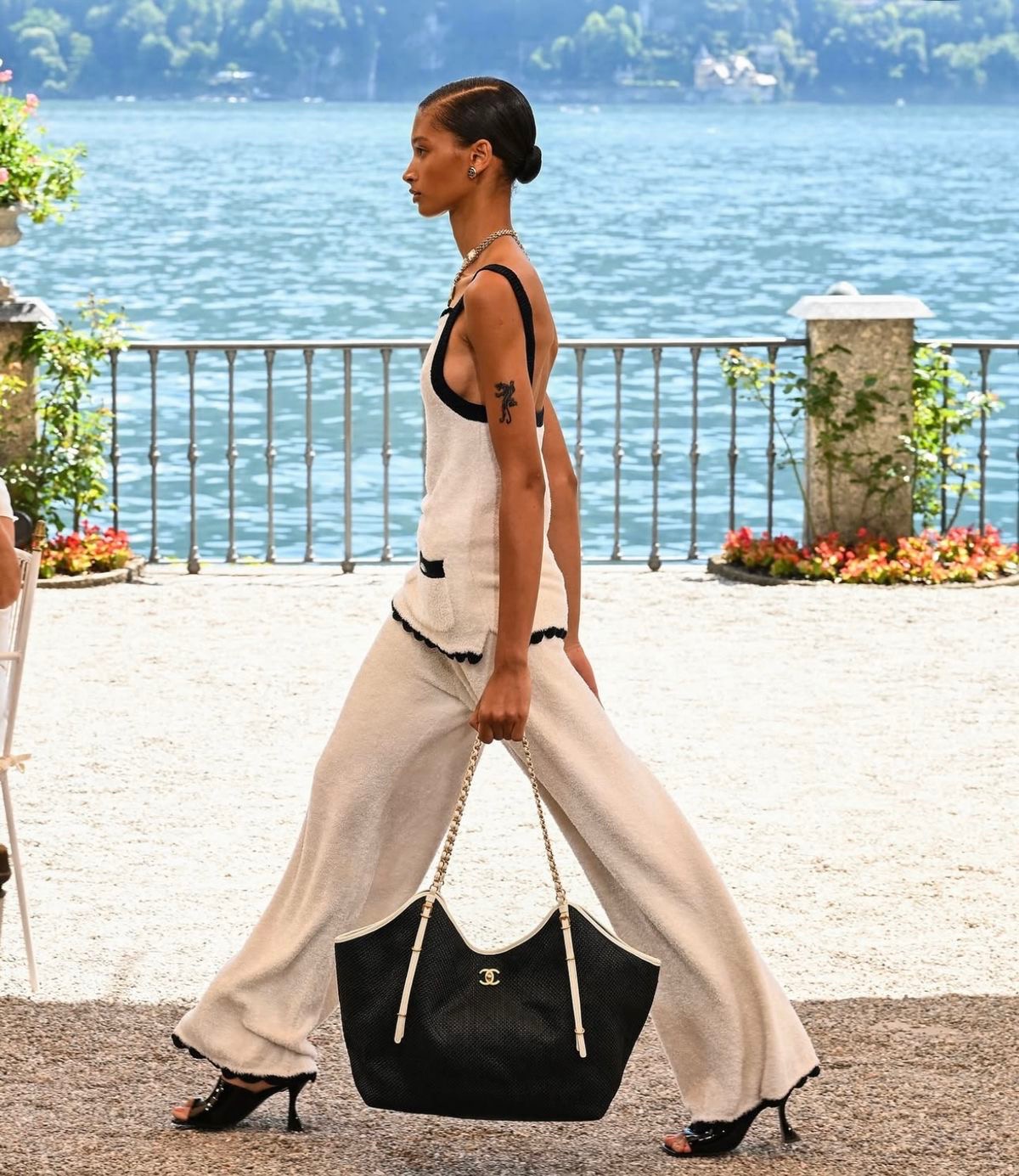
Image Credit: CHANEL
CHANEL announces that Matthieu Blazy will present his Métiers d’Art 2027 collection in Rome on December 2, 2026. The announcement is accompanied by a photograph of Gabrielle Chanel beside Luchino Visconti. ‘With this show, the house is writing a new chapter in its enduring story with Italy,’ the house says. ‘Tackling Rome is always a challenge, because it represents a pinnacle. Beyond fashion, it’s a mythical destination and an endless source of inspiration.’ The story that began on the Lido in 1920 is still being written.
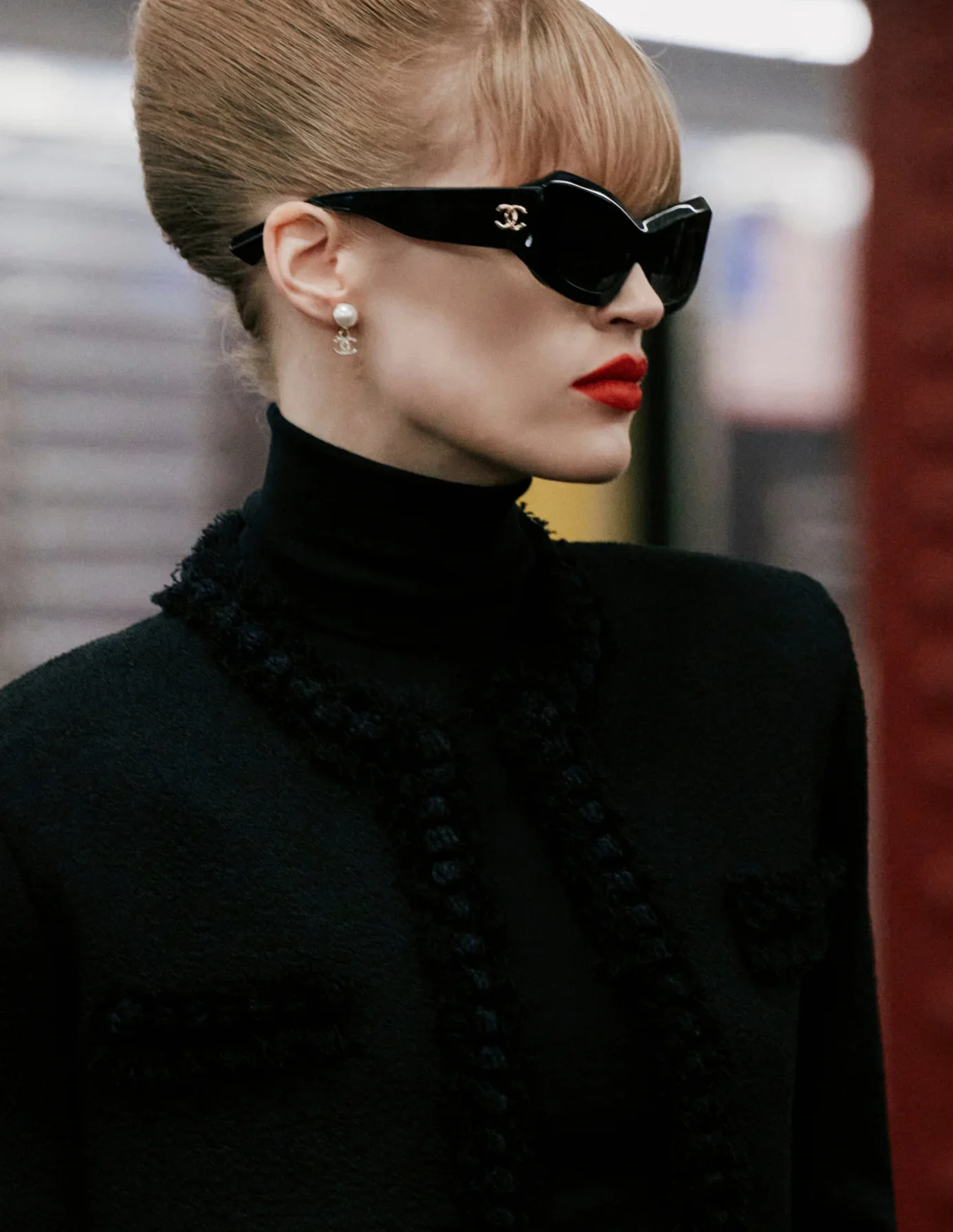
CHANEL Métiers d'Art 2026
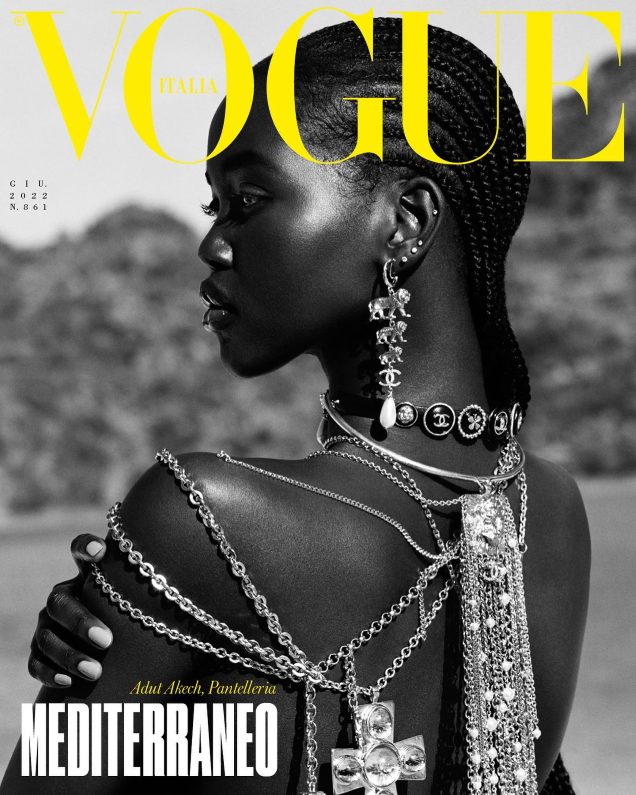
VOGUE Italia, June 2022