3 March 2026
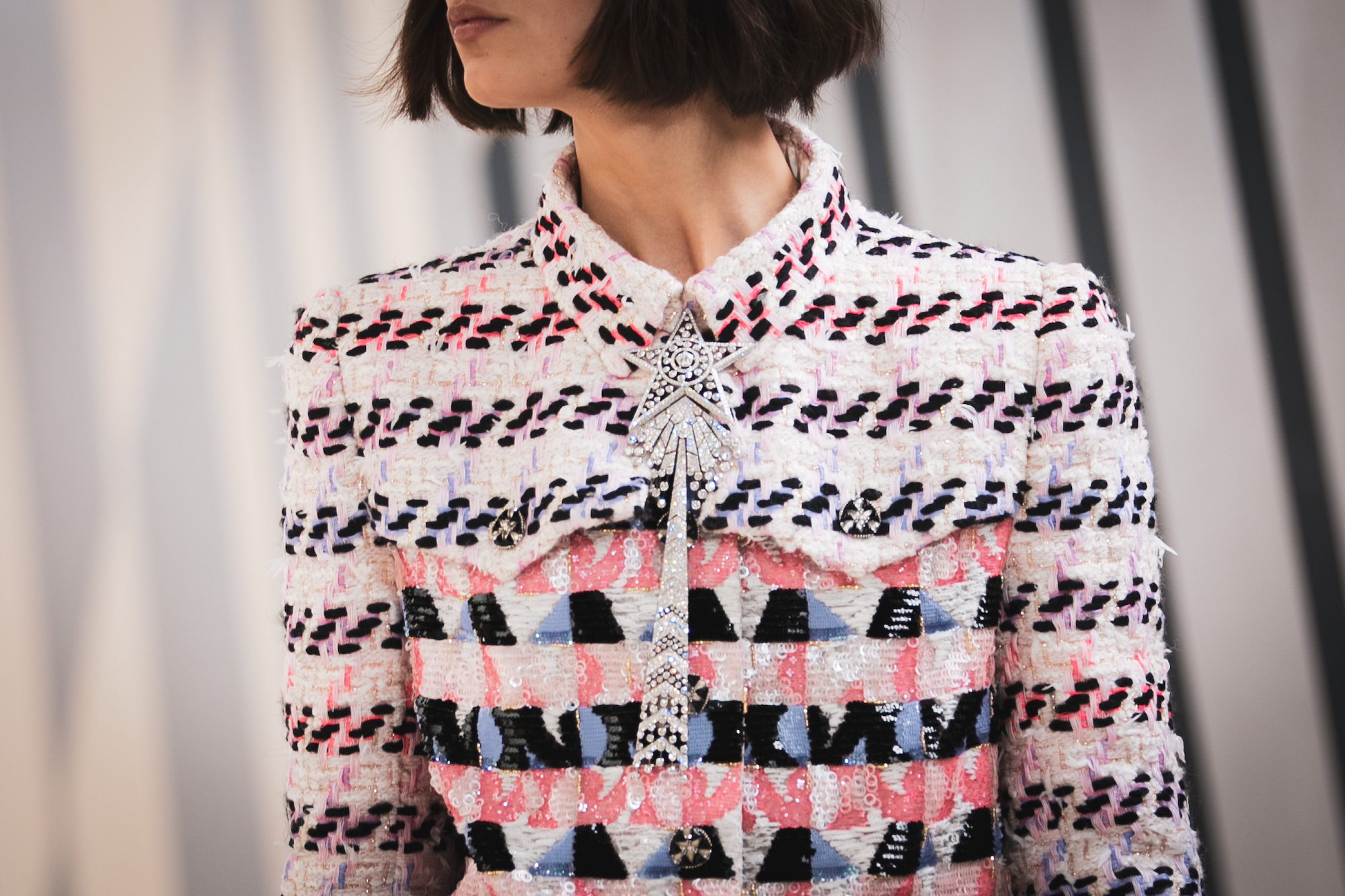
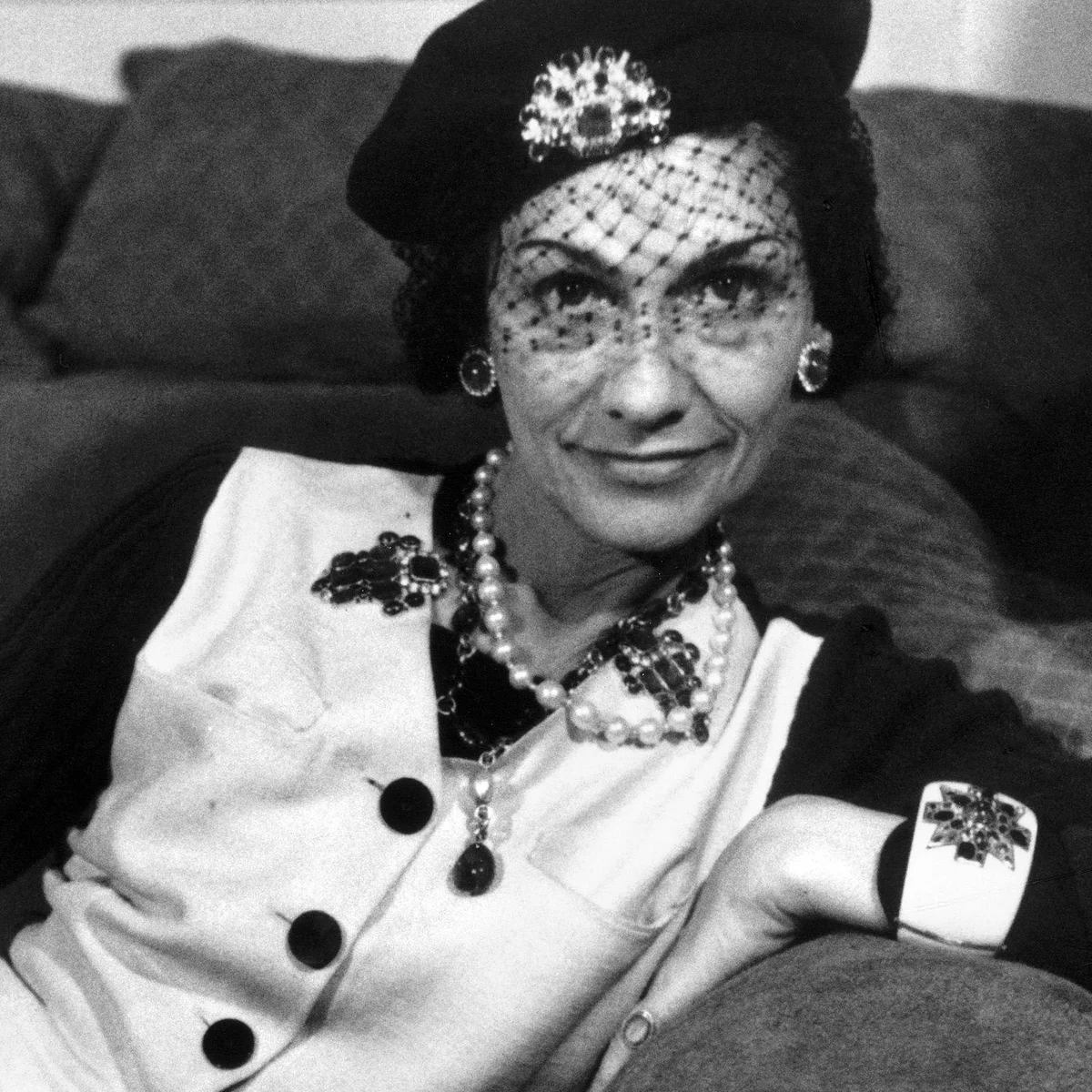
To understand CHANEL’s jewellery is to understand Gabrielle Chanel herself — a woman who wore ornament not as a statement of wealth, but as an act of defiance. At the turn of the twentieth century, fine jewellery was inseparable from social status. Aristocratic women dripped in real gems inherited through bloodlines, and the quantity and authenticity of one’s stones announced one’s place in the world. Into this rigidly coded environment stepped a woman who had no family heirlooms, no inherited pearls, and no patience for the rules.
Gabrielle Chanel’s relationship with jewellery began not in her atelier but in the arms of her lovers. Arthur “Boy” Capel, the British businessman who shaped so much of her aesthetic sensibility, and the Duke of Westminster, the wealthiest man in Britain, both showered her with extraordinary gems. She received them, wore them, and promptly mixed them with fakes. This was not poverty; it was philosophy.
“I decided to cover women in constellations,” Chanel once said. “Stars, yes — but not real ones.” The sentiment captures something essential: for Gabrielle Chanel, jewellery was about the idea, the silhouette, the poetry of a gesture. A cascade of white pearls against a black jersey dress was not a display of wealth but a visual statement — graphic, modern, deliberate.
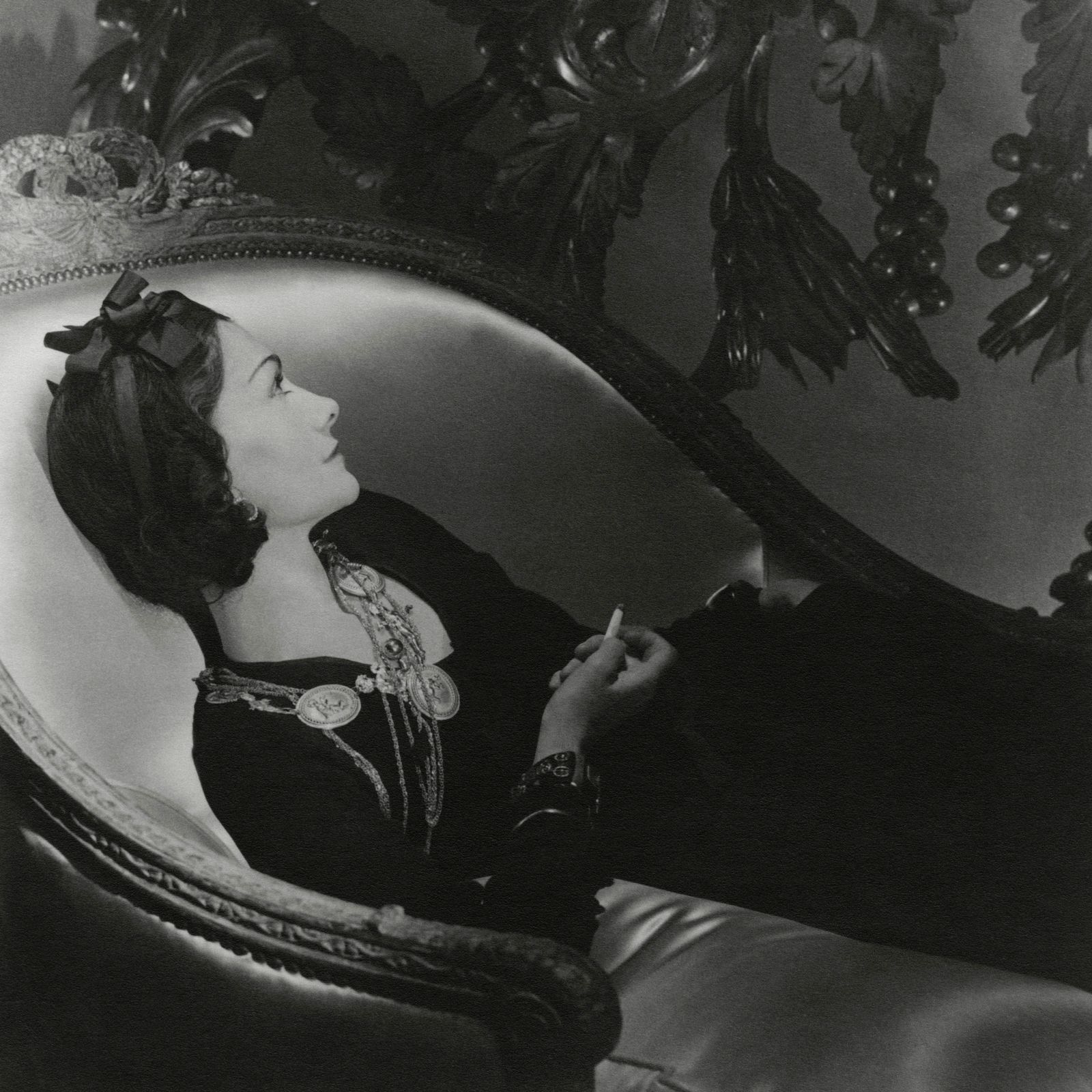
Horst P. Horst
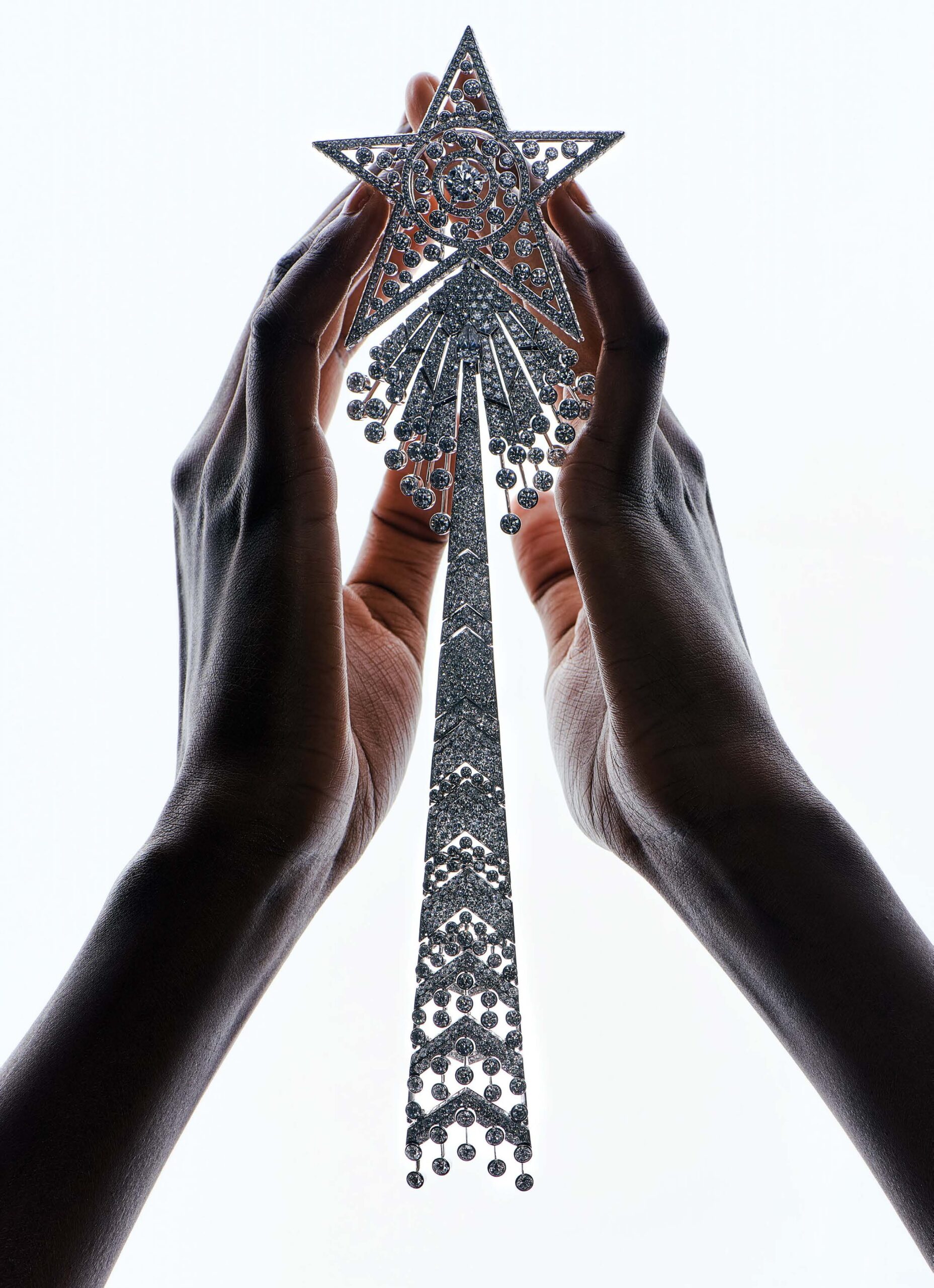
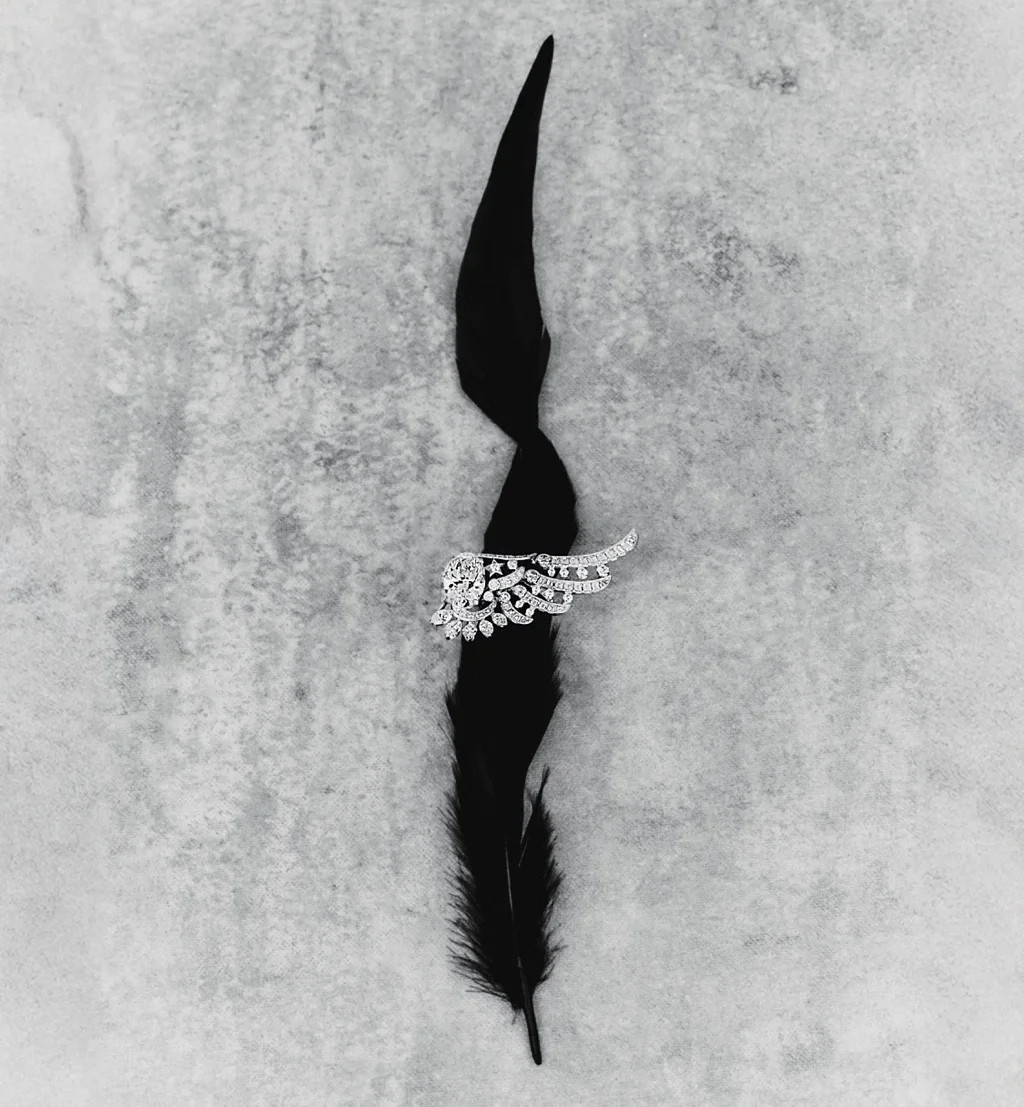
CHANEL Comete Volute High Jewellery Brooch
In 1924, Gabrielle Chanel created what would become one of the most radical provocations in fashion history: she began selling costume jewellery — openly, proudly, and at a moment when such a thing was considered scandalous. The very term *bijoux de fantaisie* had long implied imitation, deception, the desire to appear richer than one was. Chanel turned this logic on its head entirely.
She had already been wearing fake pearls alongside genuine ones for years, deliberately refusing to allow anyone — including herself — to know which was which. “It is disgusting to walk around wearing millions around one’s neck just because one is rich,” she declared. “I only like fake jewelry… because it is not provocative.” The irony, of course, is that her costume jewellery was among the most provocative things she ever created.
Her early collaborators were key. In 1924, she began working with Duke Fulco di Verdura, a Sicilian aristocrat with extraordinary taste and draftsmanship, who designed the iconic Maltese Cross cuffs that would become one of the most celebrated jewellery motifs of the century. Chunky, enamelled, Byzantine in their richness and entirely untethered from conventional precious materials, these cuffs were worn by Chanel herself and photographed endlessly. They announced that decoration could be theatrical and meaningful without being expensive.
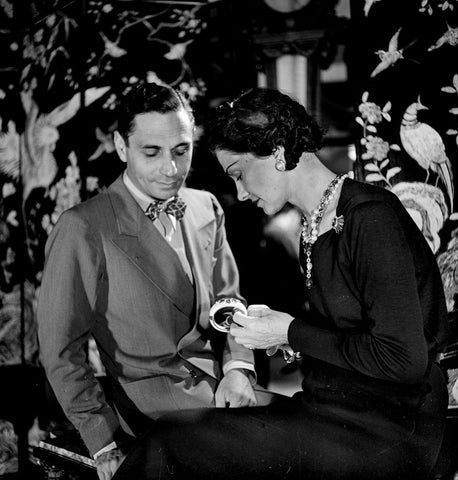
Chanel & Fulco di Verdura, Photography by Lipnitzki
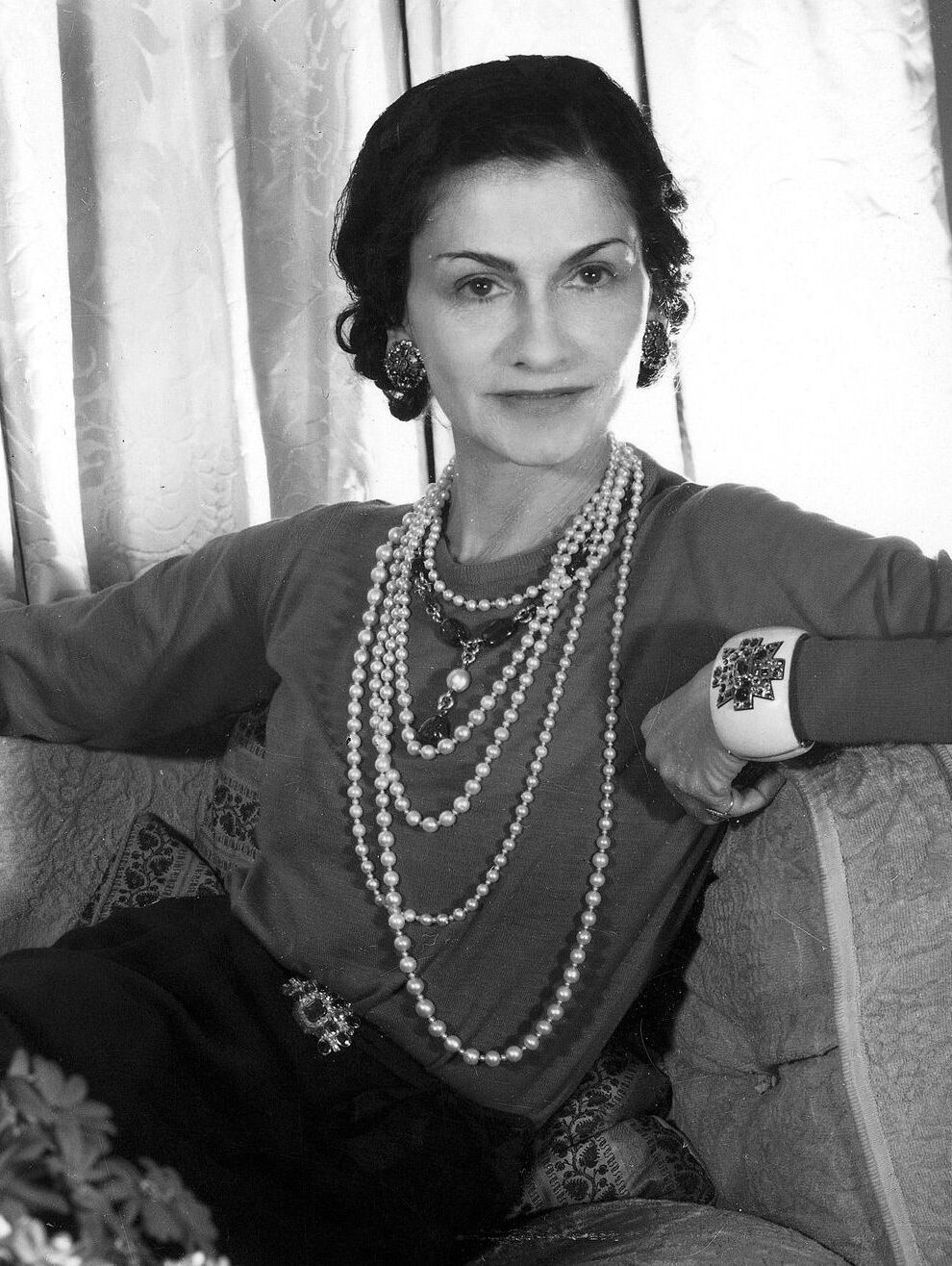
Coco Chanel
She also worked with Count Étienne de Beaumont and later with the surrealist artist Jean Cocteau, bringing into her orbit a sensibility that was artistic, literary, and deliberately anti-bourgeois. Jewellery in the CHANEL universe was never merely decorative — it was intellectual.
Her signature motifs emerged in this period: the camellia rendered in fabric or metal, the interlocking CC, the eight-pointed star, the cross, the comet, and above all, pearls. Pearls became Chanel’s most personal emblem. She wore them constantly, in cascading ropes, doubled and tripled, falling to the waist. In her hands, the pearl — that most traditional of feminine adornments — became something radical, almost athletic in the way she wore it with sportswear and jersey suits.
If costume jewellery was Chanel’s democratic revolution, fine jewellery was her artistic one. In 1932, at the height of the Great Depression, Gabrielle Chanel created the “Bijoux de Diamants” collection — her first and only high jewellery collection during her lifetime, and one of the most influential exhibitions in the history of jewellery design.
The collection was presented not in a shop but in her private apartment at 29 Faubourg Saint-Honoré, where wax mannequin heads displayed the pieces over two weeks. The show was by private invitation, and the world came. What they saw was unlike anything that had preceded it.

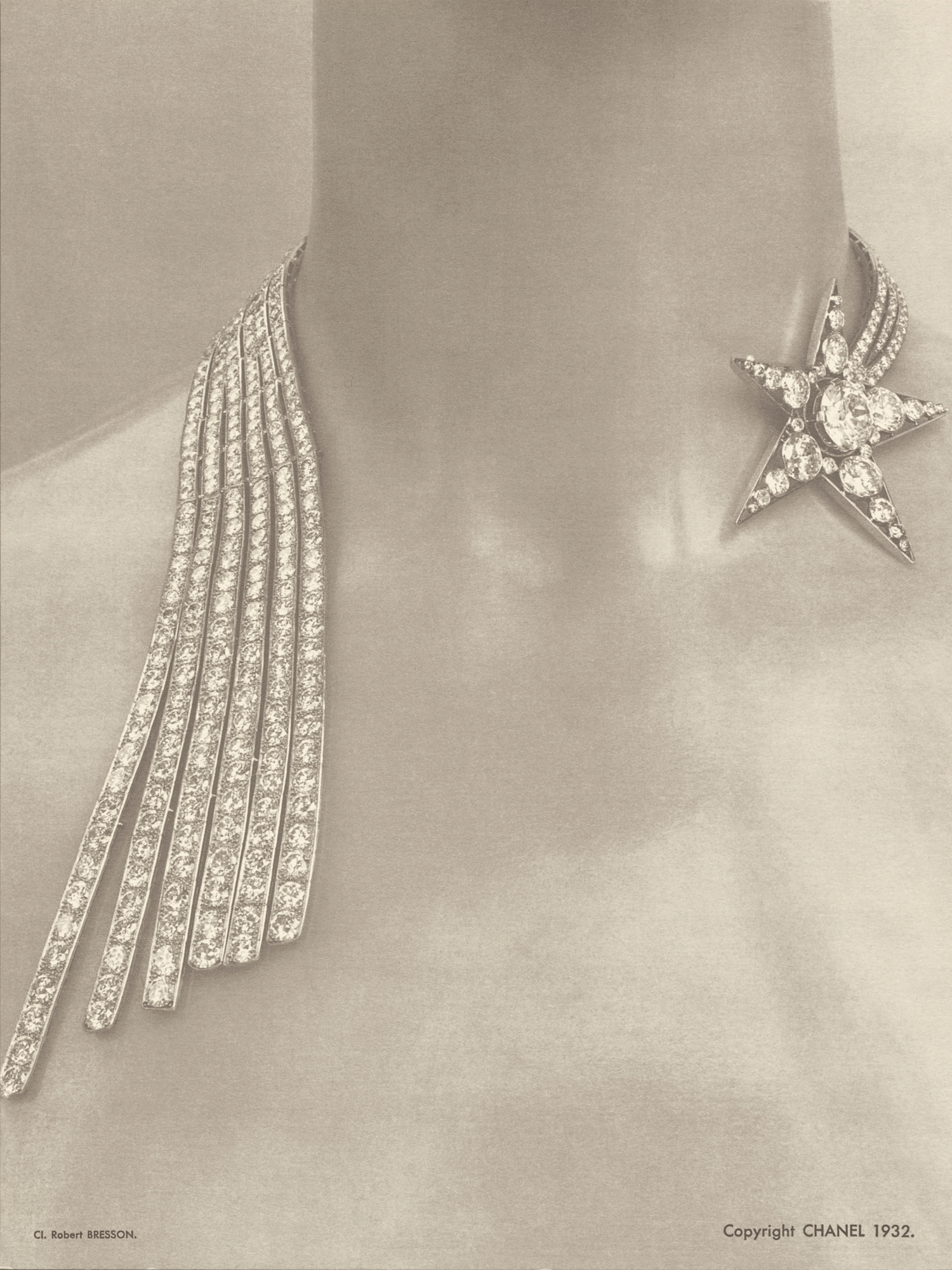
CHANEL 'Bijoux de Diamants' Collection
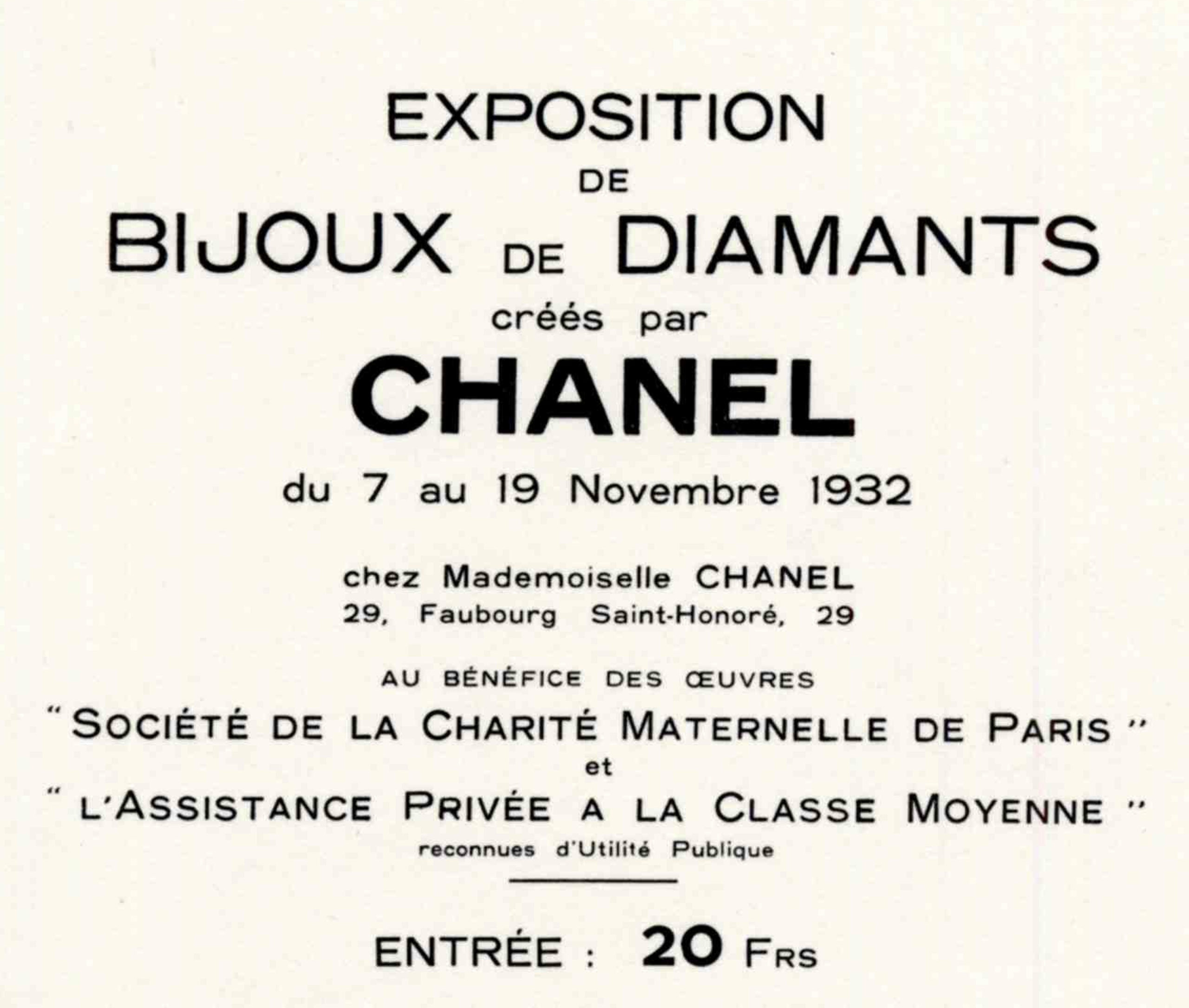
CHANEL 'Bijoux de Diamants' Invitation
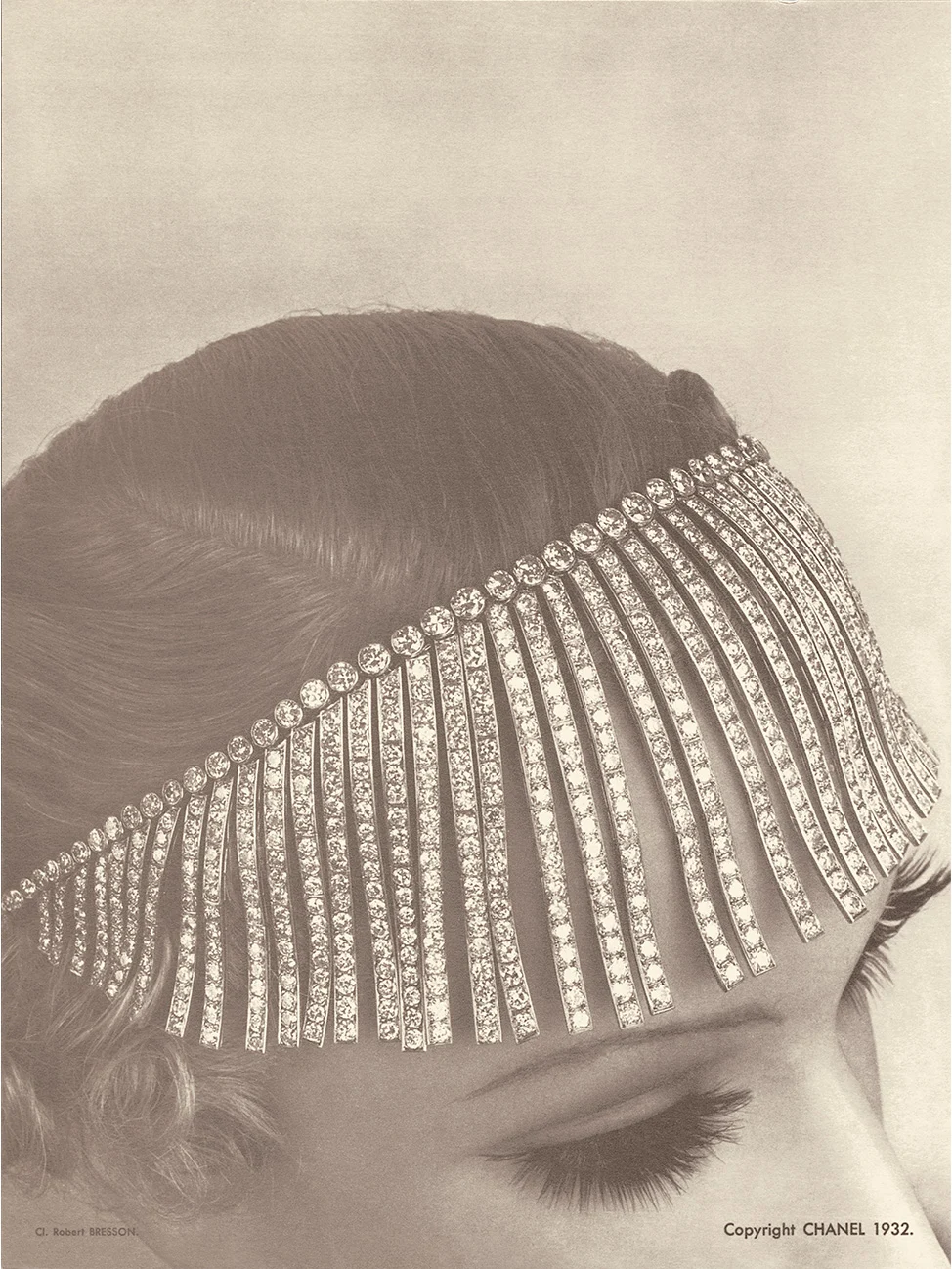
CHANEL 'Bijoux de Diamants' Collection
Chanel worked exclusively in diamonds and platinum — the most serious materials possible — but the designs were radical in their lightness and movement. She was obsessed with the idea of jewellery that moved with the body, that felt alive rather than static. The *Comète* brooch, shaped like a shooting star with a long diamond tail, could be detached and worn in the hair. Necklaces were constructed to be transformable — they could be shortened, lengthened, or broken apart into brooches. The sun motif, the moon, the stars: celestial forms rendered in diamonds that sat on the body like light itself.
The collection introduced the concept of jewellery as wearable sculpture rather than ornamented accessory. It was technically daring, aesthetically modern, and made a statement that remains central to CHANEL’s jewellery philosophy today: fine jewellery should feel like freedom, not like armour.
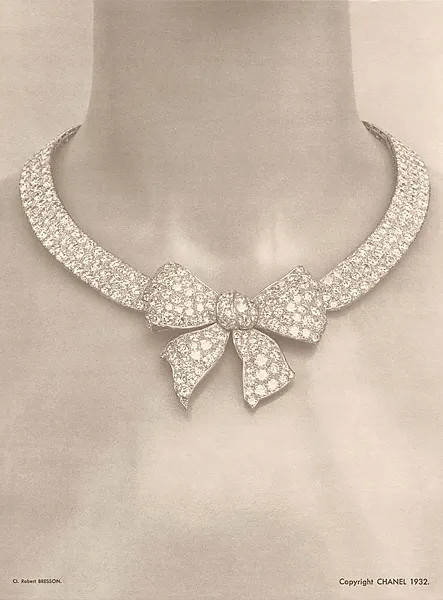
CHANEL 'Bijoux de Diamants' Collection
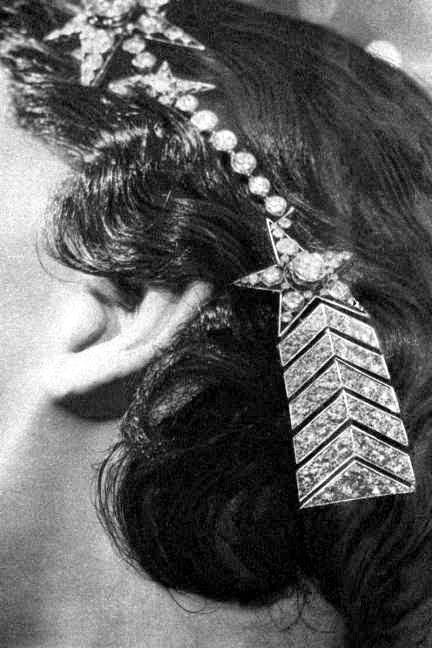
CHANEL 'Bijoux de Diamants' Collection
After the “Bijoux de Diamants” of 1932, Chanel did not pursue another high jewellery collection. The war came, the couture house closed, and when it reopened in 1954, her focus was the suit, the bag, the shoe. She continued to design costume jewellery, but the haute joaillerie chapter remained singular, a brilliant comet that had passed.
In 1993, CHANEL relaunched fine jewellery with the “Première” collection, inspired by the Place Vendôme and the octagonal face of the Première watch. But the true return to the spirit of 1932 came with the development of ongoing high jewellery collections that made the house’s motifs — the camelia, the comet, the lion, the star — central to an annual programme of extraordinary pieces.
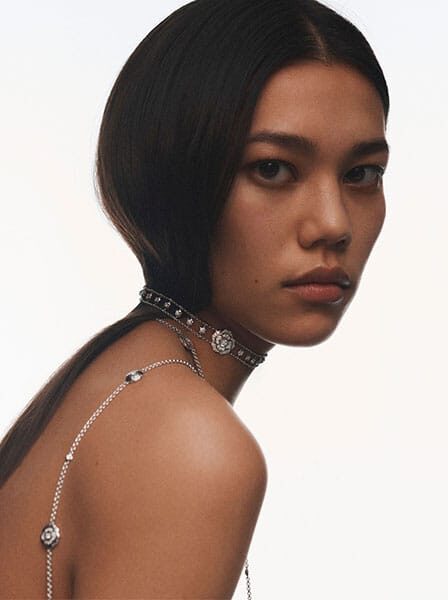
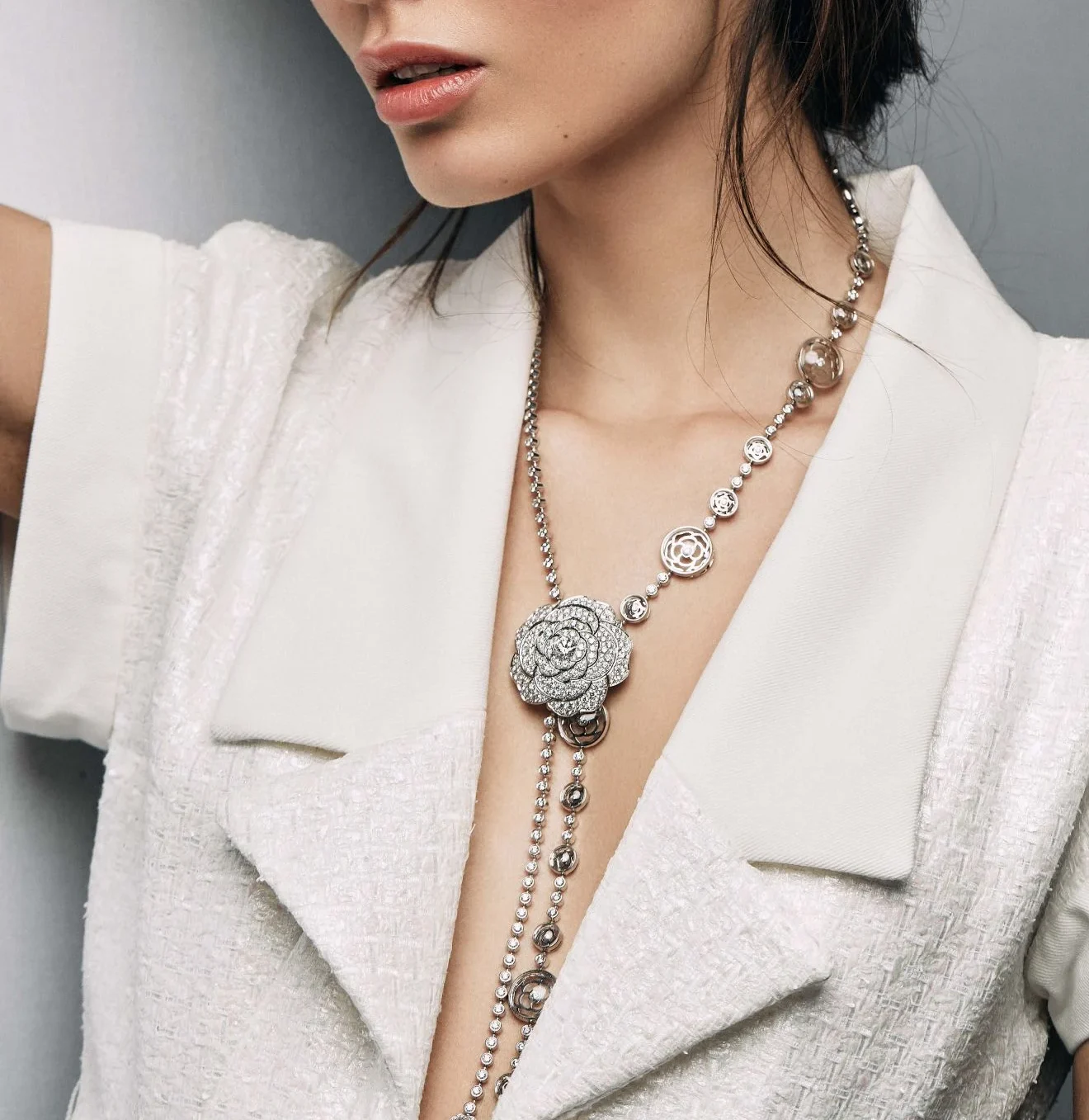
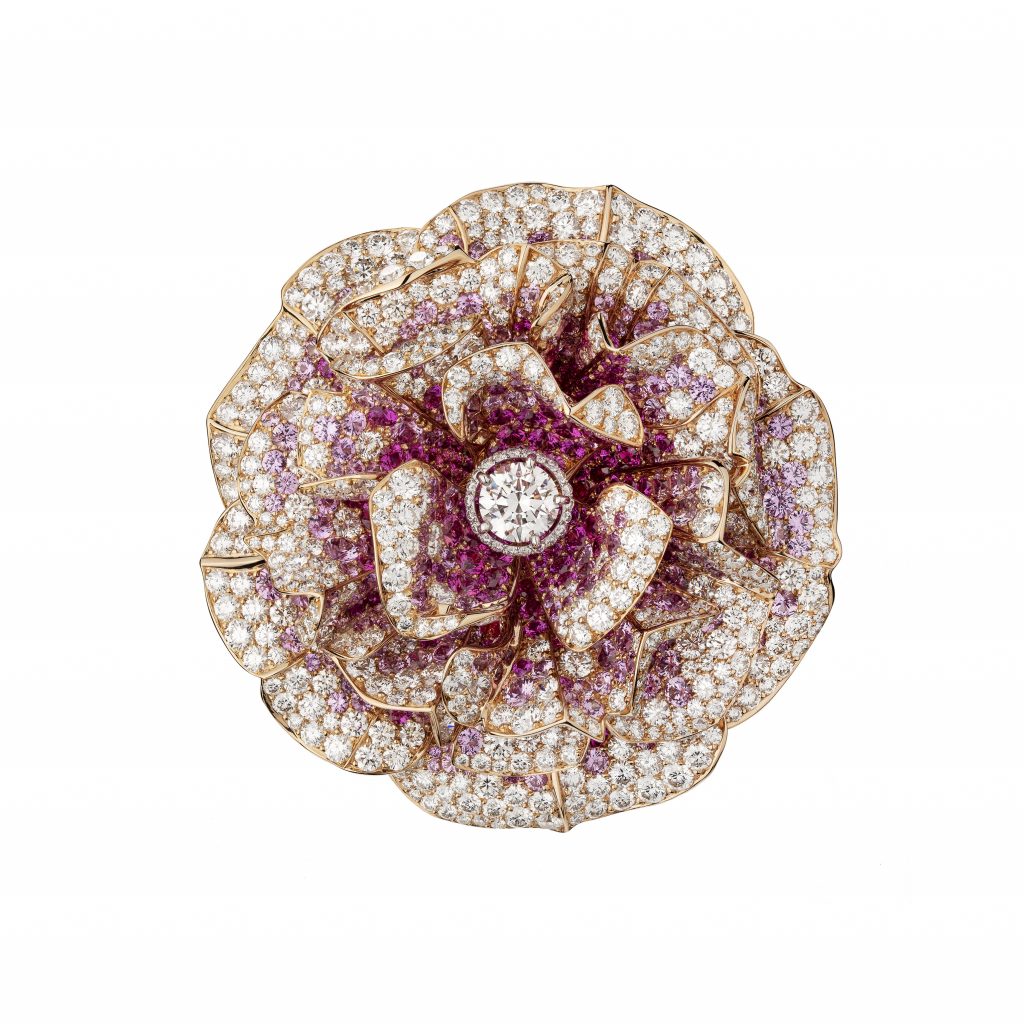
No motif is more central to CHANEL’s identity in jewellery than the camellia. Gabrielle Chanel adopted it as a personal emblem — a flower with no scent, which she appreciated for its purity of form. In jewellery, the camellia has been rendered in every conceivable material: carved mother-of-pearl, pavé diamonds, lacquered gold, rock crystal, and combinations thereof. The form’s circular regularity makes it perfect for jewellery — it sits naturally against the body, and its layered petals allow for extraordinary technical complexity.
The high jewellery camellias from recent decades often employ a technique called “serti-neige” (snow-setting), in which diamonds of different sizes are scattered across a surface like snowflakes, creating an effect of exceptional luminosity and depth.
CHANEL
Piotr Stoklosa
CHANEL
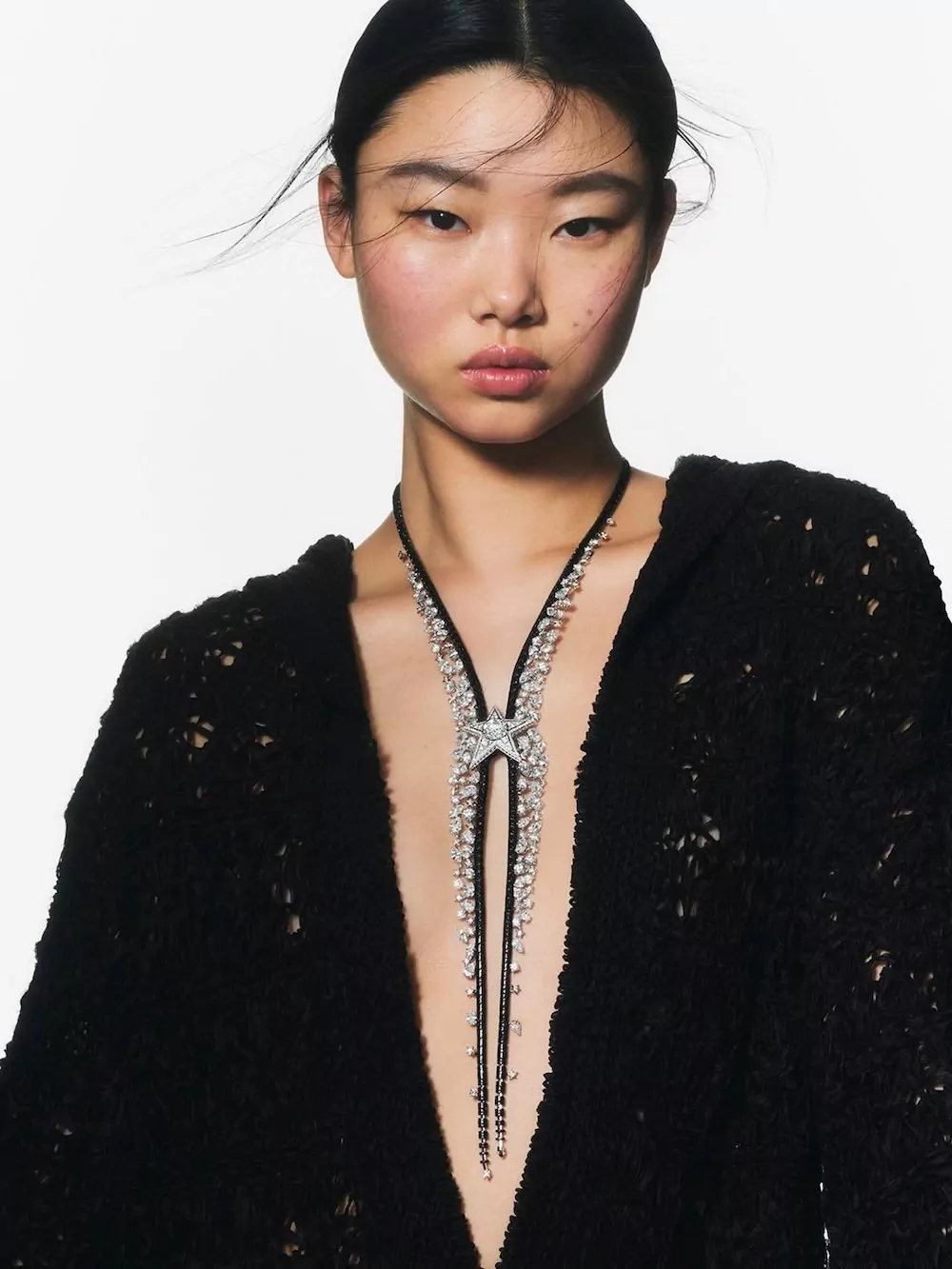
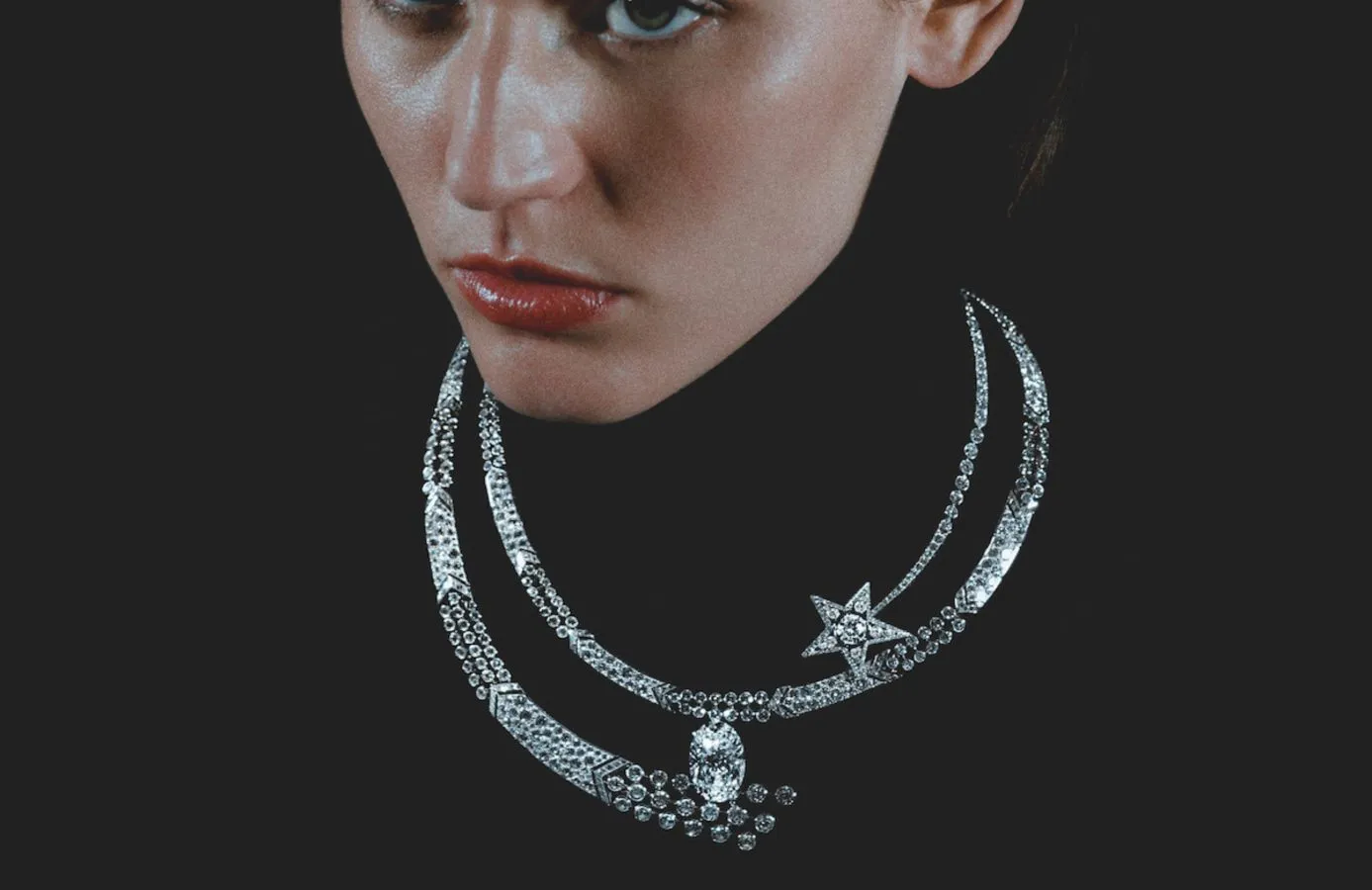
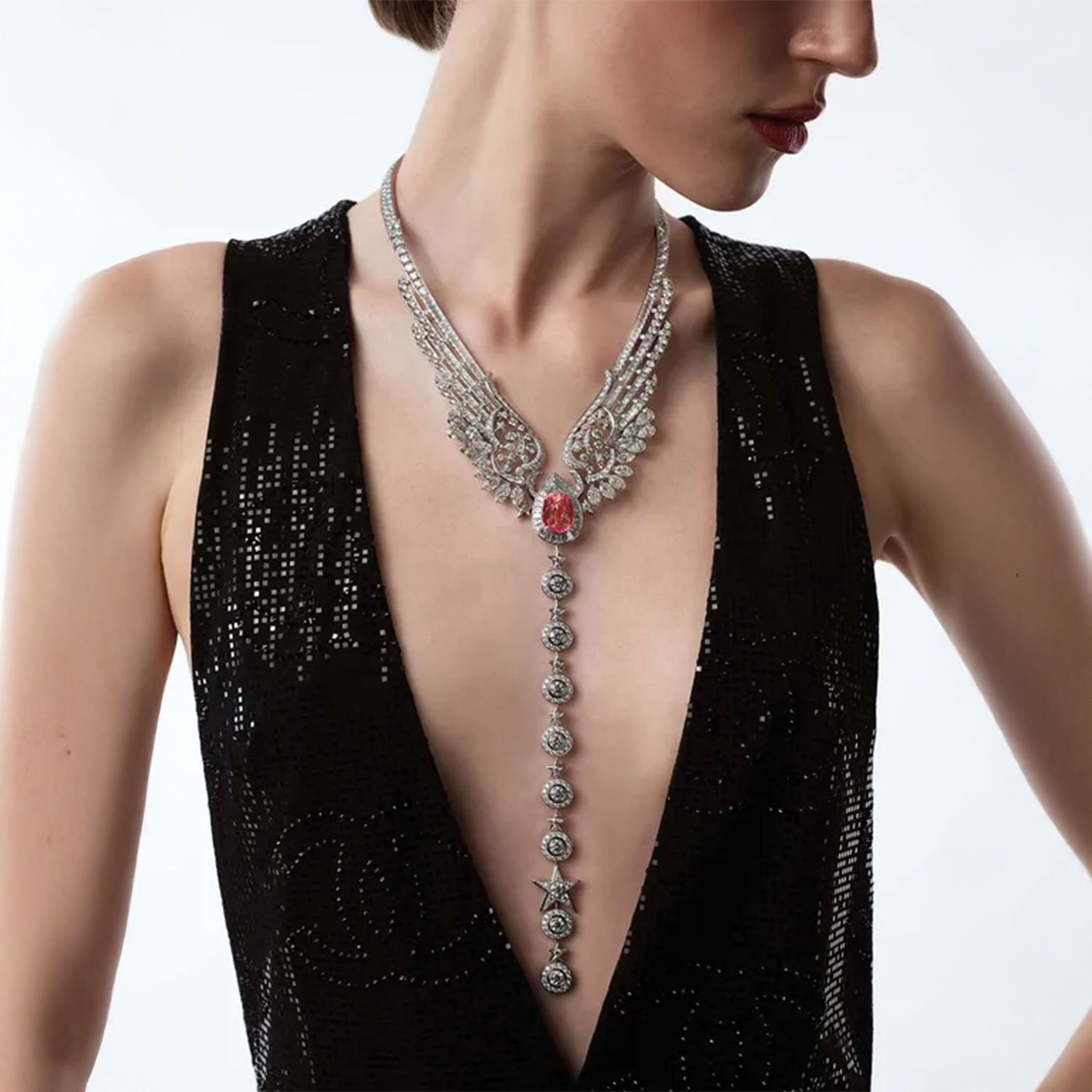
The comet motif, introduced in the 1932 collection, has become one of the most enduring and reproduced forms in CHANEL’s jewellery vocabulary. Its appeal lies in its dynamism: a burst of stones that seems to streak across the skin, suggesting motion and light simultaneously. The “Comète” necklace and its variations appear regularly in CHANEL’s high jewellery presentations and have become some of the house’s most sought-after pieces.
CHANEL
CHANEL
CHANEL
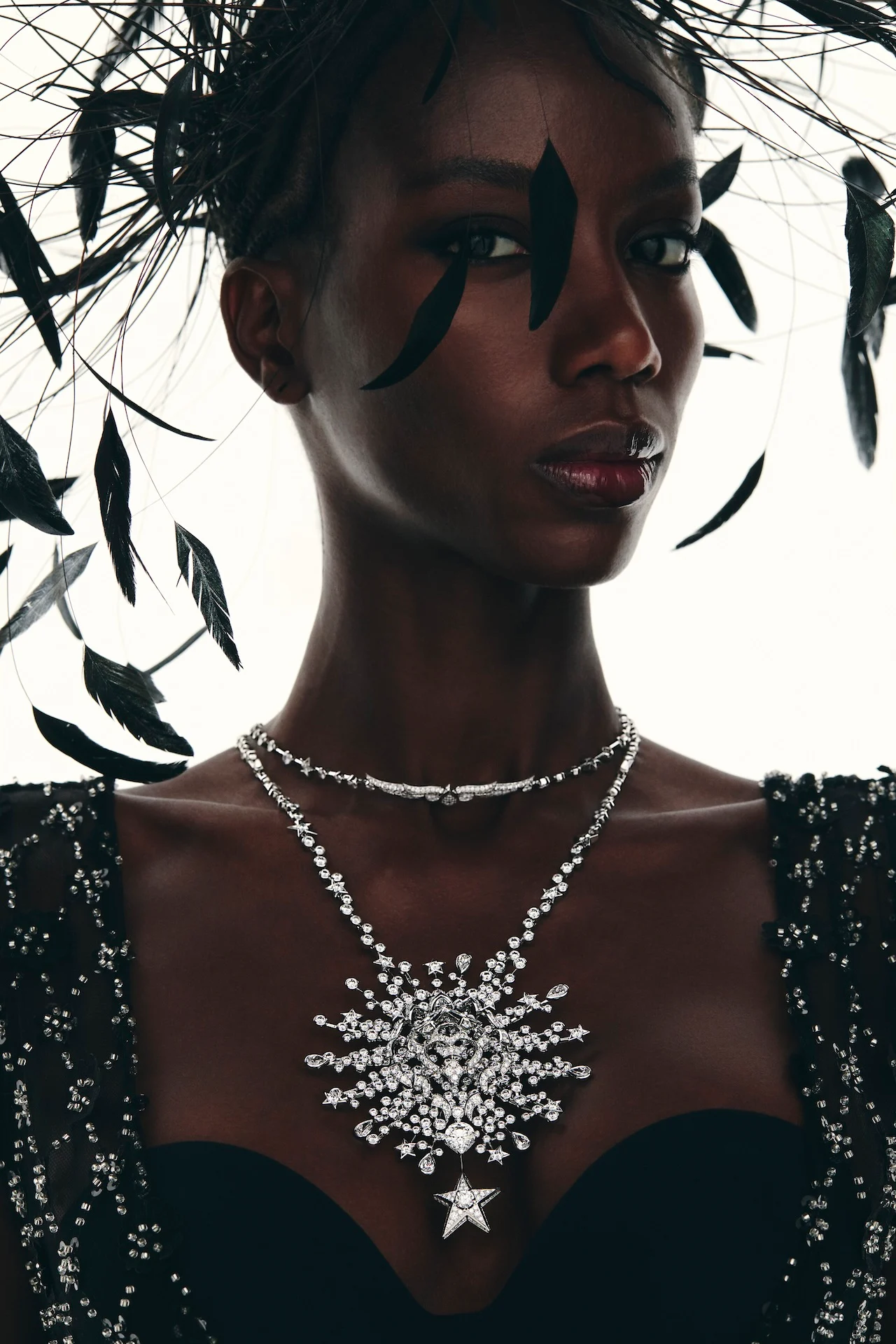
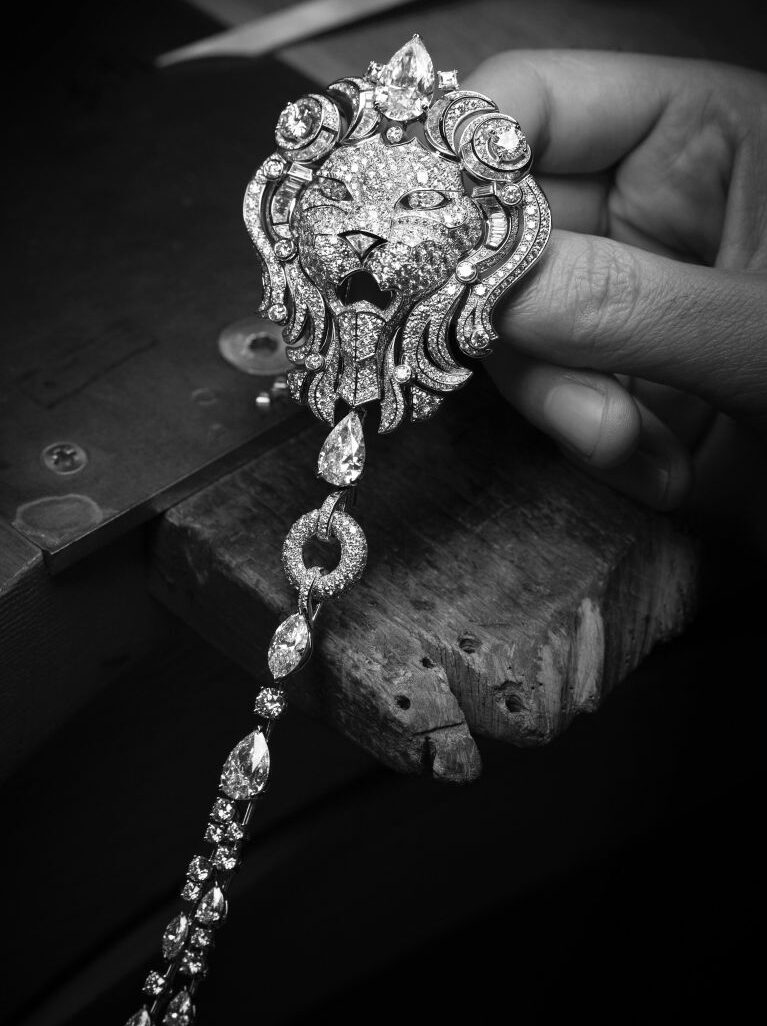
Gabrielle Chanel was a Leo, born August 19, 1883, and she maintained a lifelong obsession with lion iconography. Lions appeared throughout her apartment at the Ritz, on her Coromandel lacquer screens, on her furniture, and in her jewellery. The lion’s head — proud, frontal, heraldic — became one of CHANEL’s most consistent motifs in costume jewellery, appearing on cuffs, pendants, and rings throughout the decades.
In contemporary high jewellery, the lion has been rendered with extraordinary complexity, its mane sometimes composed of hundreds of individually set stones, its eyes often set with coloured gems — emeralds or sapphires.
Vladimir Martí,
CHANEL
Since the early 2000s, CHANEL has presented annual high jewellery collections that represent some of the most ambitious work in the industry. These presentations typically include between 50 and 100 pieces, each crafted at the house’s workshops in Paris, and they consistently explore the tension between Gabrielle Chanel’s modernism and the extraordinary technical tradition of Parisian haute joaillerie.
Recent collections have revisited the 1932 vocabulary in sophisticated ways. The “1932” collection, presented in 2012 on the eightieth anniversary of the original, reinterpreted the celestial motifs with contemporary stone-setting techniques and new understandings of how jewellery can move on the body. The “Tweed de CHANEL” collection translated the texture of the house’s signature fabric into pavé surfaces, a concept that is both technically extraordinary and philosophically coherent with the brand’s history.
The “Escale à Venise” collection drew on Venice’s Byzantine heritage — a direct homage to the Maltese crosses and coloured enamel of Verdura’s early work for Chanel. Collections inspired by Scottish landscapes (“Escale à Édimbourg”) and Japanese aesthetics have expanded the house’s jewellery geography while keeping the core motifs — the star, the cross, the camellia — as constant references.
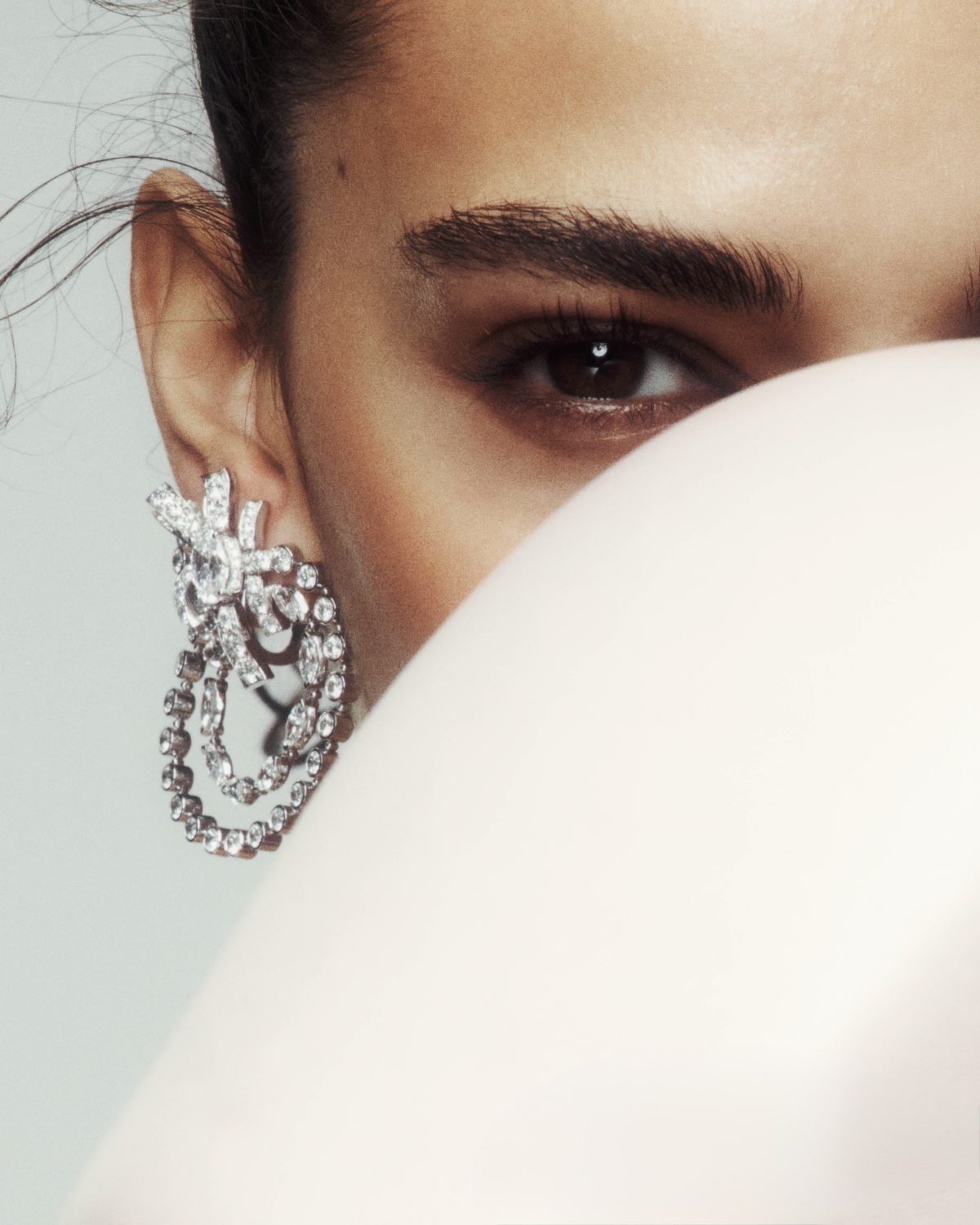
Mattia Guolo
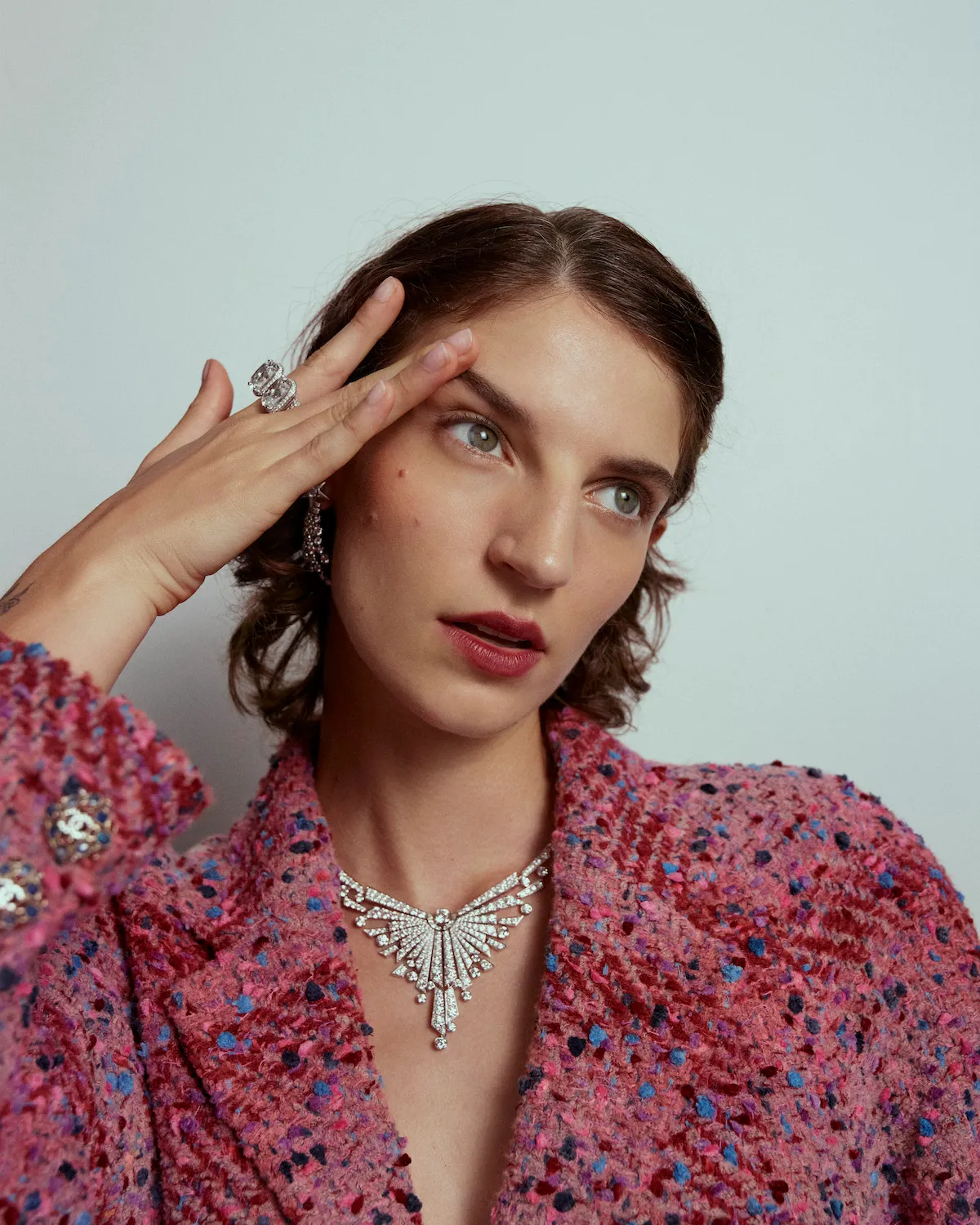
Emman Montalvan
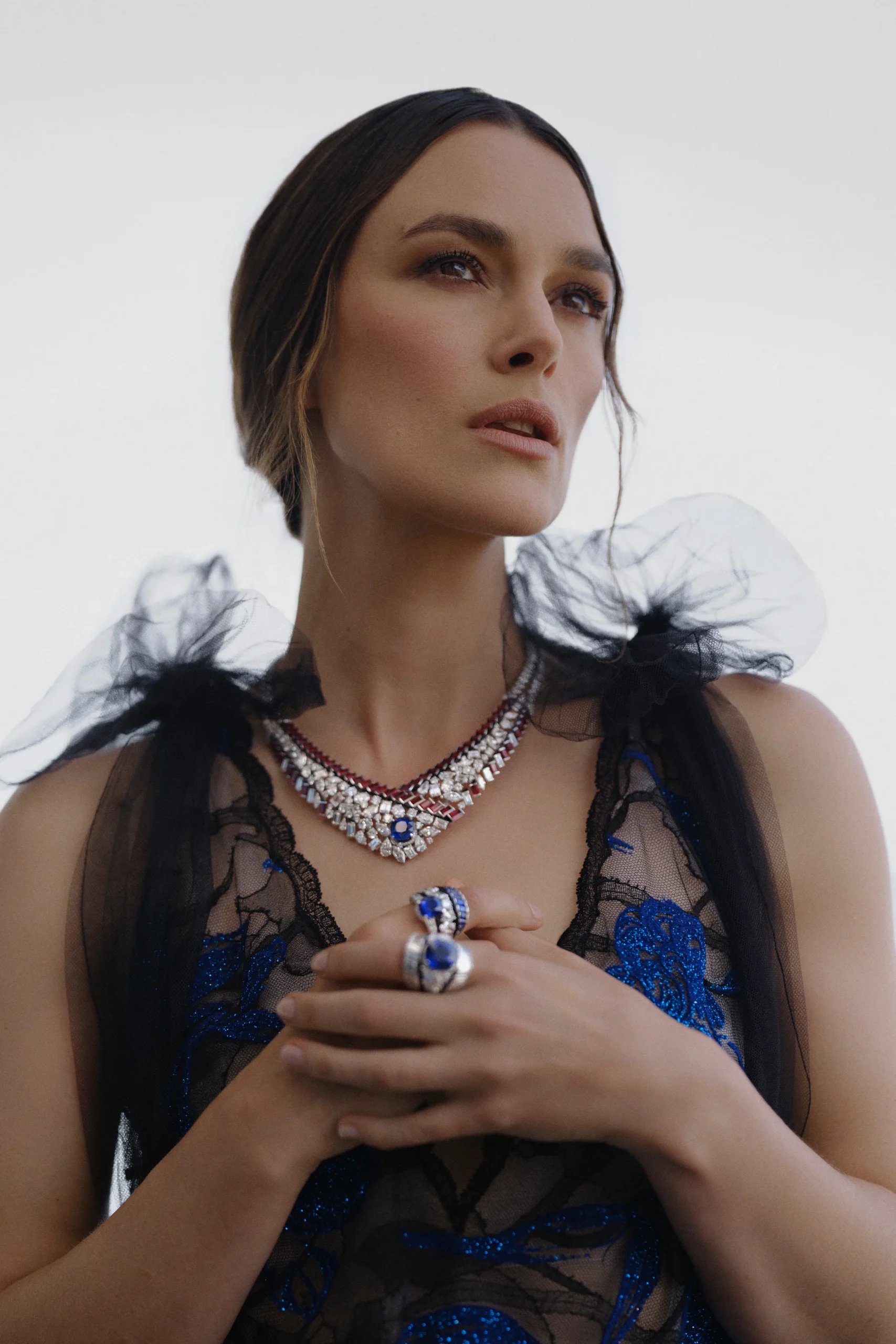
CHANEL
What is remarkable about CHANEL’s jewellery, across more than a century, is the consistency of its underlying philosophy. Gabrielle Chanel established a set of principles in the 1920s and ’30s that remain the animating spirit of every piece the house produces today: jewellery should feel light, not heavy; it should move with the body; it should be about the idea rather than the display of expense; and it should connect the woman wearing it to something larger than social signalling — to art, to stars, to poetry.
The tension between costume and fine, between the democratic and the exclusive, was never resolved by Chanel — it was embraced. The woman who mixed fake pearls with real ones was making a point that the house still makes: life is a paradox. A CHANEL camellia in lacquered metal and a CHANEL camellia in carved diamonds occupy the same imaginative universe. They speak the same language, told in different registers.
In an industry that often equates quality with conspicuous expense, this remains a genuinely radical position. And it remains, unmistakably, Chanel.
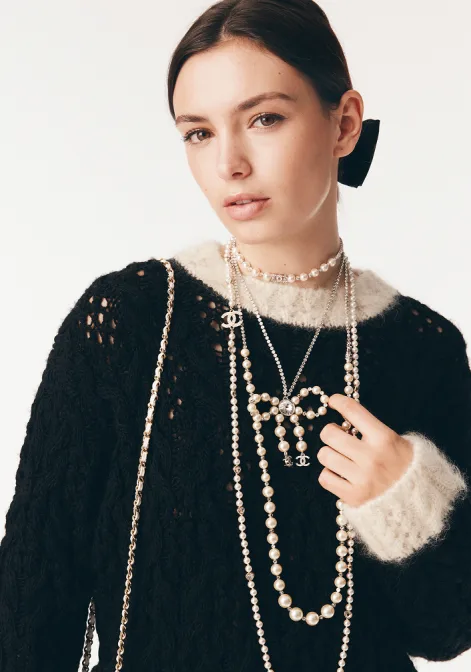
CHANEL
Vladimir Martí