12 April 2026
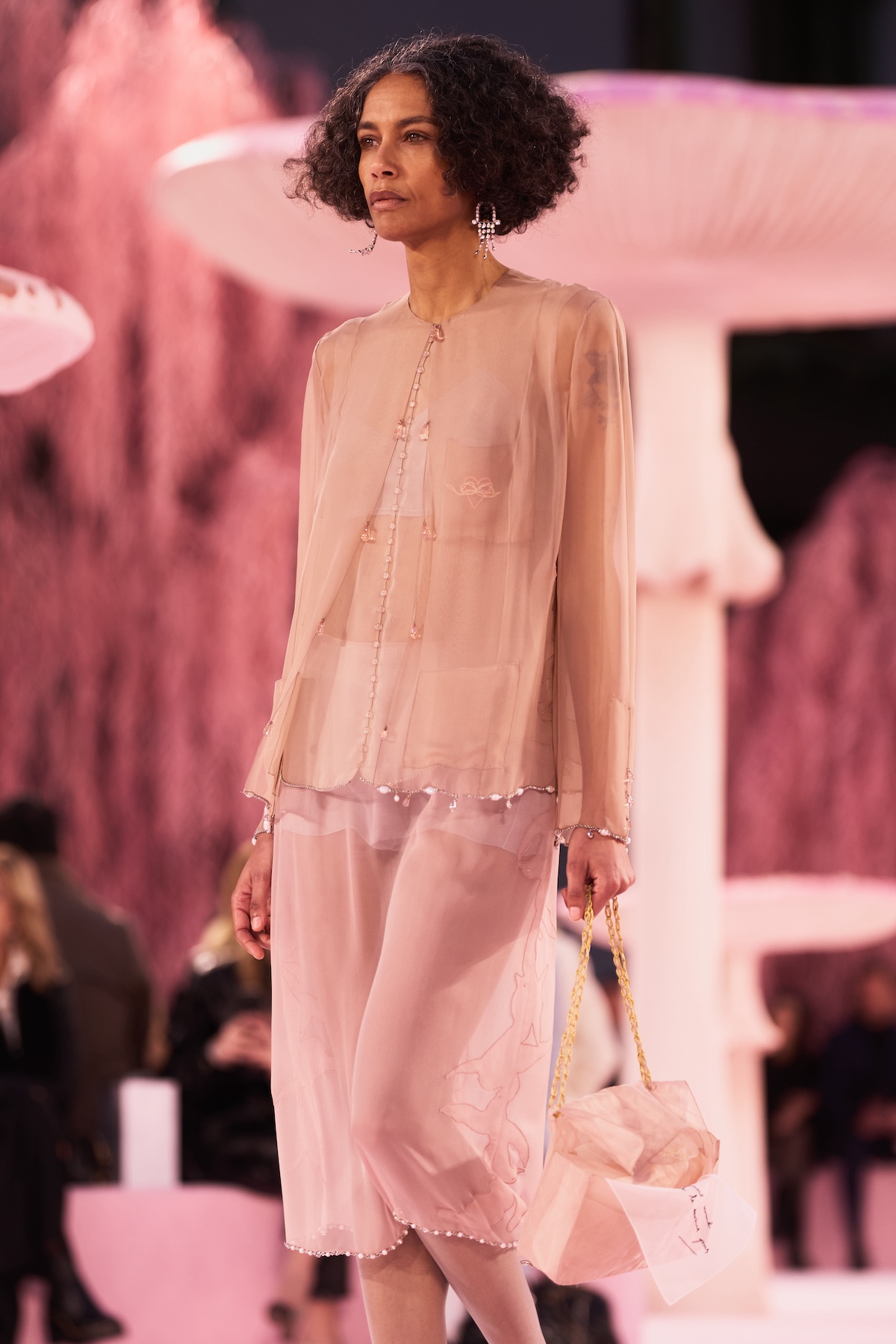
Ask anyone to free-associate with CHANEL and you’ll hear the same words: tweed, pearls, the little black dress, the interlocking Cs, quilted leather, camellia. The house’s codes have been so thoroughly absorbed into the cultural vocabulary that they’ve become expected, inevitable, canonical.
But Gabrielle Chanel was, above everything else, a rule-breaker. She borrowed from fishermen and jockeys, from peasants and lovers. And in the century since, every creative director who has touched this house, from Karl Lagerfeld to Virginie Viard to Matthieu Blazy, has known a private truth: the most interesting CHANEL codes are the ones that surprise you.
Here are five of them.
Of all the fabrics in existence, denim seems least likely to bear the double-C. It is the fabric of workwear, of counter-culture, of democratic rebellion – everything that a Parisian house built on couture logic ostensibly opposes. And yet CHANEL and denim have a relationship that stretches back decades, rooted in the same instinct that had Gabrielle reaching for men’s jerseys in the 1910s: the belief that ease is the ultimate luxury.
Cindy Crawford wore denim trousers on the Spring/Summer 1994 runway, grounding the collection’s supermodel glamour in something deliberately, almost defiantly, casual. That same season gestured at the house’s long flirtation with Americana – the frontier spirit that Lagerfeld would return to again and again, most explicitly in the 2014 Paris-Dallas Métiers d’Art collection, where Western denim codes collided with couture embroidery.
In Matthieu Blazy’s transformative Spring/Summer 2026 Haute Couture show, silk was worked to convincingly resemble denim – “lingerie denim” – finished with intricate embroidery. The imitation was the point: denim so covetable it needed to be remade in couture materials.

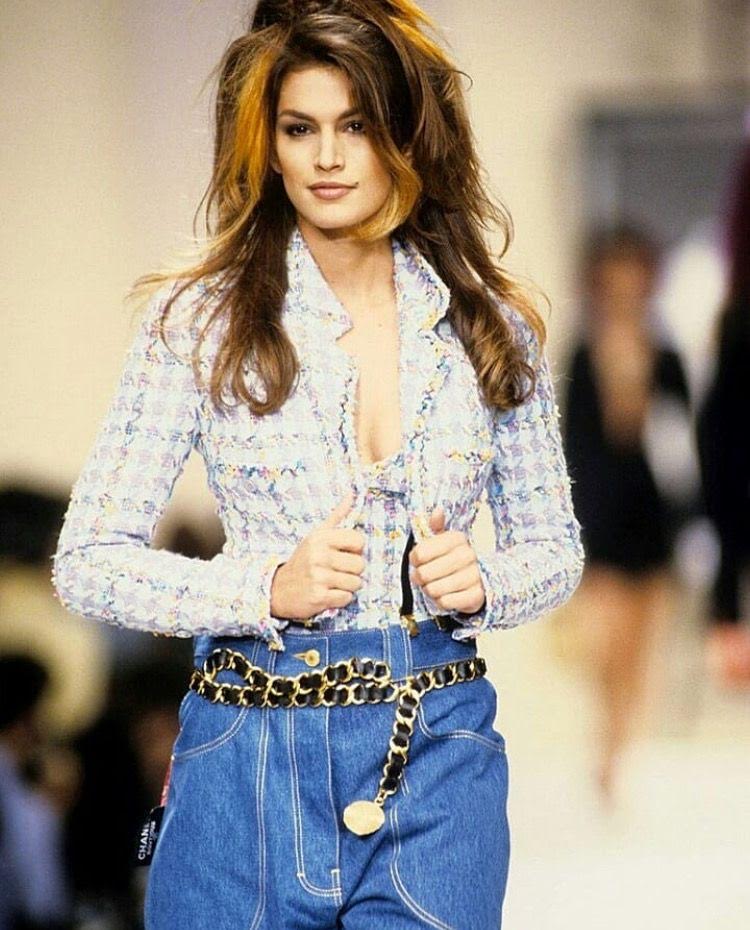
CHANEL Spring/Summer 1994 RTW
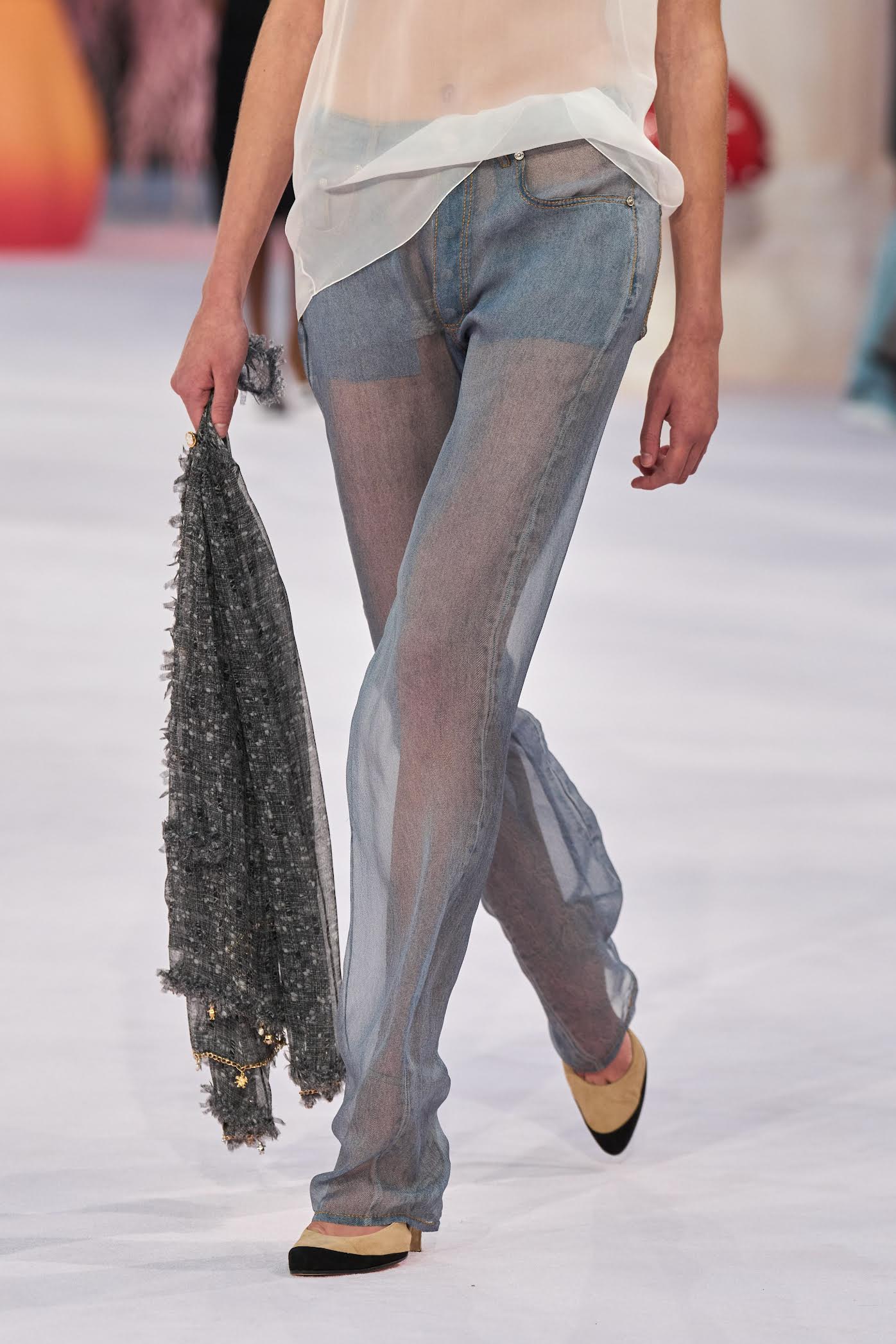
CHANEL Spring/Summer 2026 Couture
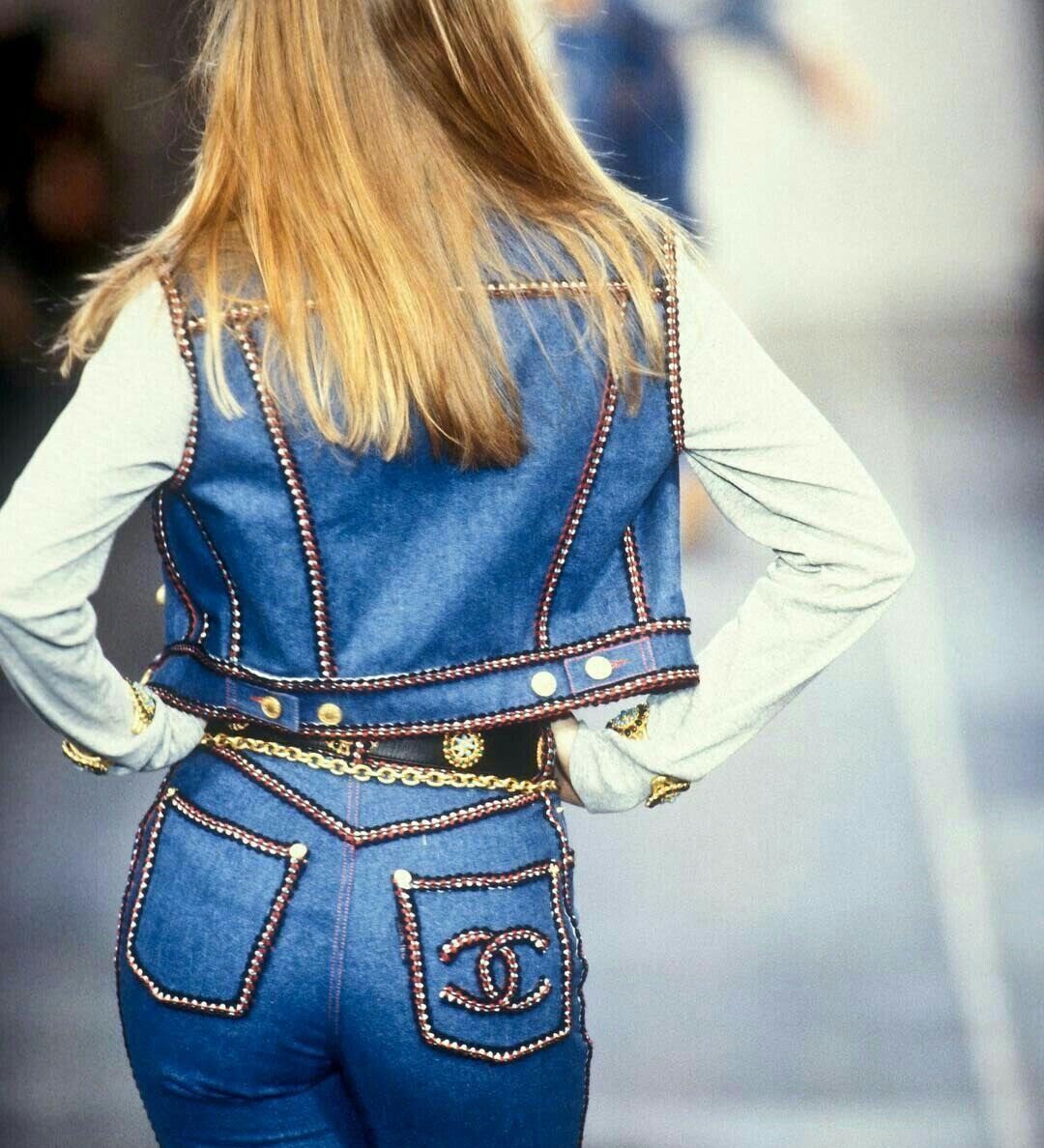
CHANEL Fall/Winter 1993 RTW
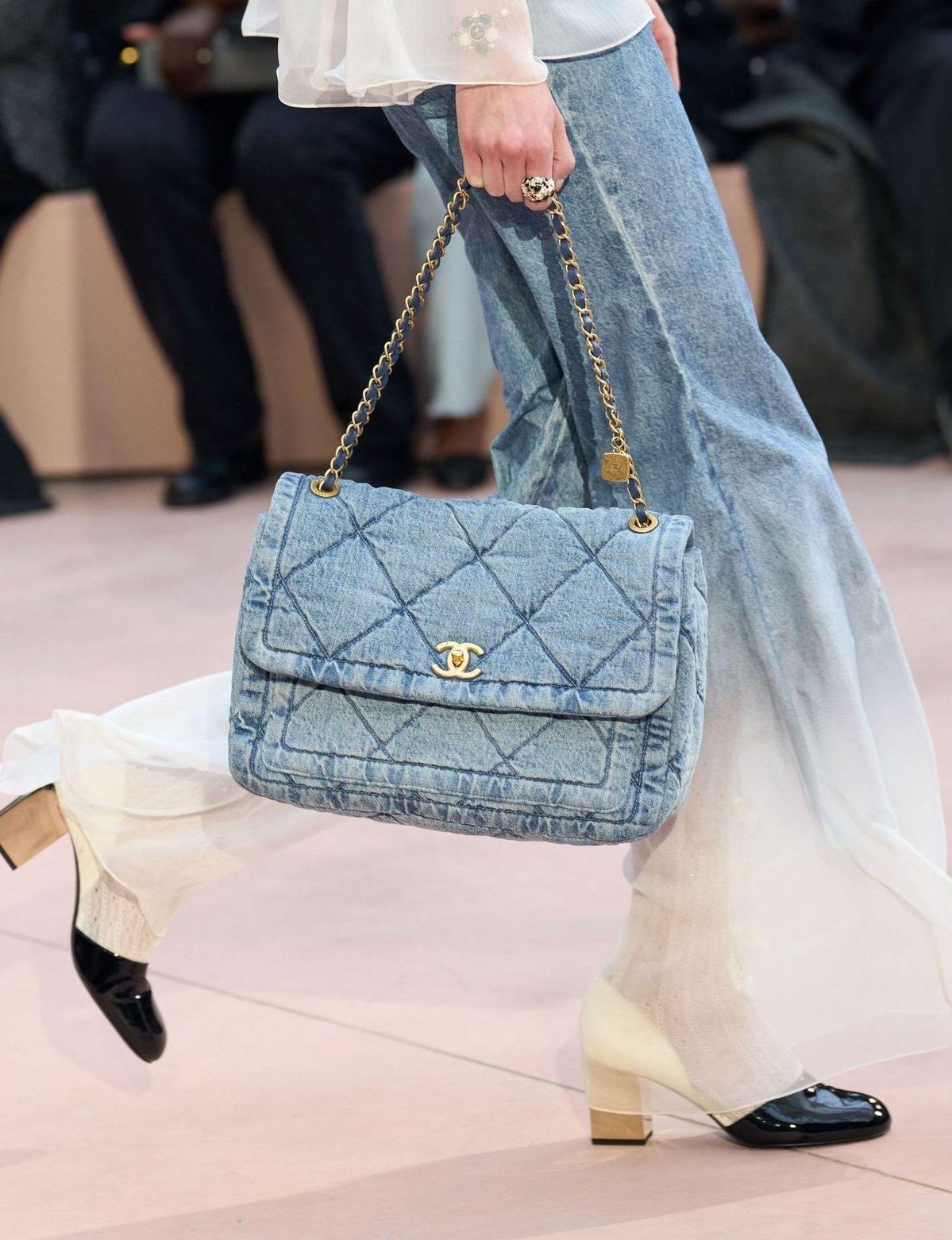
CHANEL Fall/Winter 2025 RTW
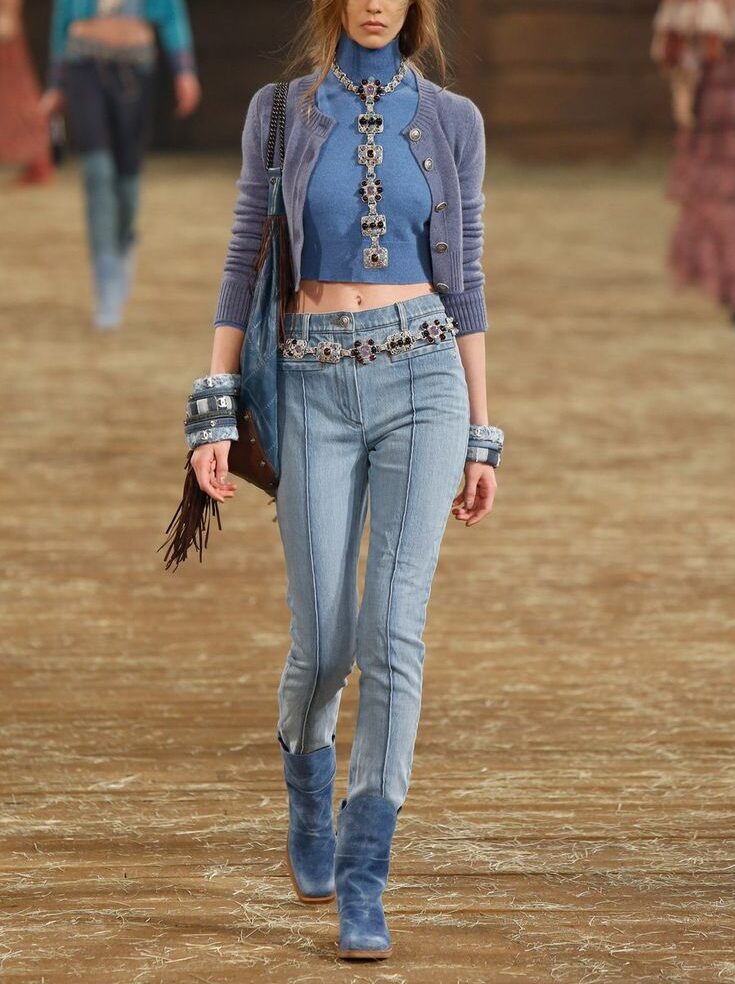
CHANEL Métiers d’Art 2014
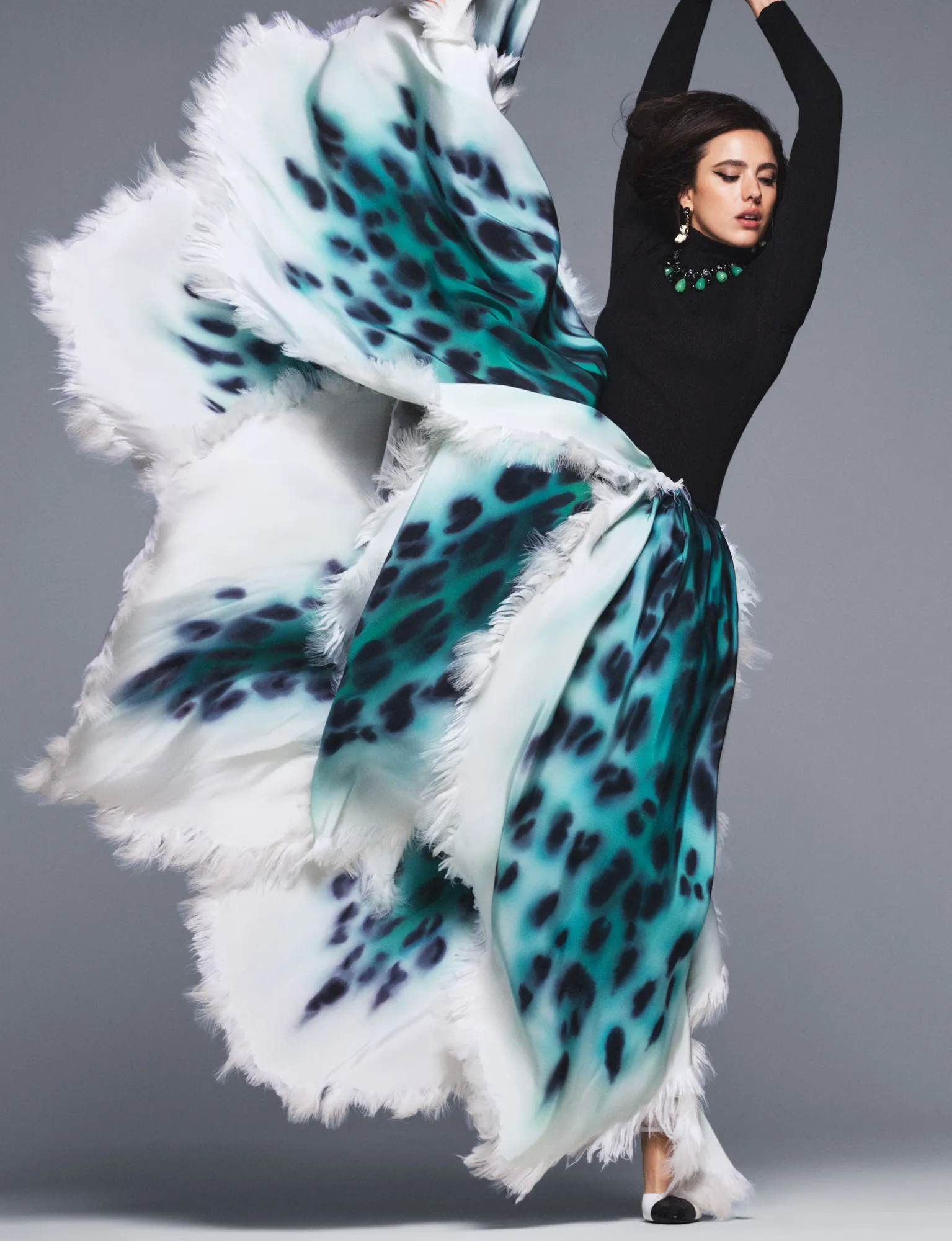
Animal print carries a reputation. It is loud, maximalist, often associated with a very specific type of dressed-up occasion dressing that sits at an apparent remove from CHANEL’s disciplined elegance. But the house’s relationship with the wild is older and stranger than its reputation suggests – rooted not in trend-chasing but in Gabrielle Chanel herself.
Coco had a genuine fascination with animal motifs, an admiration for Astrakhan fur, for leopard as a kind of aristocratic shorthand for untameable confidence. By the 1990s, Lagerfeld was using the vocabulary fluently: leopard emerged across runway looks, deployed with the same assurance as the house’s more recognised codes.
The Métiers d’Art 2026 collection made the case most explicitly. The show spanned eras – from 1920s silhouettes to 1980s power suiting – with animal prints woven throughout, directly inspired by Gabrielle Chanel’s own wardrobe. Striking tweed jacket and skirt sets arrived in leopard motifs, achieved through a new weaving technique.
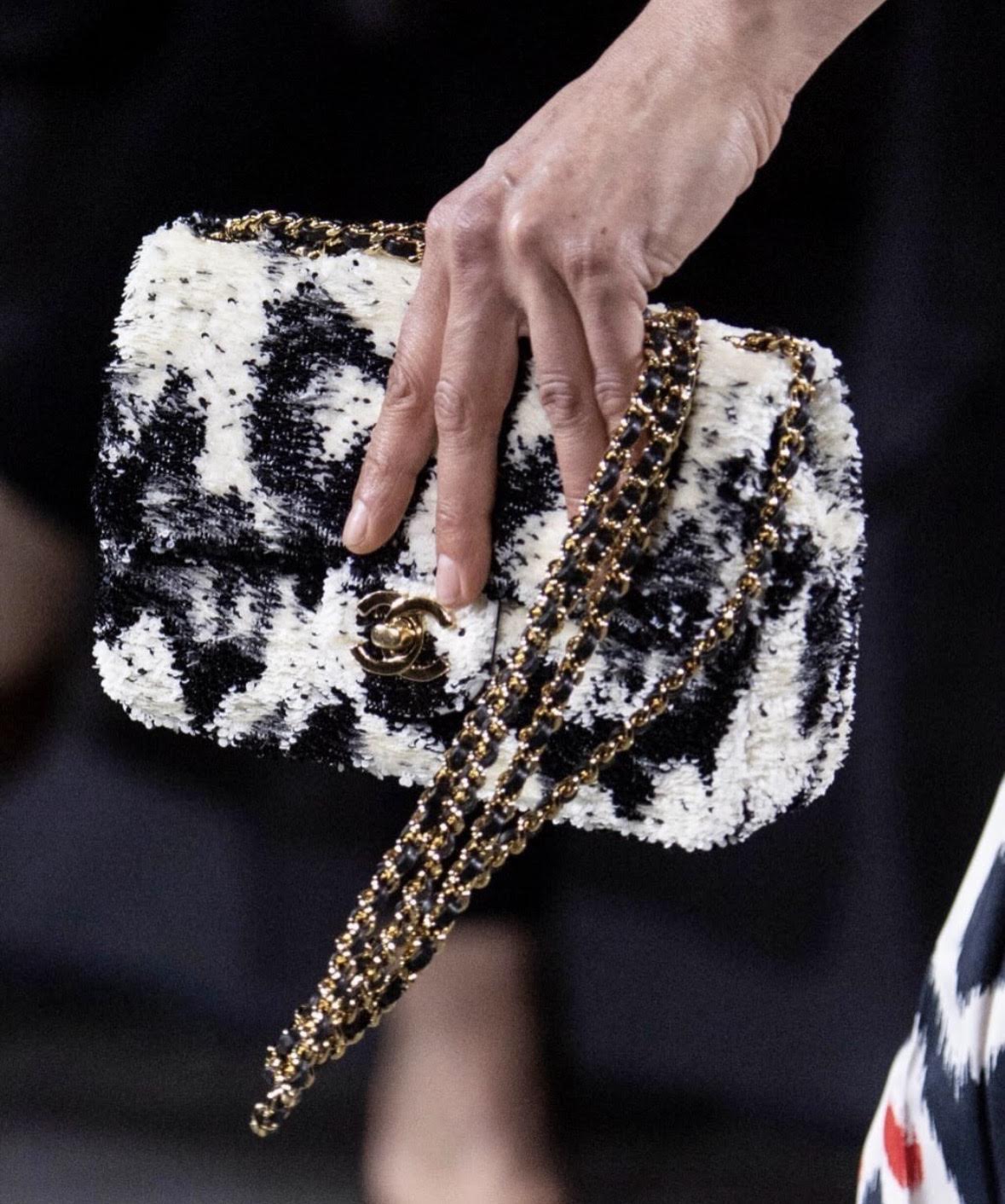
CHANEL Fall/Winter 2026
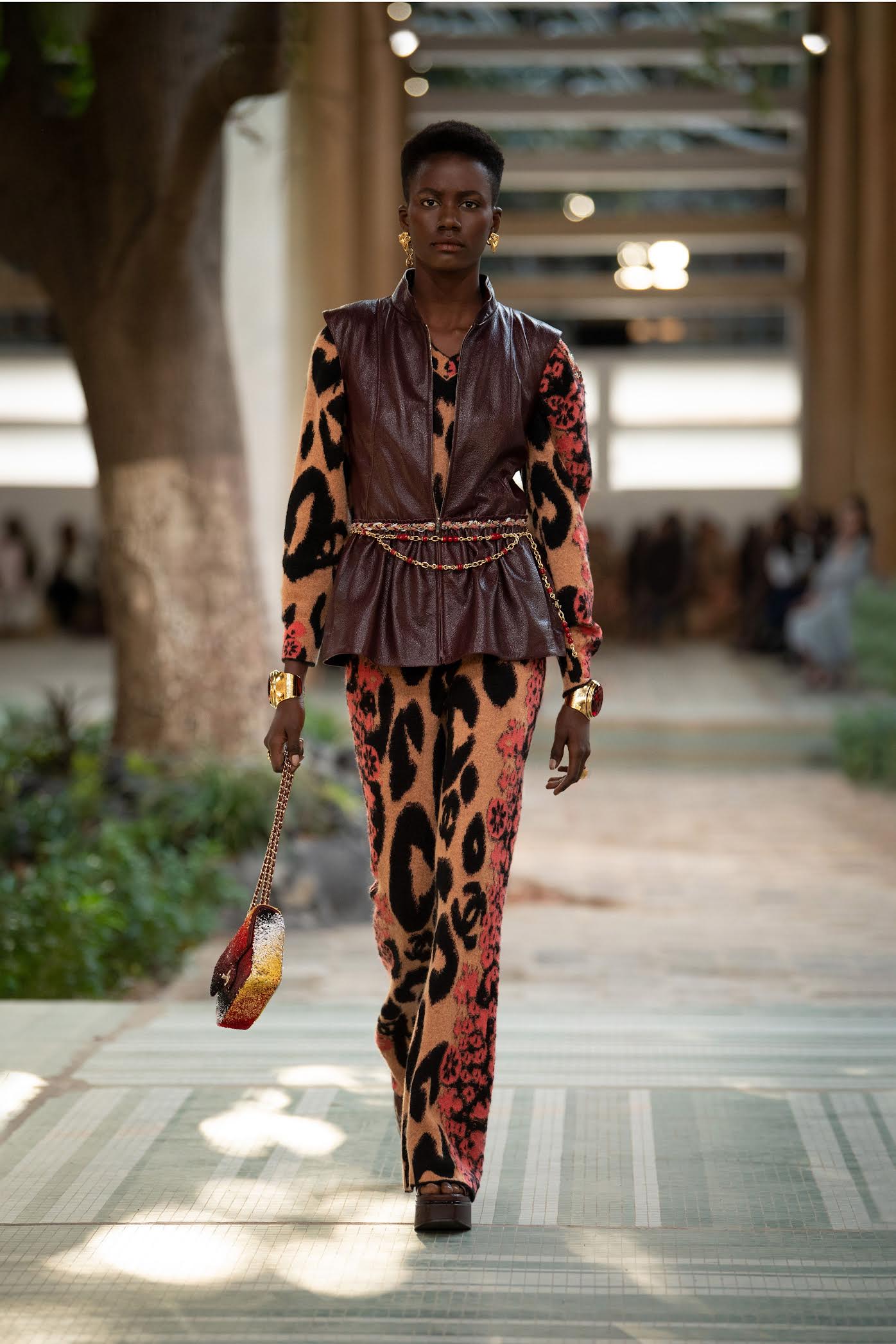
CHANEL Métiers d’Art 2023
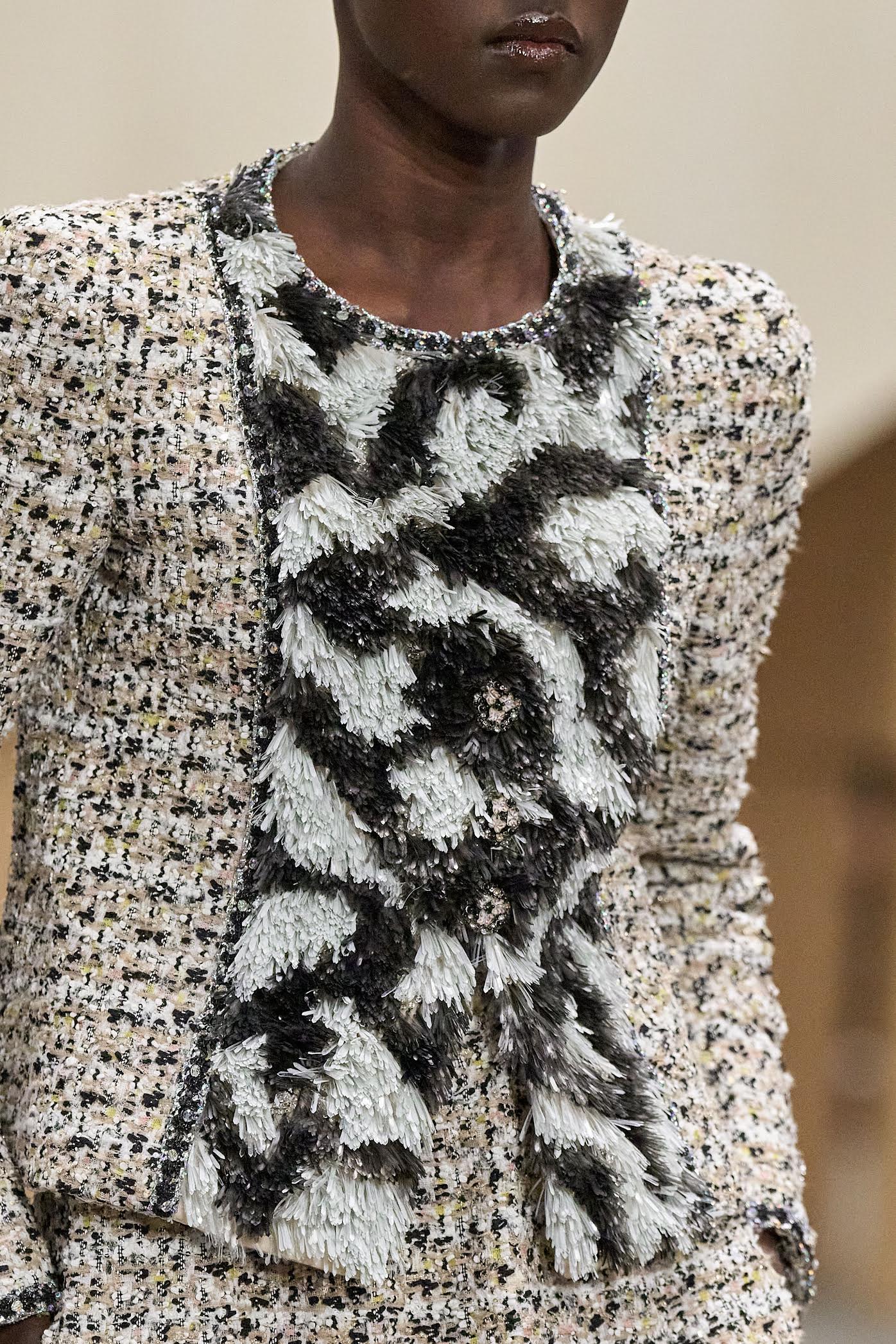
CHANEL Spring/summer 2023 Couture
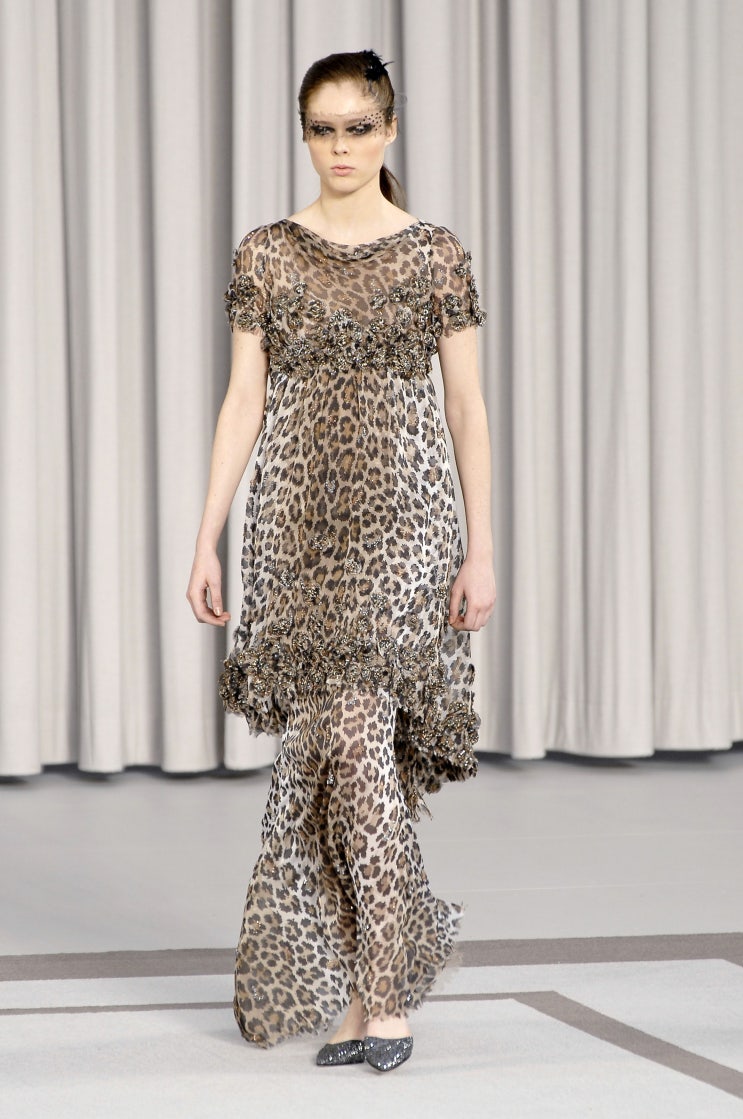
CHANEL Spring/Summer 2007 Couture
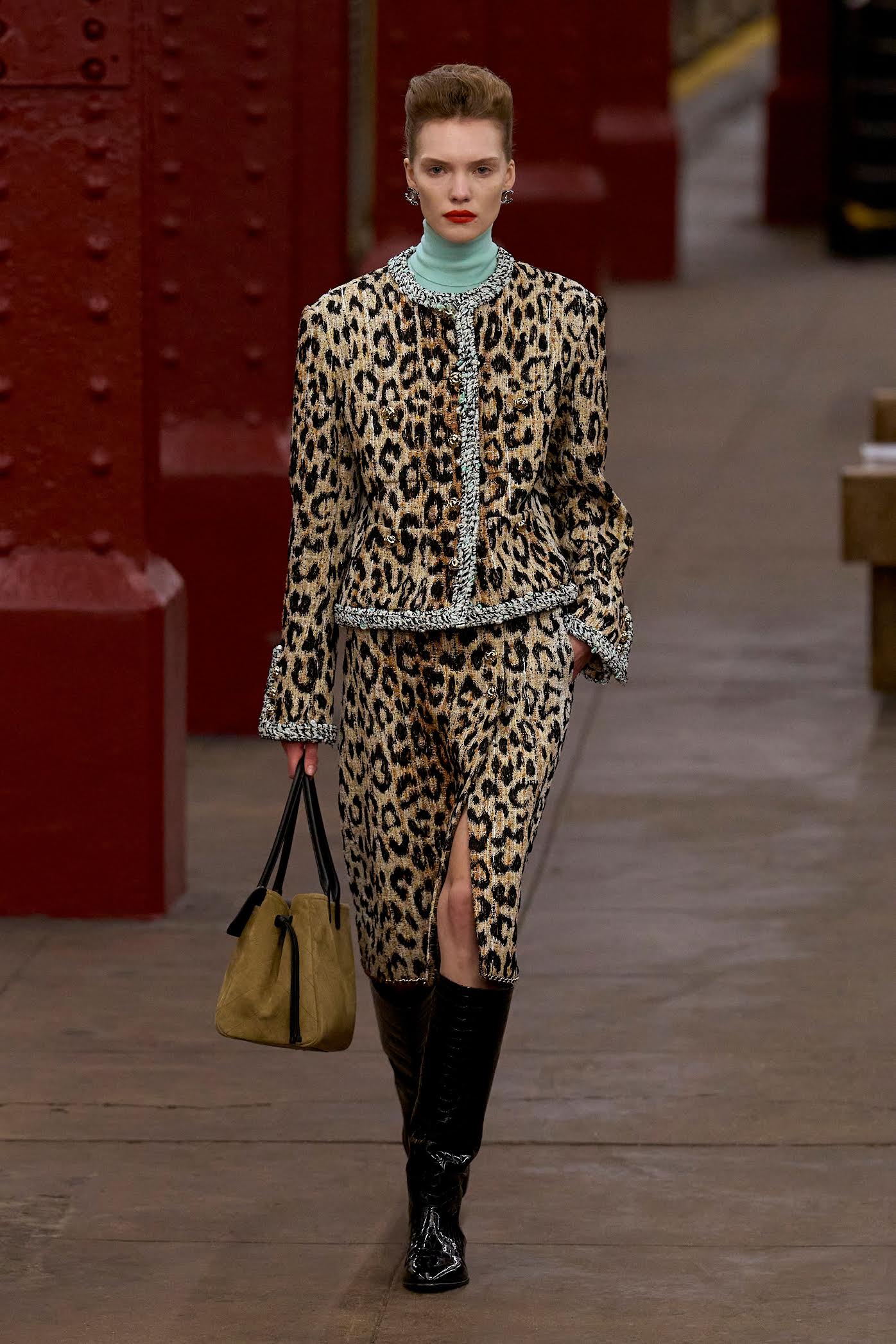
CHANEL Métiers d’Art 2026
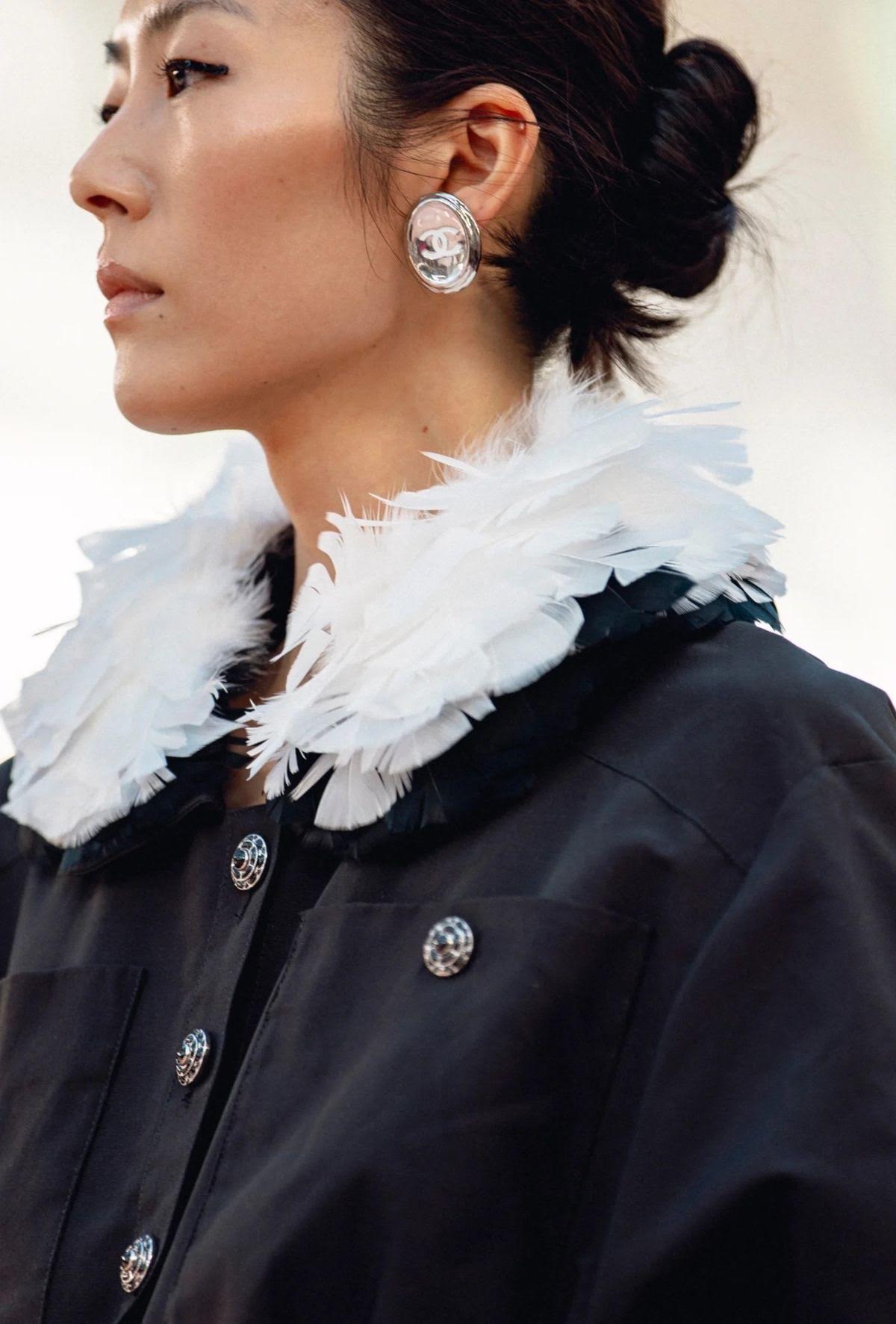
Feathers belong, in most people’s mental taxonomy, to the realm of Las Vegas showgirls and maximalist 1970s disco glamour – not to a house whose aesthetic is synonymous with restraint and geometric precision. But CHANEL’s relationship with the plume is long, committed, and surprisingly central to the house’s more theatrical ambitions.
In the Spring 1992 Haute Couture collection, Christy Turlington walked the runway in a little black dress draped in gold chains, wearing an aviary-inspired feathered headpiece that made the whole look feel like something mythological. The Spring 2011 collection was full of feathered dresses that used plumes as structural and textural elements rather than mere decoration. Feathers, here, were not excess – they were architecture.
The Fall 2025 Haute Couture collection leaned heavily into this inheritance. A nubby ivory tweed cape arrived with hulking feathered shoulders. A fluffy black coat constructed from a mix of tweed, feathers and chiffon. The Spring 2025 Ready-to-Wear collection also prominently featured feathers. The Maison Lemaré, CHANEL’s historic feather specialist within the Métiers d’Art family of artisans, has ensured that this is not a trend but a permanent, extraordinary skill.
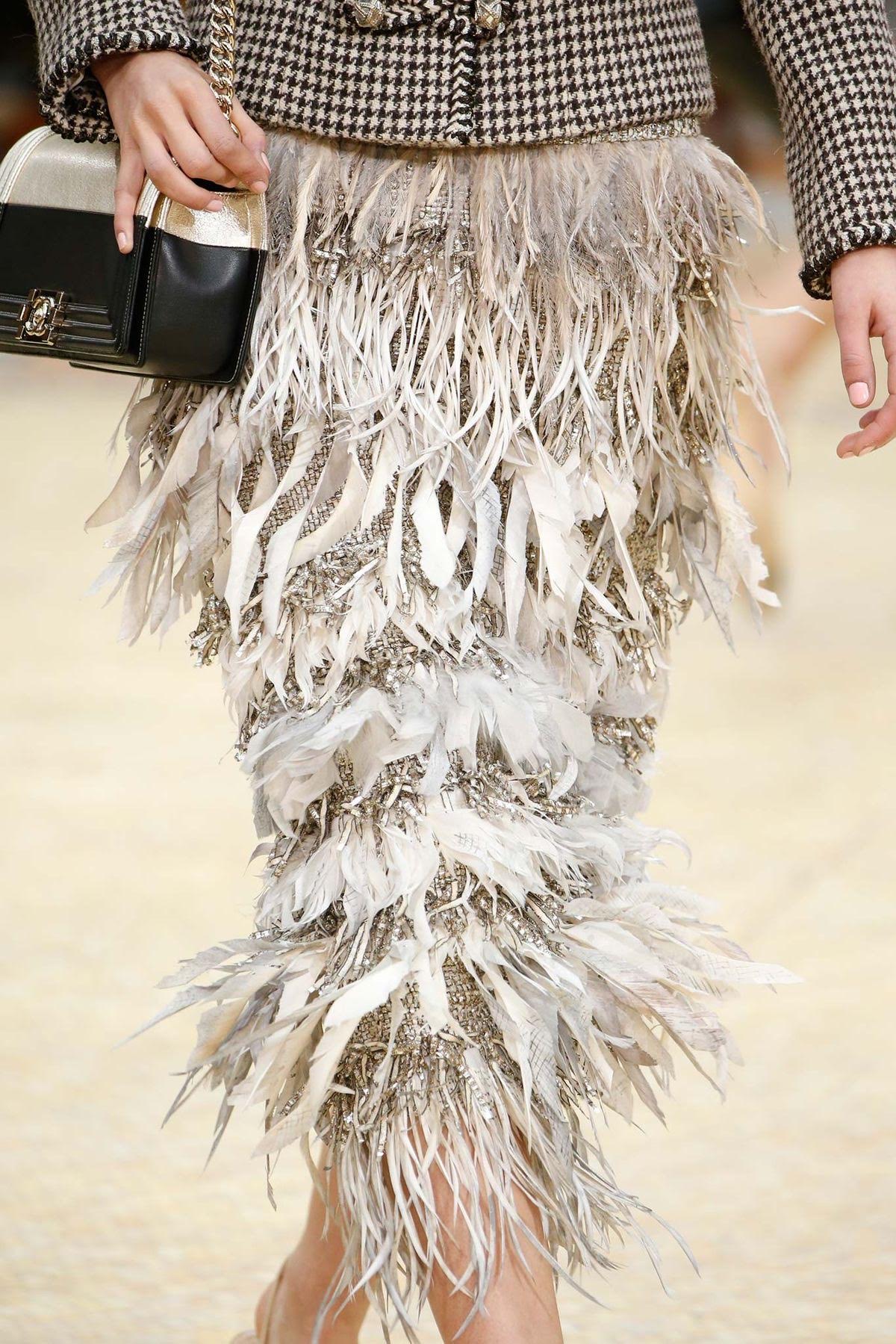
CHANEL Fall/Winter 2015 RTW
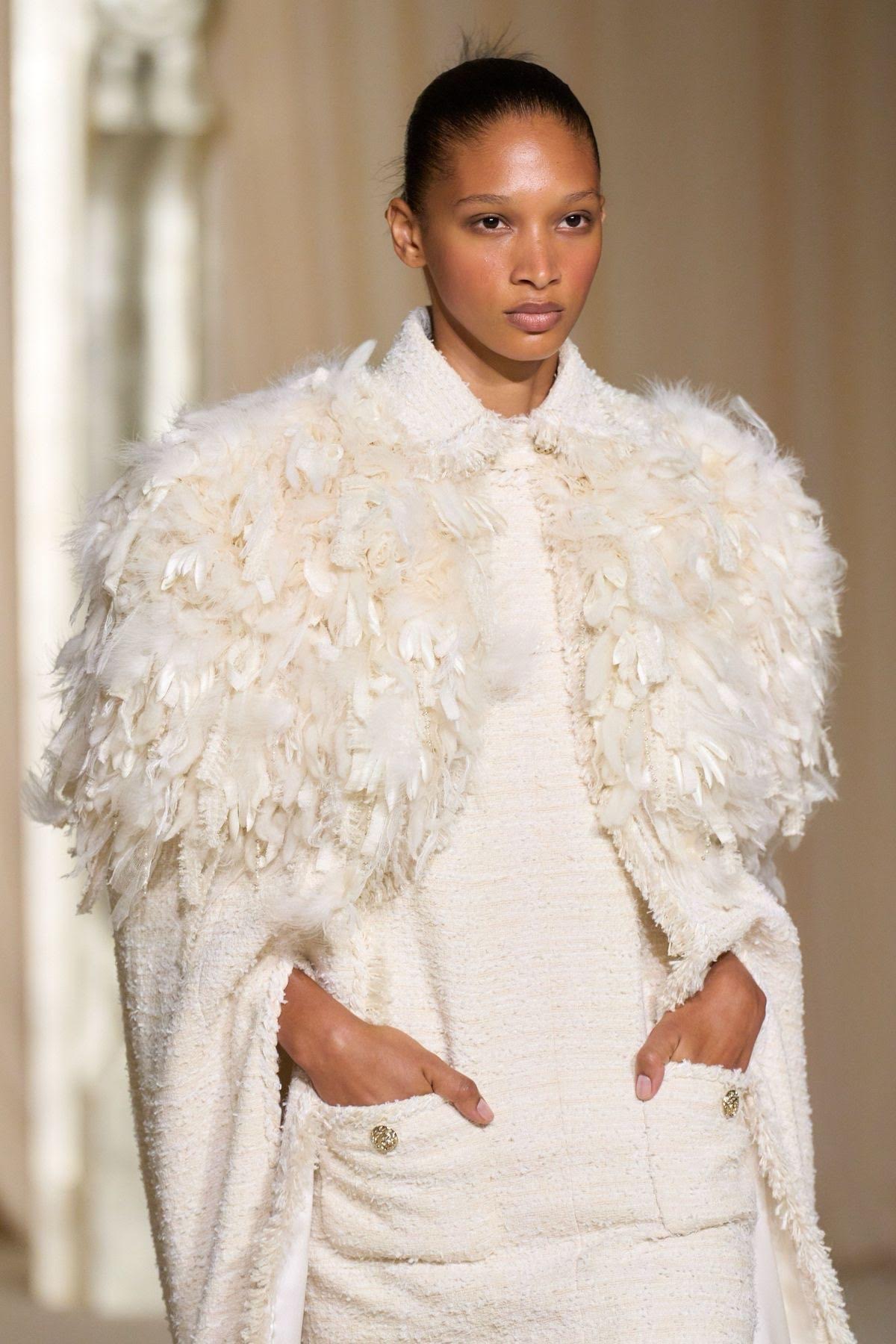
CHANEL Fall/Winter 2025 Couture
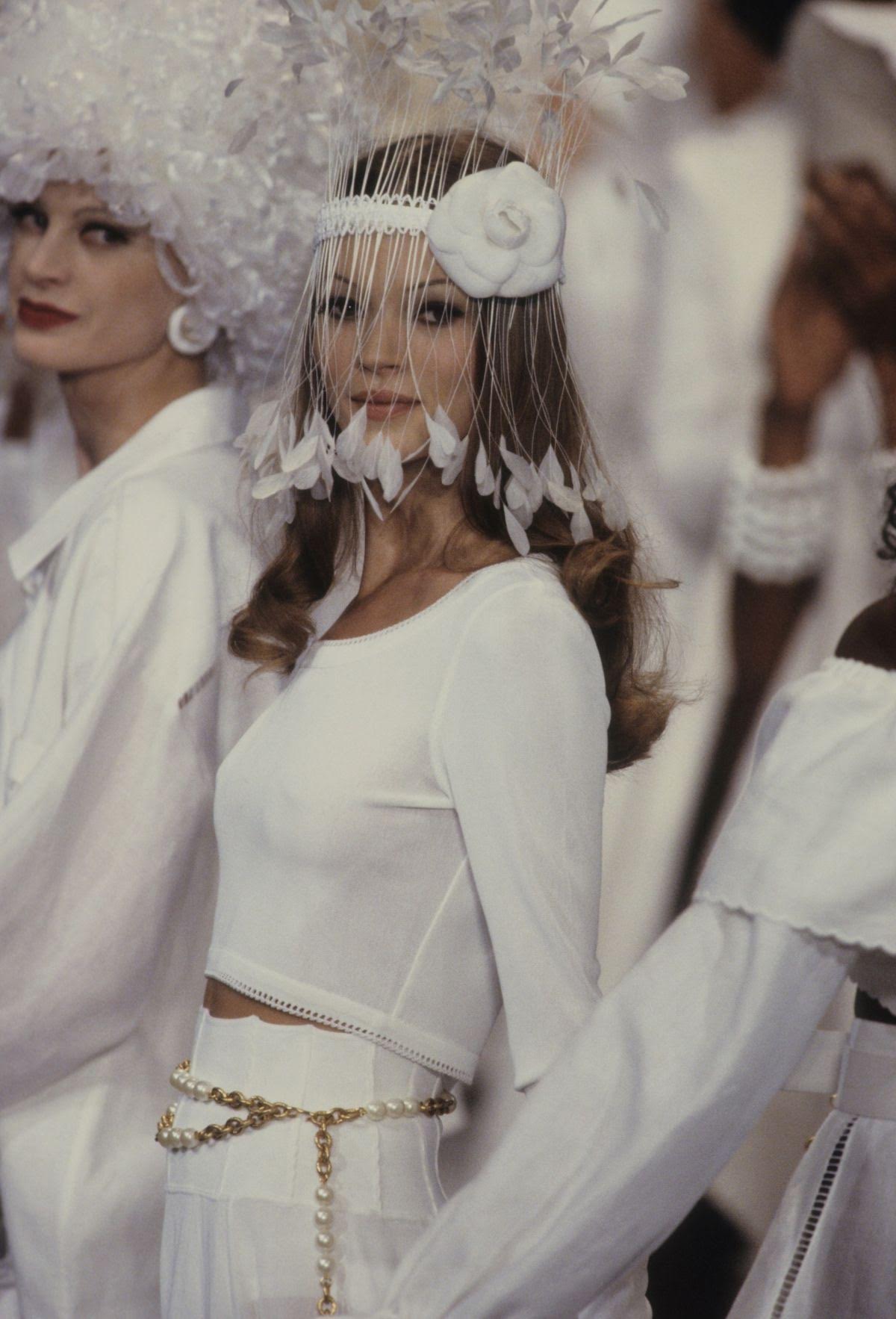
CHANEL Spring/Summer 1993 RTW
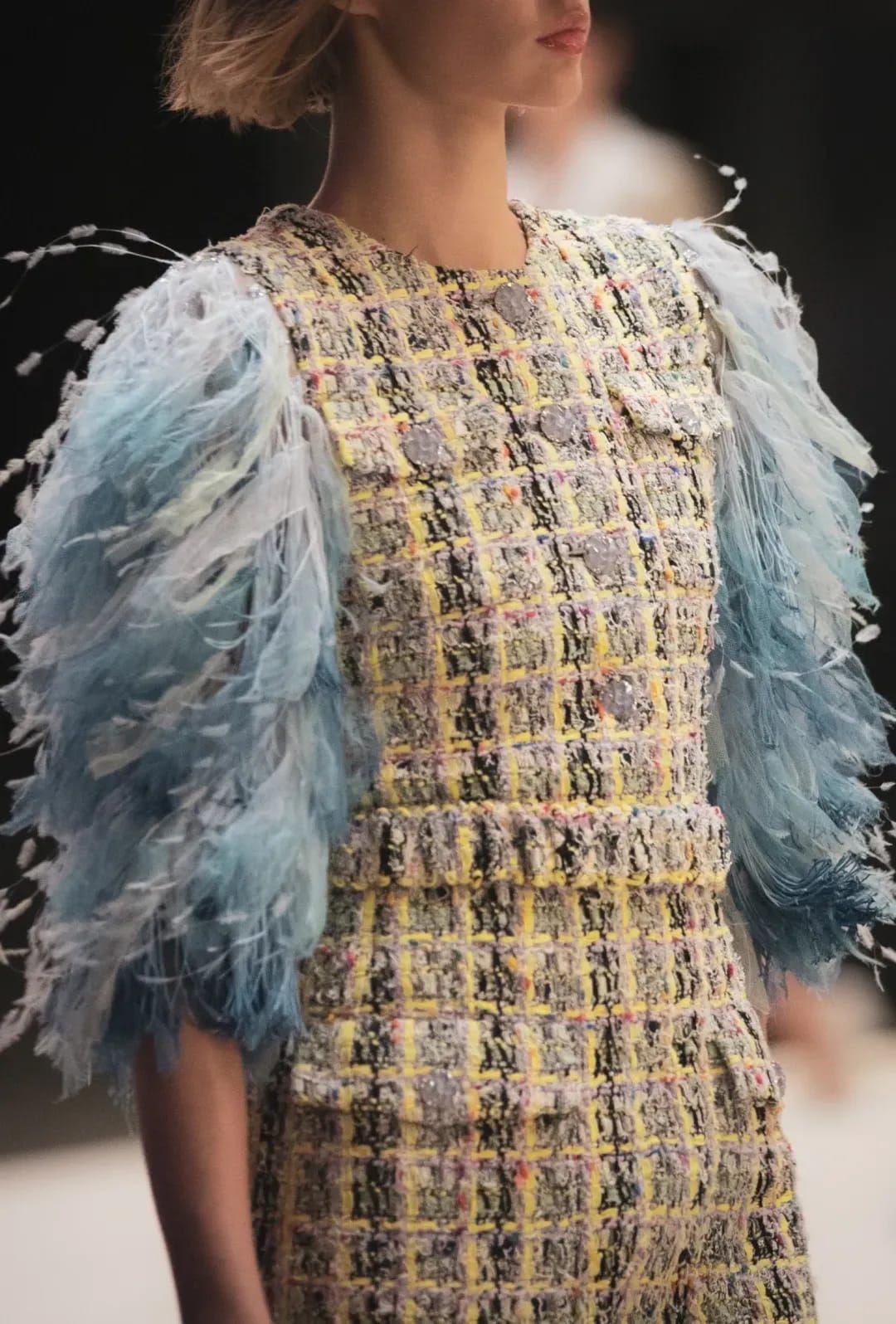
CHANEL Spring/Summer 2022 Couture
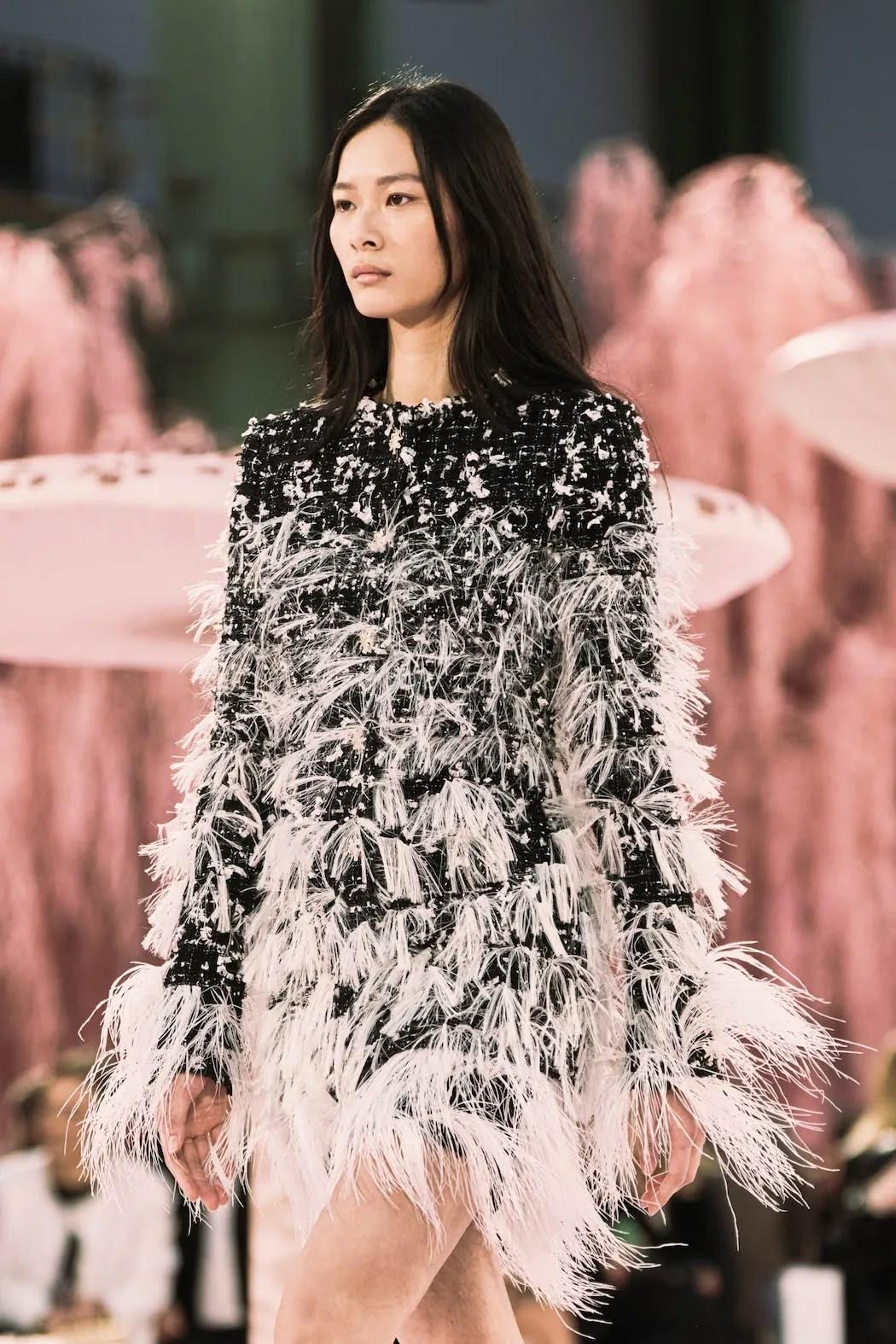
CHANEL Spring/Summer 2026 Couture
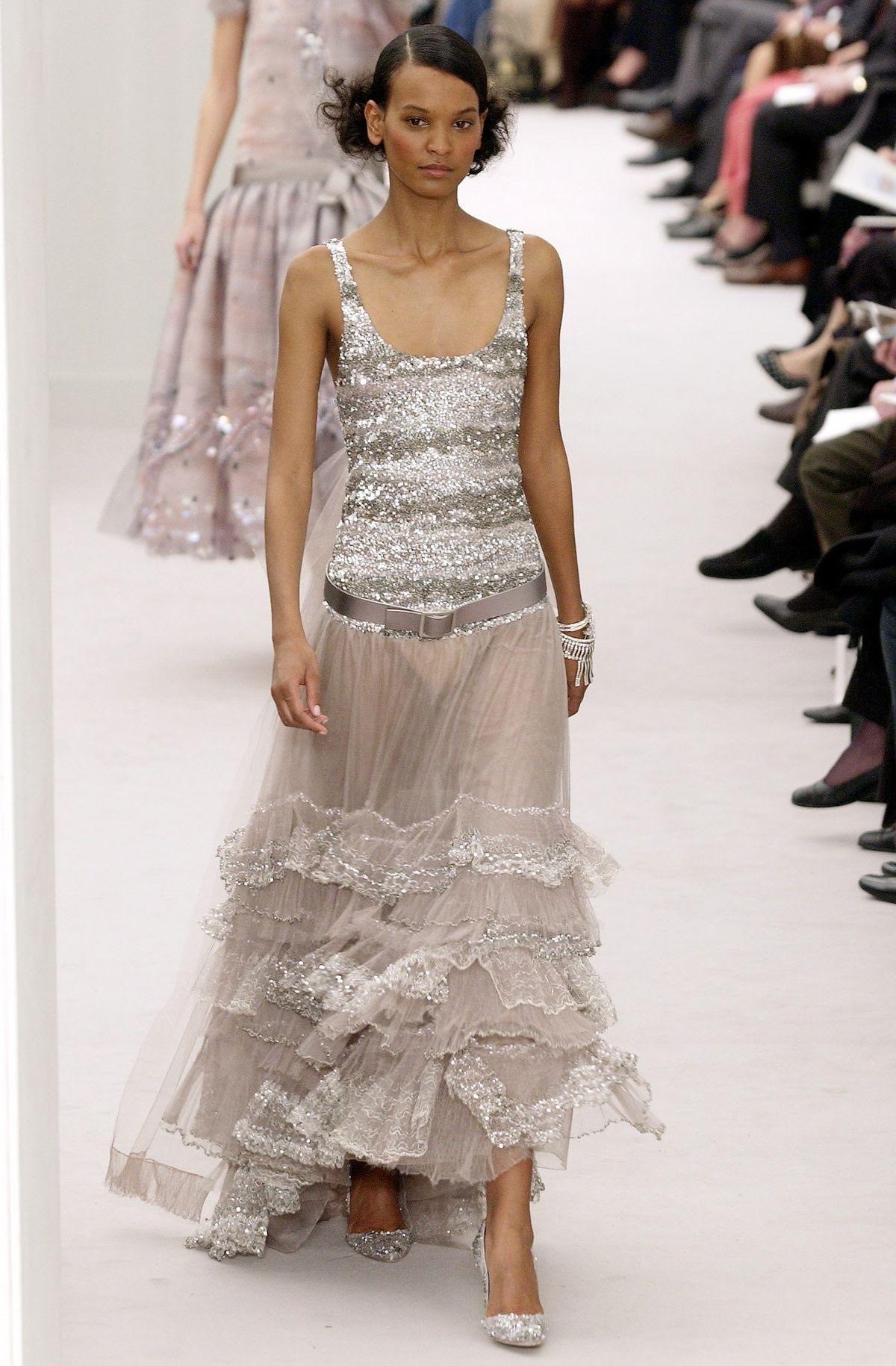
Transparency is, paradoxically, one of the most controlled things a designer can offer. Sheer fabric reveals but it also frames, delays, distills. Used badly, it is just exposure. Used well, it is a kind of architecture of suggestion, and the house of CHANEL has used it well for a very long time.
Lagerfeld introduced sheerness gradually across the late 1980s and 1990s. By the early 1990s, he was showing see-through elements in ways that felt deliberately provocative – a challenge to Coco’s more austere inheritance. But the house survived the provocation and absorbed it. Sheer had become a CHANEL language.
The Spring/Summer 2018 collection, with its bold environmental theme staged in a recreated Gorges du Verdon inside the Grand Palais, used chiffon and georgette alongside its famous tweeds – sheer standing in contrast to structure as it so often does at the house. At CHANEL, the transparent is always intentional, a deliberate loosening of the house’s more disciplined geometry.
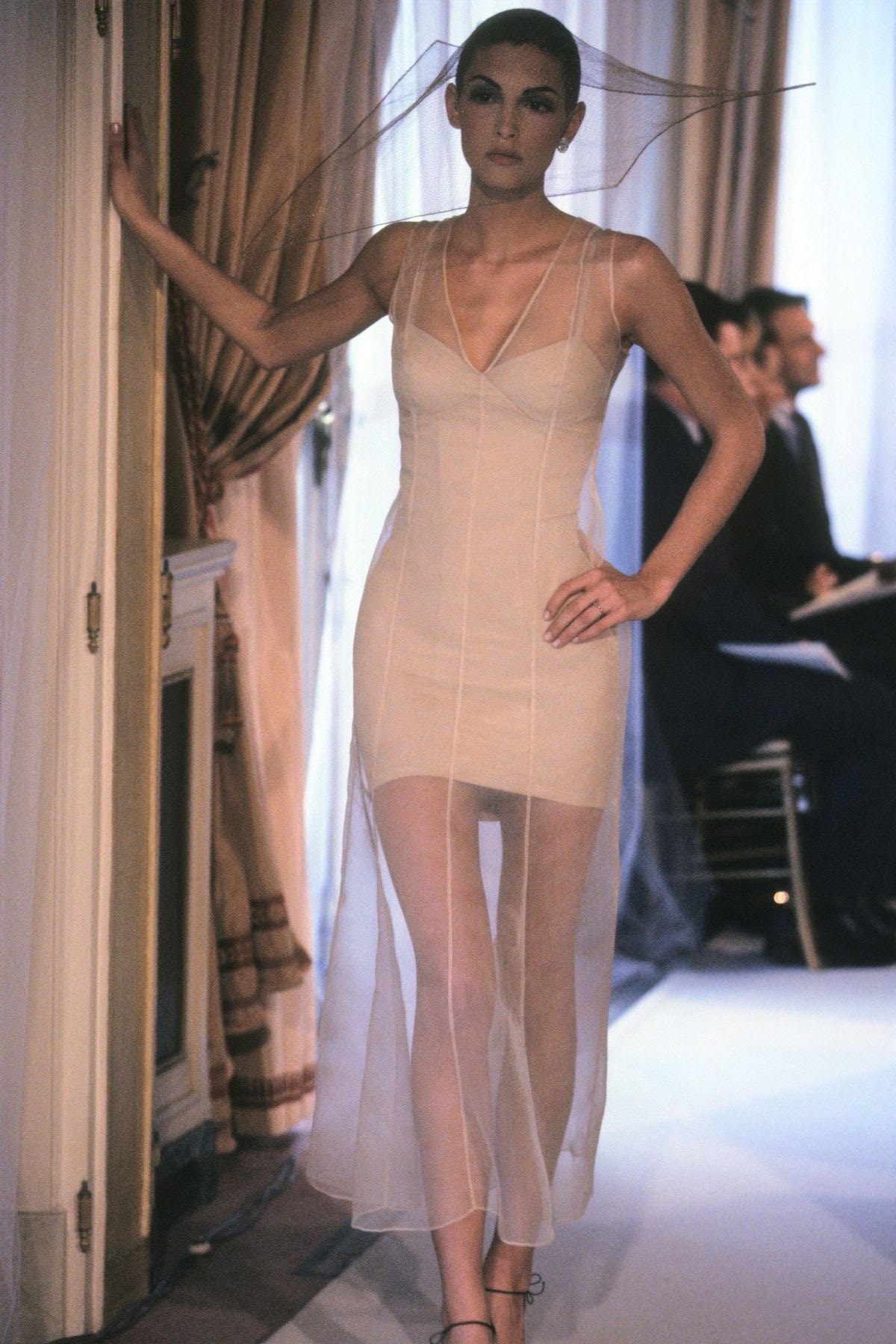
CHANEL Spring/Summer 1997 Couture
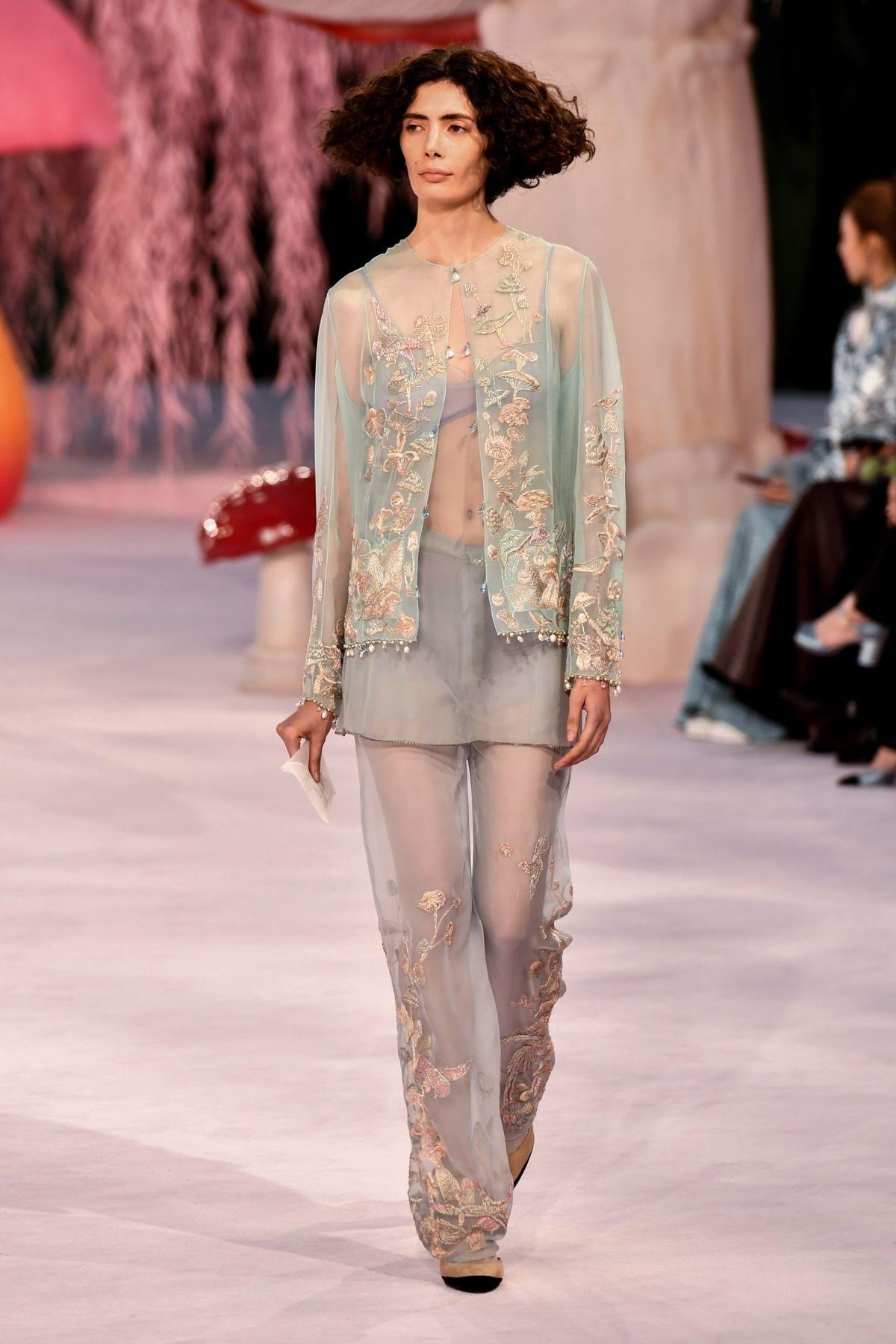
CHANEL Spring/Summer 2026 Couture
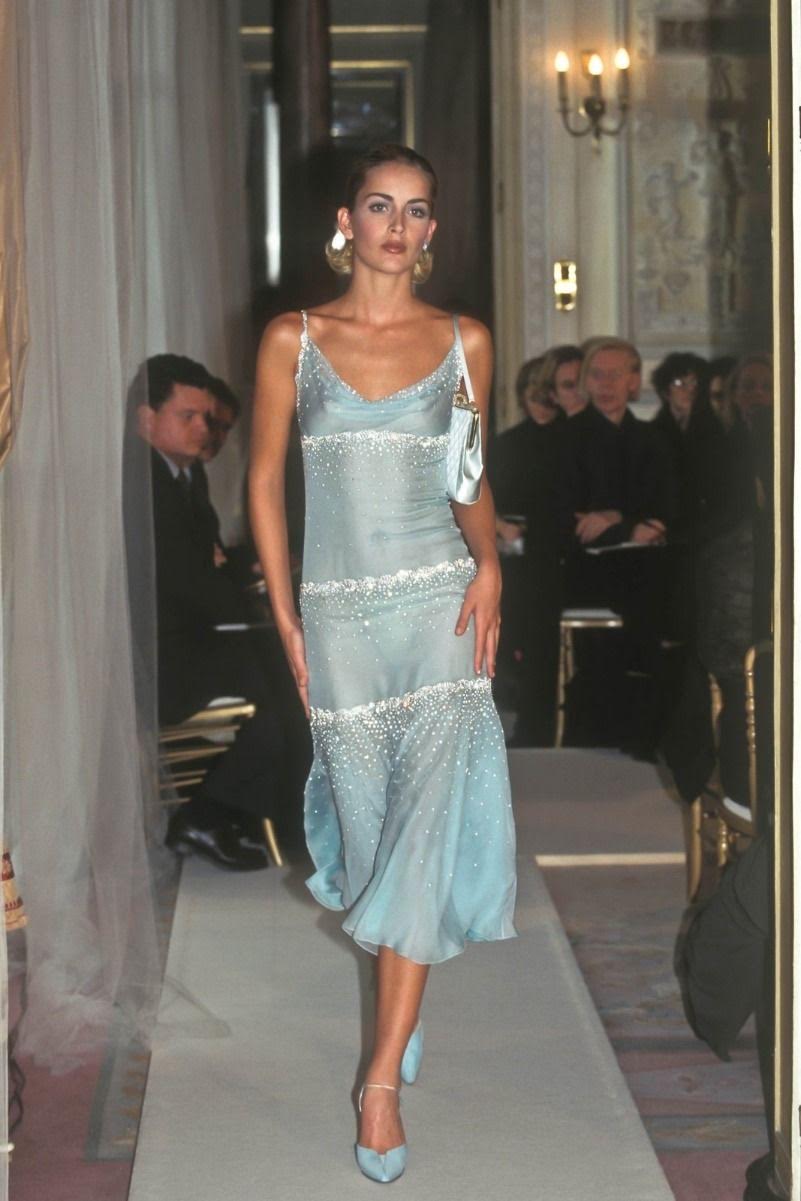
CHANEL Spring/Summer 1997 Couture
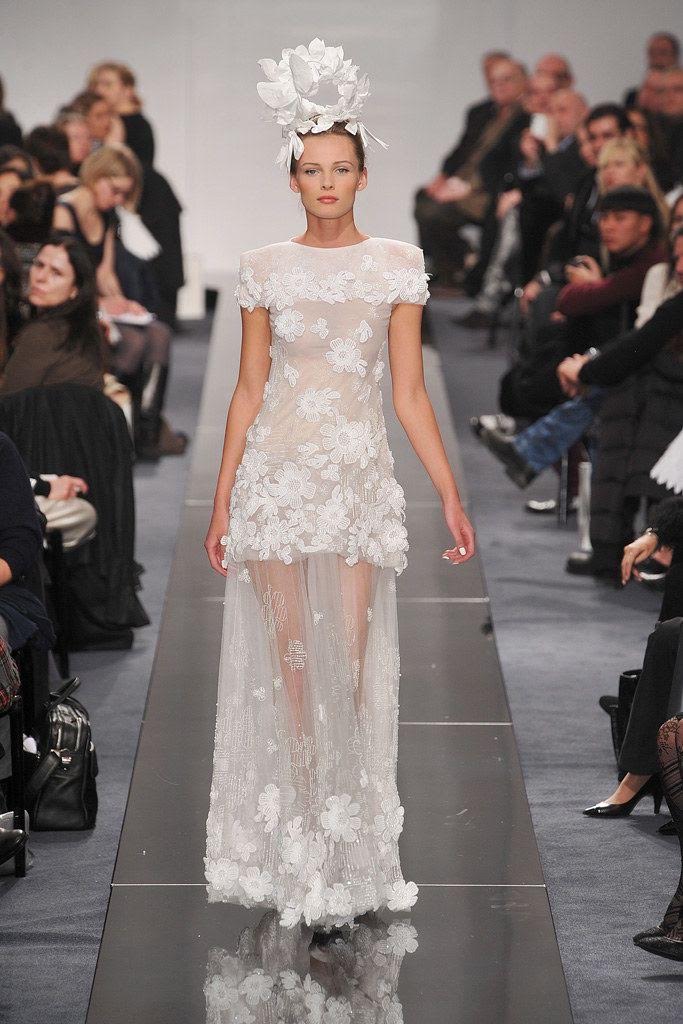
CHANEL Spring/Summer 2009 Couture
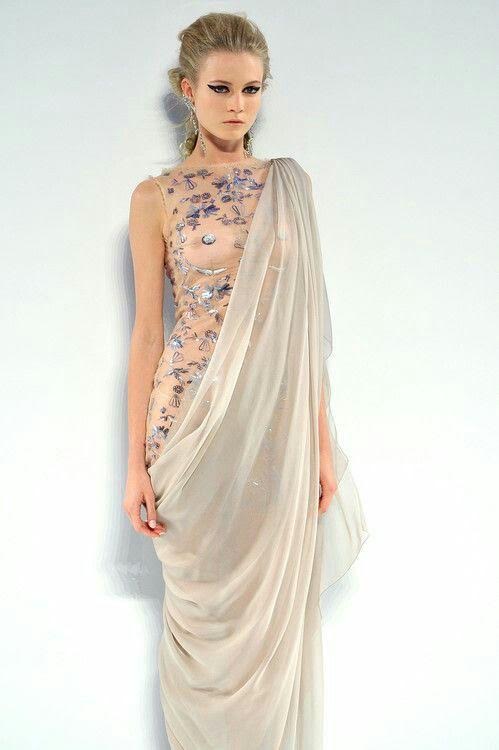
CHANEL Fall/Winter 2009 Couture
The CHANEL shoe of the imagination is the two-tone slingback: elegant, feminine, precise, the product of a woman who believed that beautiful shoes should be comfortable above everything else. It is one of the great pieces of twentieth-century design, and it has not gone anywhere. But alongside it, across decades of runway seasons, a different footwear language has been developing – heavier, more assertive, more grounded.
Lagerfeld’s Fall/Winter 2013 collection produced what became one of the most talked-about pieces of his late career: the chain boots. Worn with leather gaiters, they became an instant street-style fixation after the show – one of those CHANEL pieces that immediately escaped the runway and entered a different, more urban conversation. They were heavy, they were architectural, they were uncompromising and they were completely, unmistakably CHANEL.
The Fall 2025 Haute Couture collection positioned thigh-high boots as central to its outdoor-coded, Scotland-inspired aesthetic – worn beneath chunky outerwear, they functioned as the grounding element that gave the floatier pieces (the feathers, the chiffon) something to push against. In a house that was founded by a woman who refused to choose between comfort and beauty, the chunky boot is not an anomaly. It is a direct inheritance.
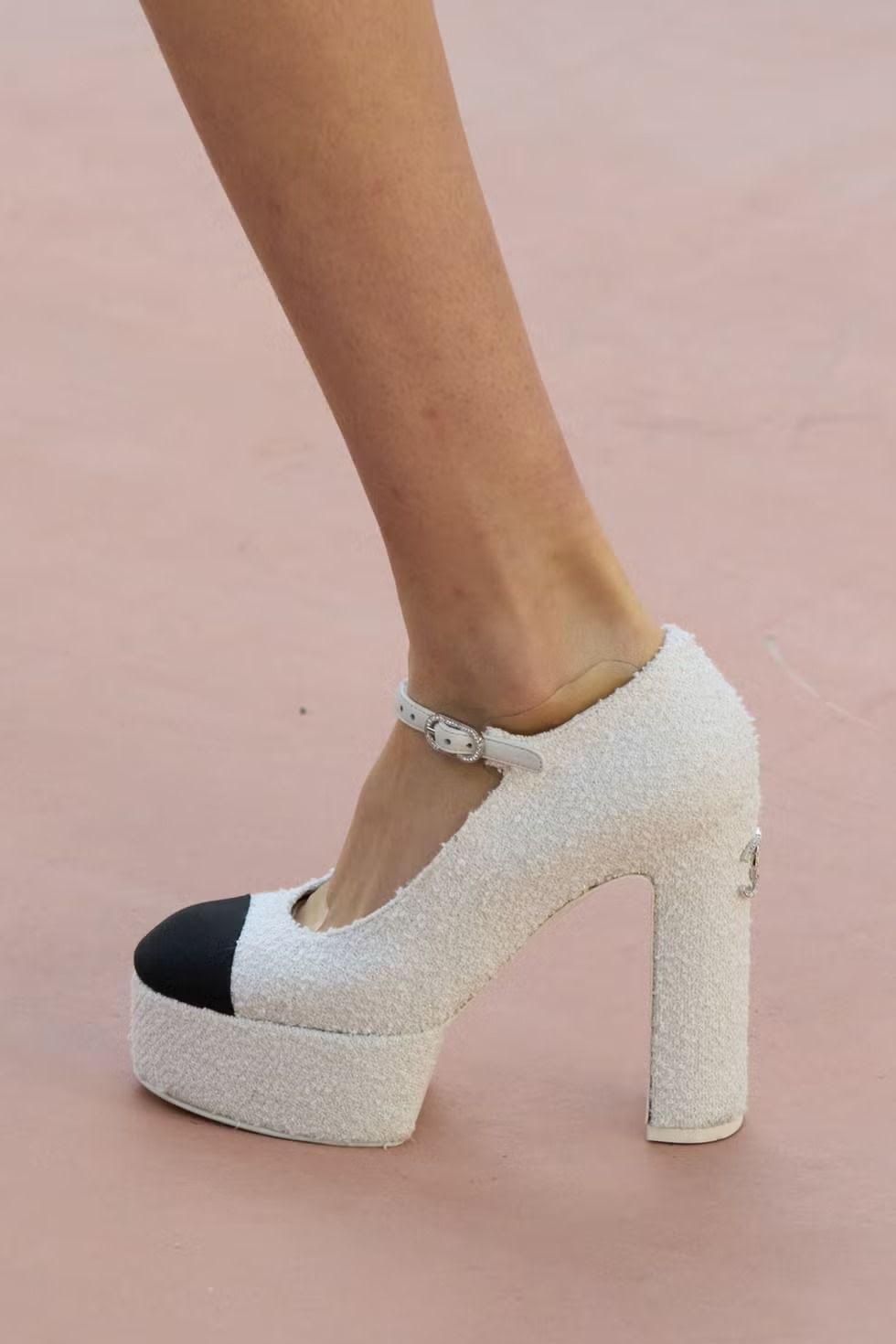
CHANEL Spring/Summer 2025 RTW
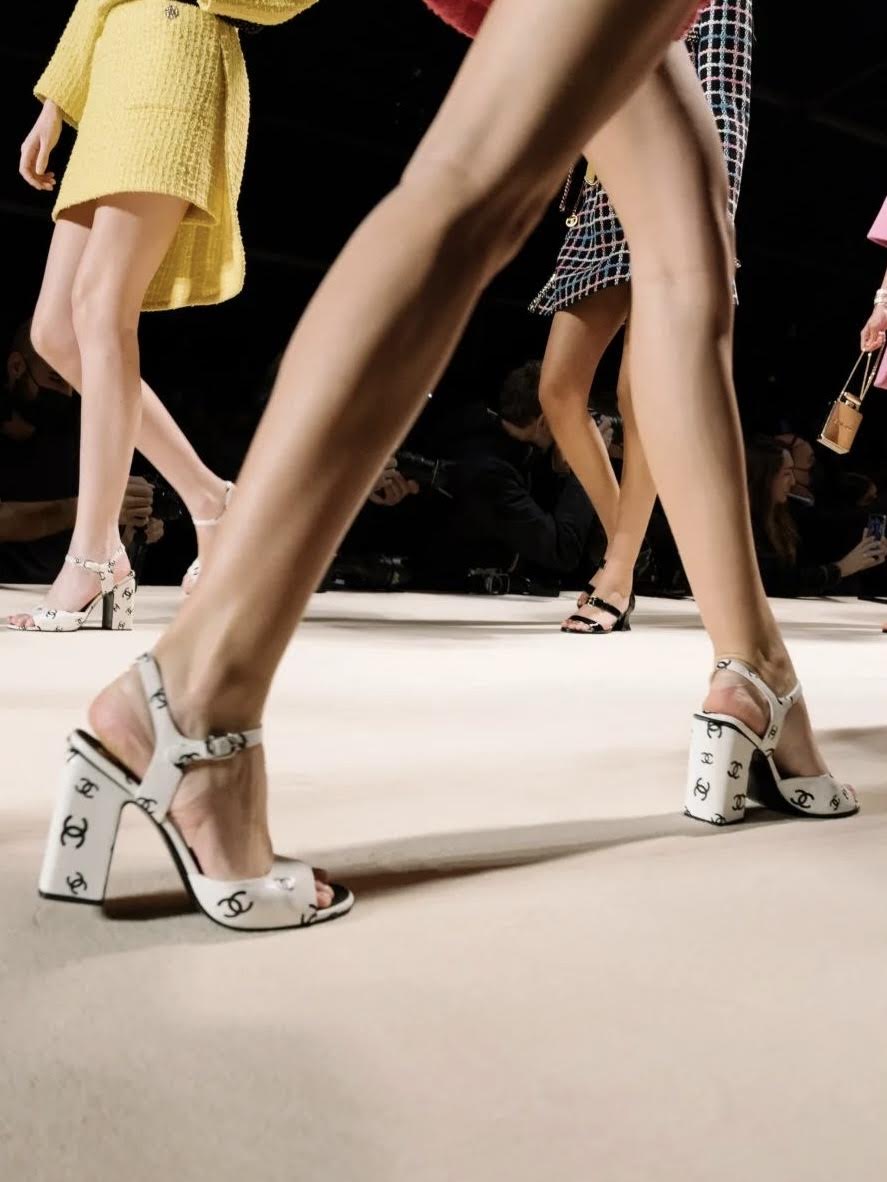
CHANEL Spring/Summer 2022 RTW
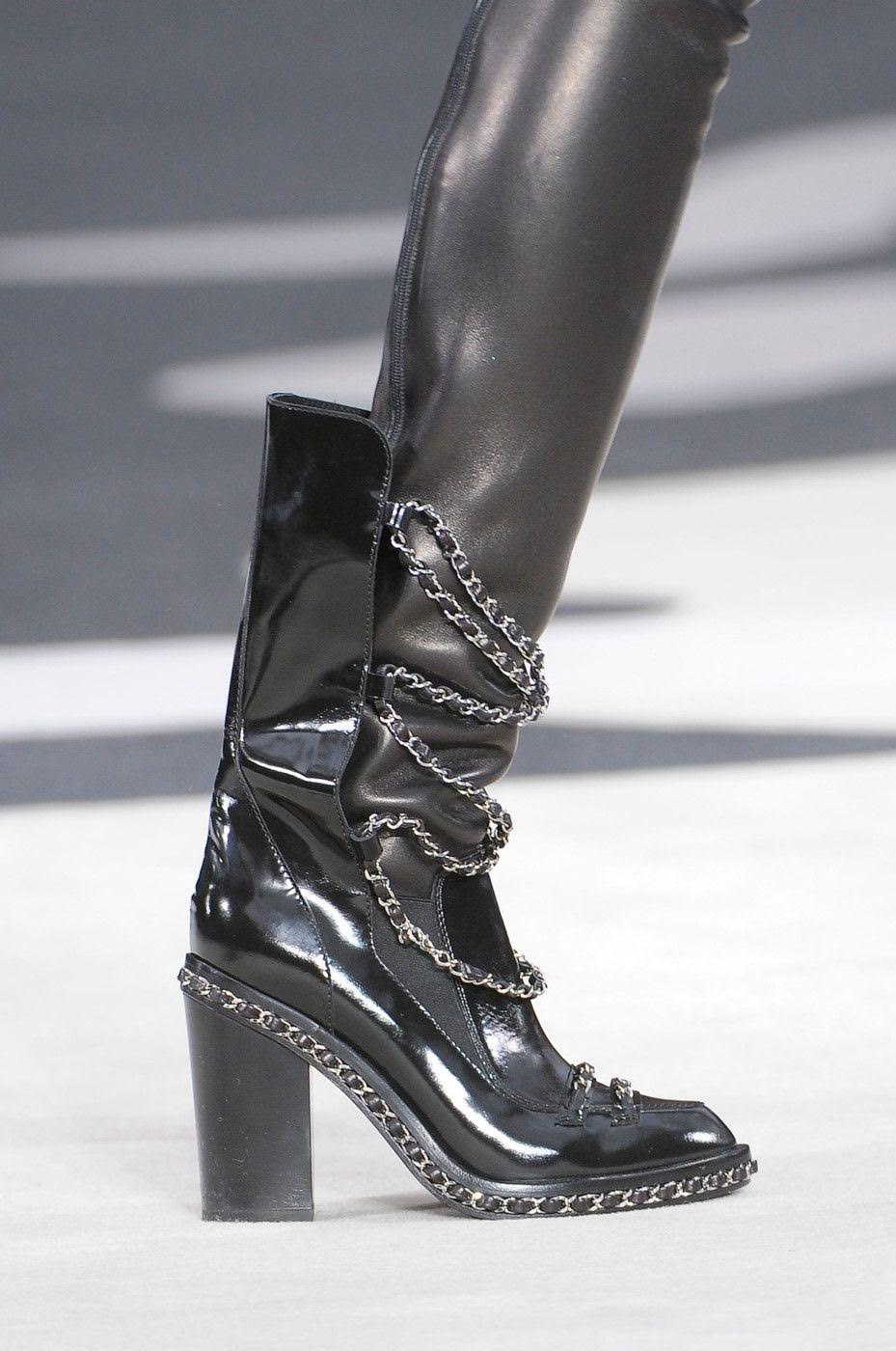
CHANEL Fall/Winter 2013 RTW
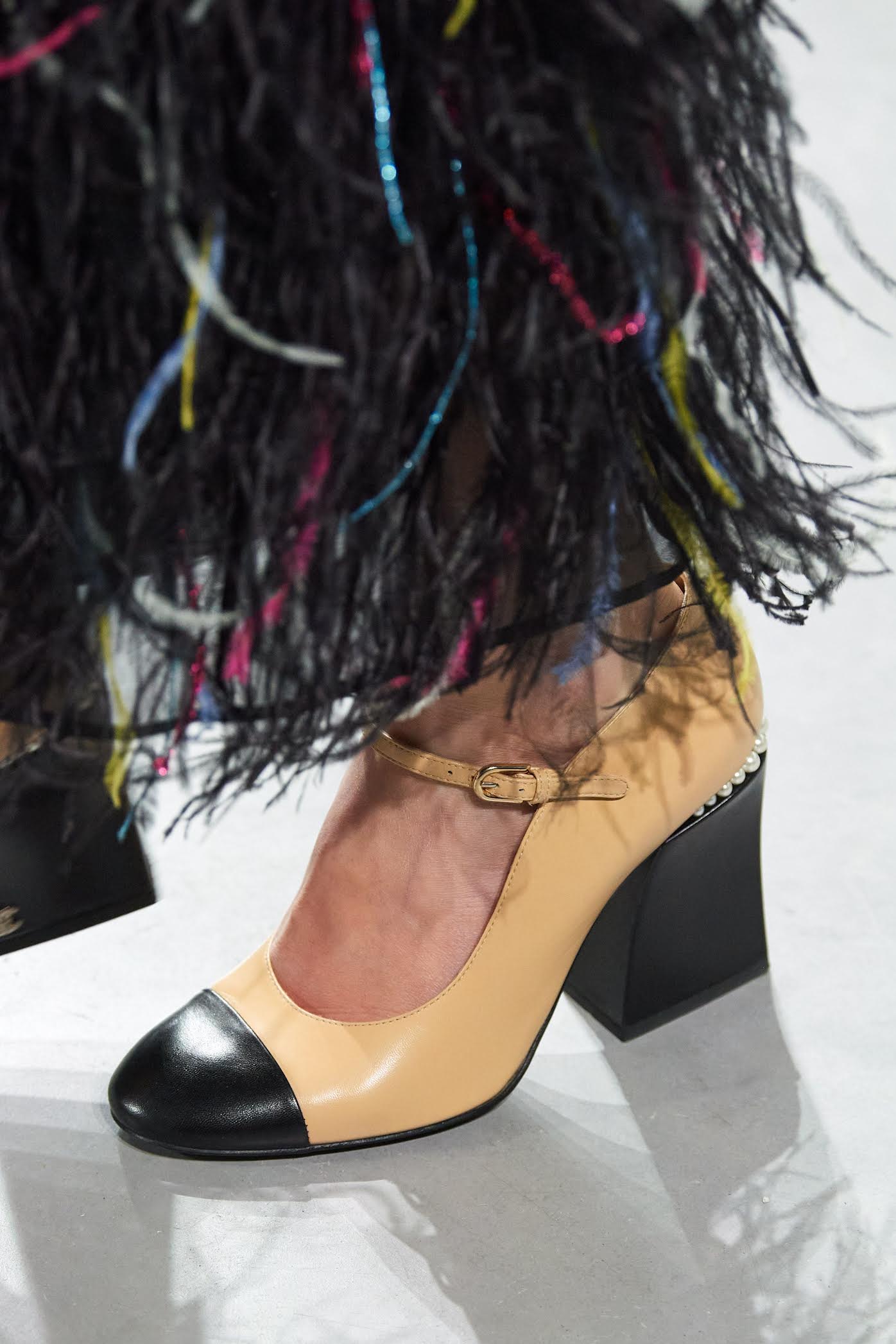
CHANEL Métiers d’Art 2022
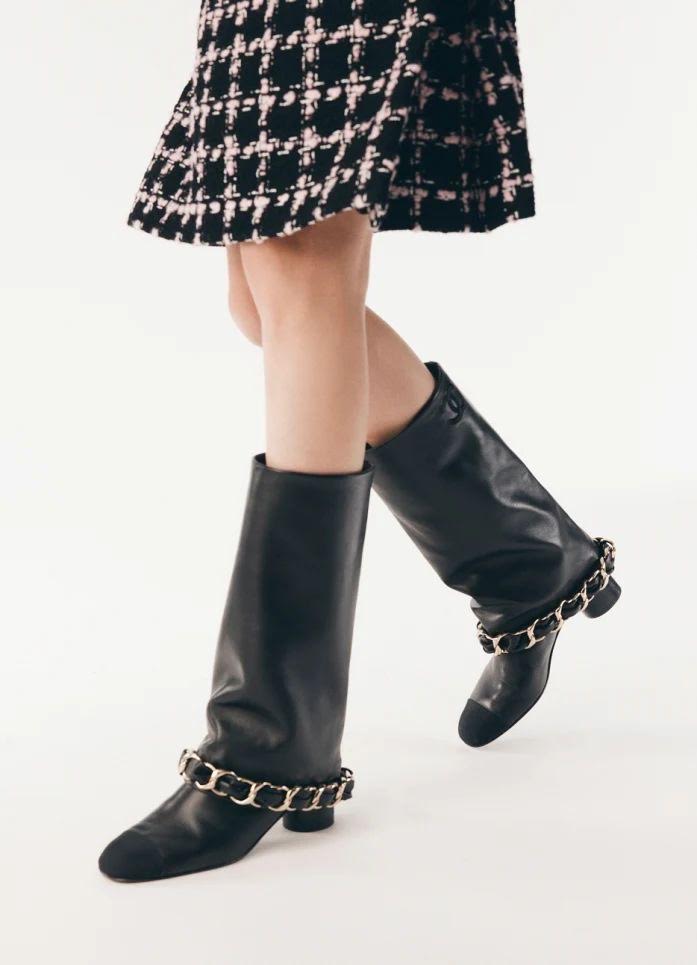
CHANEL Fall/Winter 2025 Pre-Collection
Denim, animal print, feathers, sheerness, and a boot that could stop traffic – none of these are accidents. Each one, when the house deploys it, carries the same underlying argument that Gabrielle Chanel made with men’s jersey in 1914 and a pair of trousers in 1918: that the most radical thing a woman can do is dress for herself, with supreme confidence, and without apology. The codes were never just the tweed.